Shockwave Therapy Service
Key Takeaways
- Shockwave therapy is a noninvasive treatment — no surgery, no needles, no downtime.
- It uses sound waves to help damaged tendons and soft tissue heal from common injuries.
- Most patients need three to six sessions, spaced at least one week apart.
- UChicago Medicine offers a more powerful device than most physical therapy clinics.
- It works best for chronic (long-lasting) tendon pain that hasn't gotten better with rest or physical therapy.
If you have had nagging soft tissue for months — and physical therapy hasn't fully fixed it — you may feel stuck. The choices can seem limited: keep going to PT, try a steroid shot, or consider surgery. But there is another option worth knowing about: shockwave therapy.
The University of Chicago Medicine now offers shockwave therapy through our orthopaedics team. It is a fast, noninvasive treatment that uses sound waves to help your body heal itself. No surgery. No needles. No time off work.
Schedule an Appointment
Schedule online or call us at 773-906-4605.
 What Is Shockwave Therapy?
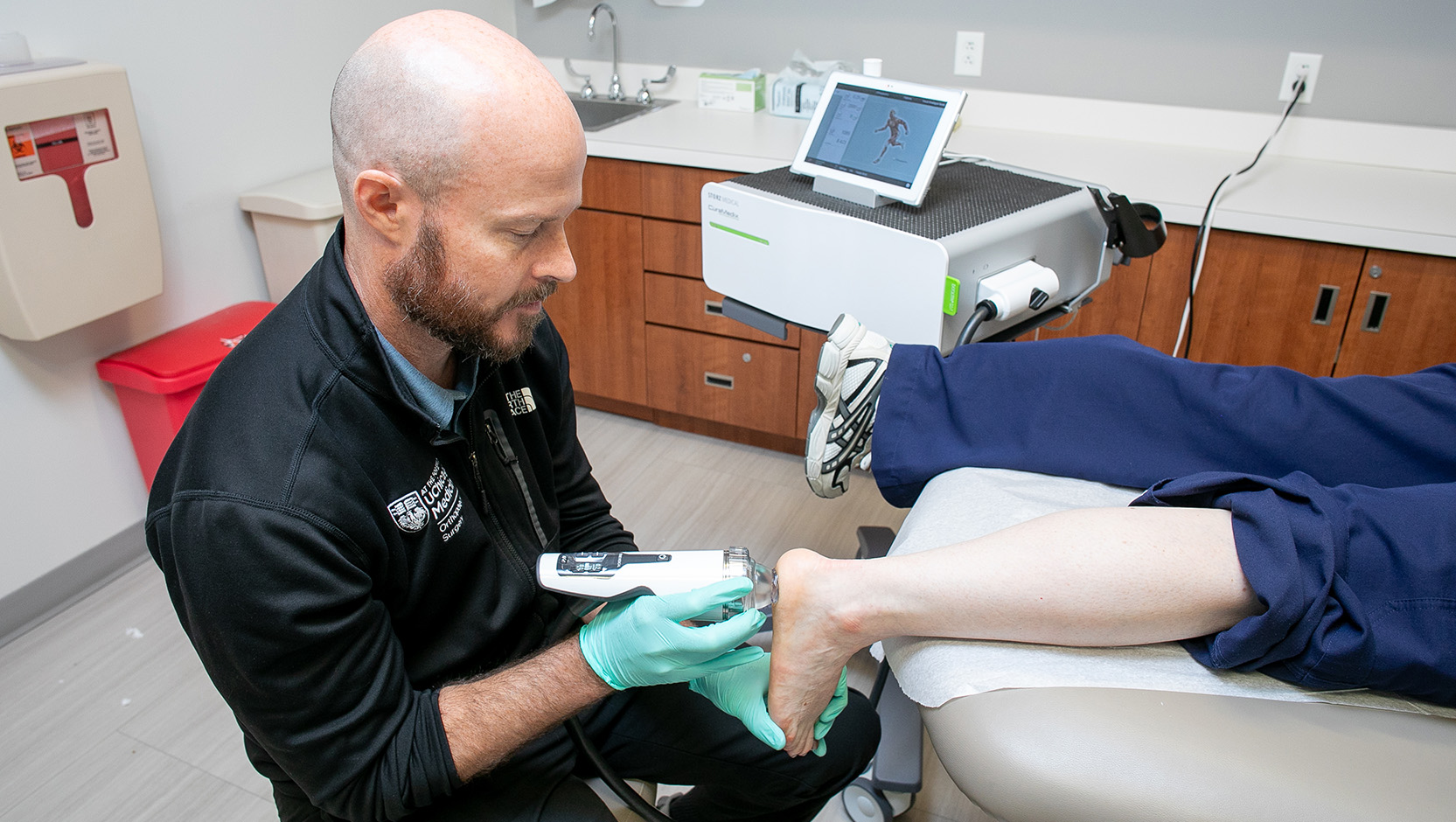
Shockwave therapy is a treatment that sends short bursts of sound energy through your skin and into an injured area of your body. The sound waves stimulate an inflammatory response, increase blood flow and help start the healing process.
Shockwave therapy is also called extracorporeal shockwave therapy or ESWT. "Extracorporeal" means outside the body. The sound waves are created by a handheld device and delivered through the skin — nothing goes inside your body.
How Does Shockwave Therapy Work?
- The energy from the sound waves reaches tendons and soft tissue that may have been stuck in a cycle of pain and poor healing.
- By stimulating that area, the treatment helps your body do what it is designed to do: repair itself.
- Think of it like a deep-tissue reset.
Each session takes about 15-20 minutes. A gel is applied to your skin (similar to an ultrasound), and a small device is moved over the sore area.
What Conditions Can Shockwave Therapy Treat?
Shockwave therapy works best for chronic soft tissue injuries — meaning pain that has lasted three months or longer and has not fully healed with rest or physical therapy. These injuries are especially common among runners, athletes and active adults.
Our orthopaedics team uses shockwave therapy to treat:
- Plantar fasciitis: pain along the bottom of the foot, near the heel
- Achilles tendinopathy: pain and stiffness in the tendon that connects your calf to your heel (the Achilles tendon)
- Patellar tendinopathy: sometimes called jumper's knee; pain just below the kneecap
- Rotator cuff tendinopathy: shoulder pain caused by irritation of the tendons that hold the shoulder joint in place
- Tennis elbow or golfer's elbow: pain on the outside or inside of the elbow from overuse
Other overuse injuries: chronic pain in tendons and soft tissue from repeated movement
Why Not Just Keep Doing Physical Therapy?
Shockwave therapy can make physical therapy more effective. Shockwave therapy is not a replacement for PT — it works alongside it.
- While PT is a great first step — or sometimes all you need for many injuries — some injuries need more advanced therapy to heal completely.
- Some injuries do not respond well to stretching and strengthening alone, especially when the tissue has been inflamed or irritated for a long time.
- With shockwave therapy, the sound waves help break the pain cycle and restart healing.
- Many patients do both.
Shockwave therapy is also a strong alternative for people who want to avoid:
- Cortisone (steroid) injections, which can weaken tissue over time
- Surgery and the recovery time that comes with it
Long-term reliance on pain medication
What to Expect at Your Shockwave Therapy Appointment
Getting started is simple. Here is how the process works:
- Consultation
- You will meet with a UChicago Medicine musculoskeletal specialist.
- They will review your symptoms, medical history and any imaging you have had.
- Together, you will decide if shockwave therapy is right for you.
- Your first treatment.
- Each session lasts about 15-20 minutes.
- The provider applies a gel to your skin, then moves the shockwave device over the sore area.
- A short series of sessions.
- Most patients have 3 to 6 sessions, spaced at least 1 week apart.
- Back to your routine.
- Your doctor may recommend modified daily activities after shockwave.
- After the treatment, you may experience temporary soreness, tenderness or swelling as shockwaves stimulate an inflammatory response
- Your care team will check in on your progress and adjust your plan as needed.
Is Shockwave Therapy Right for You?
Shockwave therapy may be a good fit if:
- You have had tendon or soft tissue pain for three months or longer.
- You have already tried physical therapy or rest with limited results.
- You want to avoid surgery or steroid injections.
- You are an active adult, runner or athlete looking to get back to movement faster.
It may not be right for everyone. Your UChicago Medicine specialist will look at your full health history, any imaging results and past treatments before recommending shockwave therapy.
If you are not sure whether this is right for you, the first step is a consultation. We will help you understand your options and build a plan that fits your life.