
'It's not possible, I'm only 48': One woman's colorectal cancer journey
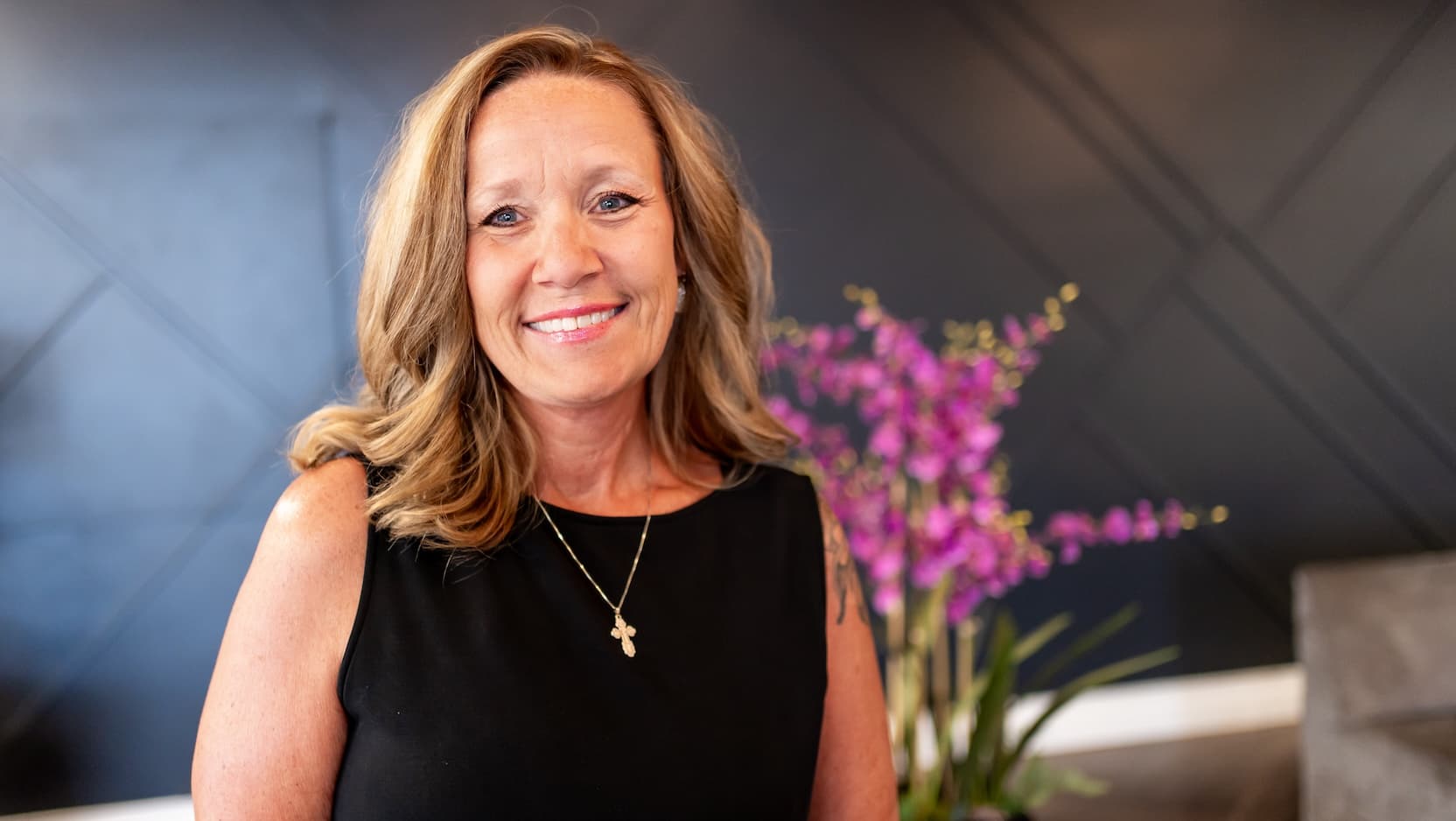
When Alena Knezevic noticed blood in her stool and swelling in her abdomen during a busy December in 2020, it was easy to brush off the symptoms.
The signs, she thought, could be a hemorrhoid from pregnancy or effects from a recent hysterectomy.
Knezevic was also busy raising three kids, running a cleaning business and dealing with the sudden loss of her mother, as well as her father’s esophageal cancer.
But after swelling appeared on the left side of her neck, her husband, Mile, insisted she get checked out.
A CT scan of her enlarged lymph nodes alarmed her emergency room care team at a local hospital.
“We were shocked,” said Knezevic, who lives in Cedar Lake, Indiana. “I remember the nurse telling us: ‘Get out of this rural area and find someone in the city to evaluate and treat you.’”
Colorectal cancer diagnosis in younger patients
At the University of Chicago Medicine, Knezevic underwent biopsies, imaging and a colonoscopy that revealed a Stage 4 adenocarcinoma — the most common type of colorectal cancer.
Adenocarcinoma starts in glandular cells lining the colon. It often begins as small growths called polyps that can turn cancerous over time.
Knezevic’s tumor, just a bit larger than a plum, had spread through her lymphatic system, causing the lumps in her neck.
“I said, ‘It’s not possible; I’m only 48,’” Knezevic said.
The diagnosis, while shocking, isn’t rare. Despite declines in older adults, colorectal cancer rates are rising in younger people.
The disease is now the leading cause of cancer-related death in people under 50, according to an analysis released this month by the American Cancer Society.
Doctors aren’t sure what is causing the shift.
While obesity and lifestyle factors may play a role, many younger patients do not have typical risk factors like family history or a genetic syndrome that might prompt early screening. (Federal guidelines recommend average-risk individuals get a colonoscopy starting at age 45.)
Potential signs of colorectal cancer include blood in the stool, abdominal pain or cramping, fatigue and unexplained weight loss. But these symptoms can be mistaken for less serious issues like hemorrhoids or digestive problems, so many people may not suspect cancer.
“With a lot of patients, it’s easy to attribute these symptoms to other causes instead of malignancy,” said Ardaman Shergill, MD, an oncologist at the UChicago Medicine Comprehensive Cancer Center.
Treatment can involve surgery to remove the tumor, as well as chemotherapy, targeted therapy, or immunotherapy, which harnesses the body’s immune system to fight cancer.
UChicago Medicine’s colorectal cancer specialists work as a multidisciplinary team to develop individualized plans tailored to each patient’s molecular profile, and to leverage innovative therapies and approaches to improve survival and quality of life.
These include options like hepatic arterial pump (HAI) therapy, histotripsy, intraoperative radiation therapy (IORT), stereotactic body radiation therapy (SBRT), liver transplant and clinical trials with new drugs and combinations.
‘I’m going to beat this’
Because Knezevic’s cancer had already spread, surgery was not an option. But genetic testing of the tumor showed characteristics that meant it could respond well to a combination of chemotherapy and targeted therapy.
In January 2021, Knezevic began weekly chemotherapy sessions at the UChicago Medicine Duchossois Center for Advanced Medicine in Hyde Park. She also managed biweekly at-home chemo infusions.
“COVID was still in full force," she said. "No one could come with me, and I started my chemo journey alone."
To support Knezevic emotionally and help ease her symptoms with medication, she was referred to the palliative care team. Palliative care doctors, available to all patients with cancer, specialize in managing symptoms caused by both the cancer and the treatment as patients undergo their intended therapies.
“I’m going to beat this,” Knezevic told them.
She made slow but steady progress with her multiple treatments and eventually had no evidence of disease on her scans.
“She went for a colonoscopy, and even her primary cancer was completely gone,” Shergill said. “She’s done exceptionally well.”
After 13 months of treatment, Knezevic rang the shiny chemo bell marking the end of her therapy.

Moving forward after colorectal cancer
Now 53, Knezevic lives life to the fullest. She returns to UChicago Medicine every three months for blood tests and scans.
Knezevic’s improved health has given her the energy to return to volunteering at her church in Merrillville and, after her work and family commitments, to lose herself in a good book.
She's lost the 100 pounds she gained during chemotherapy with the help of GLP-1 medication, which has improved her blood pressure and blood sugar levels.
Still, there are quieter moments. Knezevic recently found a bin of scarves she used to cover her head during chemo.
It made her think about what Shergill told her — that while she’s in remission now, there is always a risk of recurrence and she might have to manage the cancer again. She cried in her husband's arms, then threw out the scarves.
“It’s a journey that hasn’t stopped,” Knezevic said, who is grateful she sought care at UChicago Medicine. “You’re going to be scared, and that’s OK.
"You’re going to have bad days — but have it as a moment, get through it and then keep going.”

Ardaman Shergill, MD
Medical oncologist Ardaman Shergill, MD, specializes in providing comprehensive care to patients with all stages of gastrointestinal cancers, with expertise in treating pancreatobiliary and lower gastrointestinal cancers (appendix, colon, rectum, anal).
Learn more about Dr. Shergill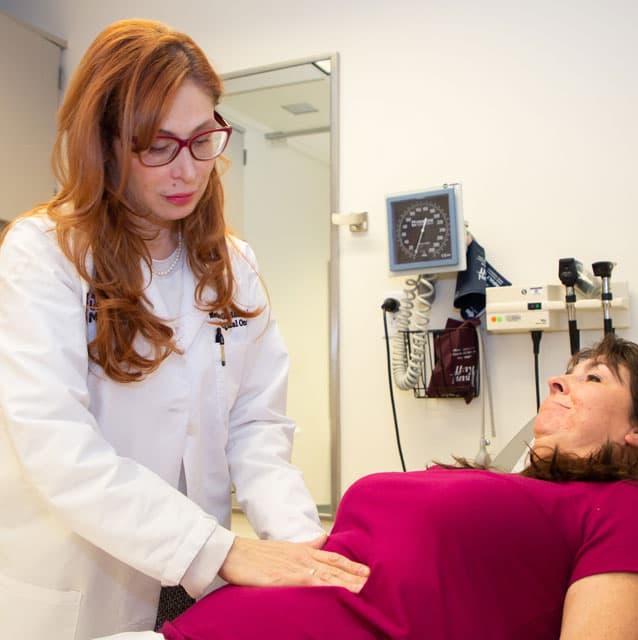
Colorectal Cancer Care
At UChicago Medicine, colorectal cancer care is delivered by a team of experts, including specialists in medical oncology, gastroenterology, colorectal surgery, radiation oncology, genetic counseling and more. Our patients receive holistic care that balances advanced, effective treatment with the goals of preserving bowel function and quality of life.
Learn About Our Colorectal Cancer Care