
Pressurized Intraperitoneal Aerosol Chemotherapy (PIPAC)
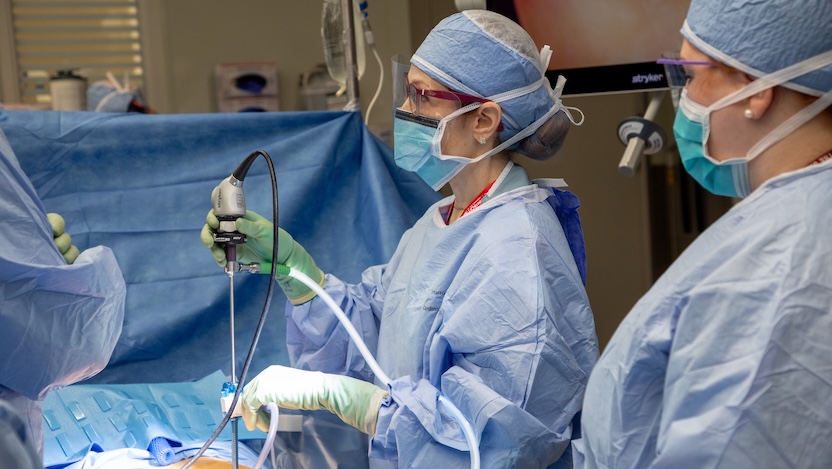
The University of Chicago Medicine is one of a few hospitals in the nation offering pressurized intraperitoneal aerosol chemotherapy (PIPAC). Part of our nationally recognized Regional Cancer Therapies Program, PIPAC is an advanced treatment option recommended for some patients with peritoneal cancers.
What is PIPAC?
PIPAC is a minimally invasive cancer treatment that delivers chemotherapy directly into your abdomen. You may be a candidate for PIPAC if you have certain types of peritoneal cancer, including metastatic cancer that has spread to the lining inside your abdomen (peritoneum). PIPAC is a palliative therapy, which aims to reduce cancer-related symptoms and improve quality of life, rather than cure cancer.
What are the benefits of PIPAC?
Benefits of PIPAC include:
- Better coverage and penetration of peritoneal tumors compared with traditional chemotherapy because cancer-fighting medicine is sprayed directly inside your abdomen.
- Fewer side effects than traditional chemotherapy because the medicine does not travel throughout your body.
- You typically go home within 24 hours of treatment.
What type of cancer is treatable with PIPAC?
You may be a candidate for PIPAC if you have certain cancers in the lining inside your abdomen (peritoneum). Types of cancers that may be treated with PIPAC include:
- Metastatic colorectal cancer
- Ovarian cancer
- Metastatic stomach cancer
- Metastatic appendix cancer
- Pseudomyxoma peritonei (PMP cancer), a rare type of cancer that spreads inside the abdomen
- Peritoneal mesothelioma, another rare cancer affecting the lining of the abdomen
We may recommend PIPAC if you are not a candidate for other treatments, such as:
- Cytoreductive surgery (CRS), a procedure to remove visible tumors from your peritoneum
- Hyperthermic intraperitoneal chemotherapy (HIPEC), which involves administering heated chemotherapy inside the abdomen after cytoreductive surgery
When is PIPAC not recommended?
Other treatments may be a better option for you if you:
- Are not a candidate for laparoscopic surgery or have extensive scar tissue in your abdomen
- Have cancer that blocks your bowel (intestines) or has spread to solid organs or outside the abdomen
If PIPAC is not an option for you, we may be able to suggest other treatments. Because UChicago Medicine is home to a National Cancer Institute-designated Comprehensive Cancer Center, we have an extensive list of clinical trials. Many of these trials provide access to treatments that are not available at most hospitals.
How does the PIPAC procedure work?
- First, we give you general anesthesia to put you to sleep.
- Then, your surgeon makes two small incisions in your abdomen.
- Your care team inserts a small, thin video camera (laparoscope) and a special device that converts chemotherapy into a fine aerosol spray.
- Your surgeon sprays this chemotherapy “mist” directly into your abdomen.
The entire process takes about two hours. After surgery, we will monitor you in our recovery room. Because PIPAC is an outpatient procedure, you’ll typically go home within 24 hours.
PIPAC can be repeated every six to eight weeks to control symptoms and tumor growth. You can have PIPAC while you continue traditional chemotherapy. Or you may have PIPAC as an alternative to traditional chemotherapy.
What are the side effects of PIPAC?
The most common side effects after PIPAC are:
- Pain in the abdomen
- Nausea
- Temporary elevation in liver enzymes
Severe side effects are rare, but can include:
- Bleeding inside the abdomen
- Serious infection (sepsis)
- Hole in the wall of the intestine (perforated bowel)
Meet Our PIPAC Physician Team
At the UChicago Medicine, our experts are leaders in PIPAC and peritoneal cancer treatment. We offer unmatched expertise and a commitment to advancing care for difficult-to-treat cancers.
Led by Mecker G. Möller, MD, our PIPAC team includes specialists from medical and surgical oncology, pathology, palliative care and other areas.
Select a specialty to learn more about our experts:



Request an Appointment
We are currently experiencing a high volume of inquiries, leading to delayed response times. For faster assistance, please call 1-855-702-8222 to schedule your appointment.
If you have symptoms of an urgent nature, please call your doctor or go to the emergency room immediately.
For Referring Physicians
To refer a patient for HIPEC, please call 1-855-702-8222.
* Indicates required field