
UChicago Medicine neurotrauma team saves the life of Northwest Indiana motorcyclist
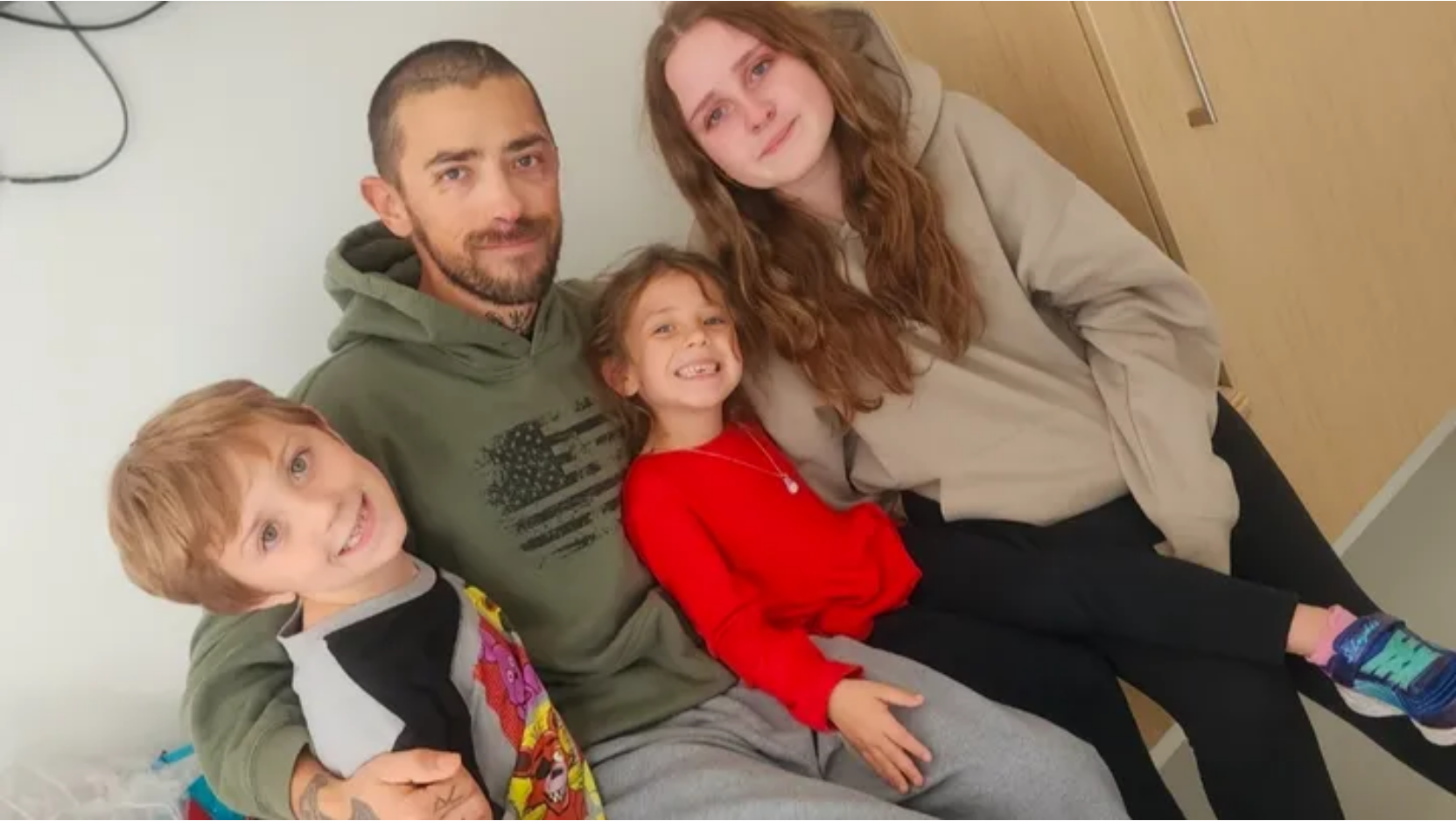
Vincent Kampstra was in critical condition last October when he arrived by helicopter at the University of Chicago Medicine's Level 1 Adult Trauma Center in Hyde Park.
His motorcycle was hit by a car going 40 mph near his home in Cedar Lake, Indiana. The collision sent Kampstra flying headfirst over the handlebars and onto the asphalt.
He suffered a severe traumatic brain injury with multiple brain bleeds and a massive midline shift — or, as Kampstra put it, “half of my brain completely smashed into the other half.”
Kampstra’s hemophilia complicated the situation. The bleeding disorder makes it hard to stop him from bleeding and requires highly specialized management during surgery.
Fortunately, UChicago Medicine’s neurotrauma intensive care unit (NeuroICU) was ready.
Expert care for neurotrauma
From the moment he arrived, Kampstra was treated by a highly coordinated team of neurocritical care physicians, neurosurgeons, advanced practice providers, nurses, pharmacists, respiratory therapists, rehabilitation specialists and dietitians.
“The volume and expertise we have in neurotrauma is unparalleled in the area,” said Ali Mansour, MD, a UChicago Medicine neurologist specializing in neurocritical care. “Not only do we have this unique expertise, but very high survival rates.”
Based in one of the Midwest's busiest trauma centers, the NeuroICU is equipped for complex neurologic emergencies like Kampstra's.
“This level of care was something that only could have been done at the University of Chicago Medicine,” said Sean P. Polster, MD, Kampstra's neurosurgeon.
Teamwork, prayer and vigilance
Following his brain surgery, Kampstra, who wasn’t wearing a helmet at the time of the accident, spent three days in a coma having a long conversation with God.
“I trusted and understood that this happened to make me a better person, a stronger man and to be with God,” said the 32-year-old father of four, who is engaged to be married. “He told me: ‘Your children and family need you.’”
Meanwhile, Kampstra’s NeuroICU team monitored him closely for seizures and hemophilia-related bleeding.
“This phase is where neurocritical care makes the greatest difference,” said Tracey Fan, DO, his attending neurocritical care physician. “It requires constant vigilance and a deeply specialized team.”
The two weeks after Kampstra awoke from his coma were tough. The accident injured the language center of his brain, causing pure expressive aphasia, a condition that left him unable to talk or write. He also had a broken jaw and couldn't open the left side of his mouth.
“It’s not that you don’t have control of your mouth, it’s like a baby who can’t find words to say,” said Fernando Goldenberg, MD, medical director of neuroscience critical care and the neurotrauma unit.
Finding his voice again
As he recovered in the NeuroICU, Kampstra managed to utter a single word — a curse word — amusing his family and the hospital staff.
A speech therapist helped Kampstra expand his vocabulary, and an occupational therapist worked with him to relearn how to do things like swallow and hold a cup and fork. His memory and speech quickly started to come back.
“Once he could hold a pen, he wrote nonstop. Once he could speak, he would talk nonstop,” said Camila Contreras Rojas, MD, a neurology resident who took care of Kampstra in the NeuroICU. “His fiancée would play hard-rock metal music and he would sing.”
Throughout his recovery, Kampstra expressed gratitude using the only words he could, repeatedly saying "God bless you” and “I love you” to the team — including Fan and neurologist Amy Espinal, MD.
“Vincent’s story really reflects the complexity of modern neurotrauma care and the level of coordinated, specialized support our unit is able to provide,” Fan said. “This kind of recovery is never the result of a single intervention; it’s a continuous, team-based effort.”
Dramatic recovery, new care options
After two weeks in the Center for Care and Discovery, Kampstra moved to a Chicago rehab center where therapists helped him fully restore his speech and mobility.
The improvement was drastic.
“For someone to go from the hospital, where he’s unable to speak a sentence, to come back to clinic and he can’t stop talking? That’s not what we normally see,” Mansour said.
To further support patients like Kampstra after they leave the hospital, UChicago Medicine recently launched a Neurotrauma Recovery Clinic, led by Mansour and neurologist Deborah Huang, MD.
Established in January 2026, the clinic provides multidisciplinary care for cognitive deficits, mood disorders, headache and other long-term effects that traumatic brain injury survivors may have.
‘I trust them with my life’
Three months after the accident, Kampstra returned to work as a mason laborer.
“The only thing the doctors want me to do now is be careful and wear a helmet when I ride a motorcycle," he said.
He suffered two seizures in early 2026, which Polster said is common after a severe brain injury. Still, it forced Kampstra to stop working for six months.
At Christmas, Kampstra returned to UChicago Medicine with gifts for the staff who helped him during those first critical weeks.
"I’ve been to a lot of different hospitals many times in my life, but the University of Chicago Medicine is the best I’ve ever been to,” he said. “They’re such amazing, loving people. I trust them with my life.”
Level 1 Adult Trauma Center
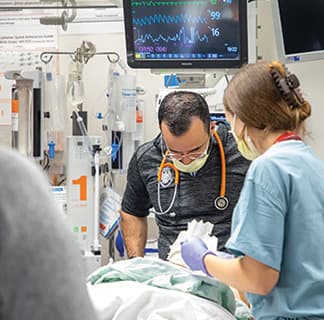
The University of Chicago Medicine is designated as a Level 1 Adult Trauma Center, meaning the hospital is prepared to handle the most seriously injured trauma patients 24 hours a day, seven days a week.
Learn more About our Trauma Care