
UChicago Medicine launches homegrown cell therapy for advanced solid tumors
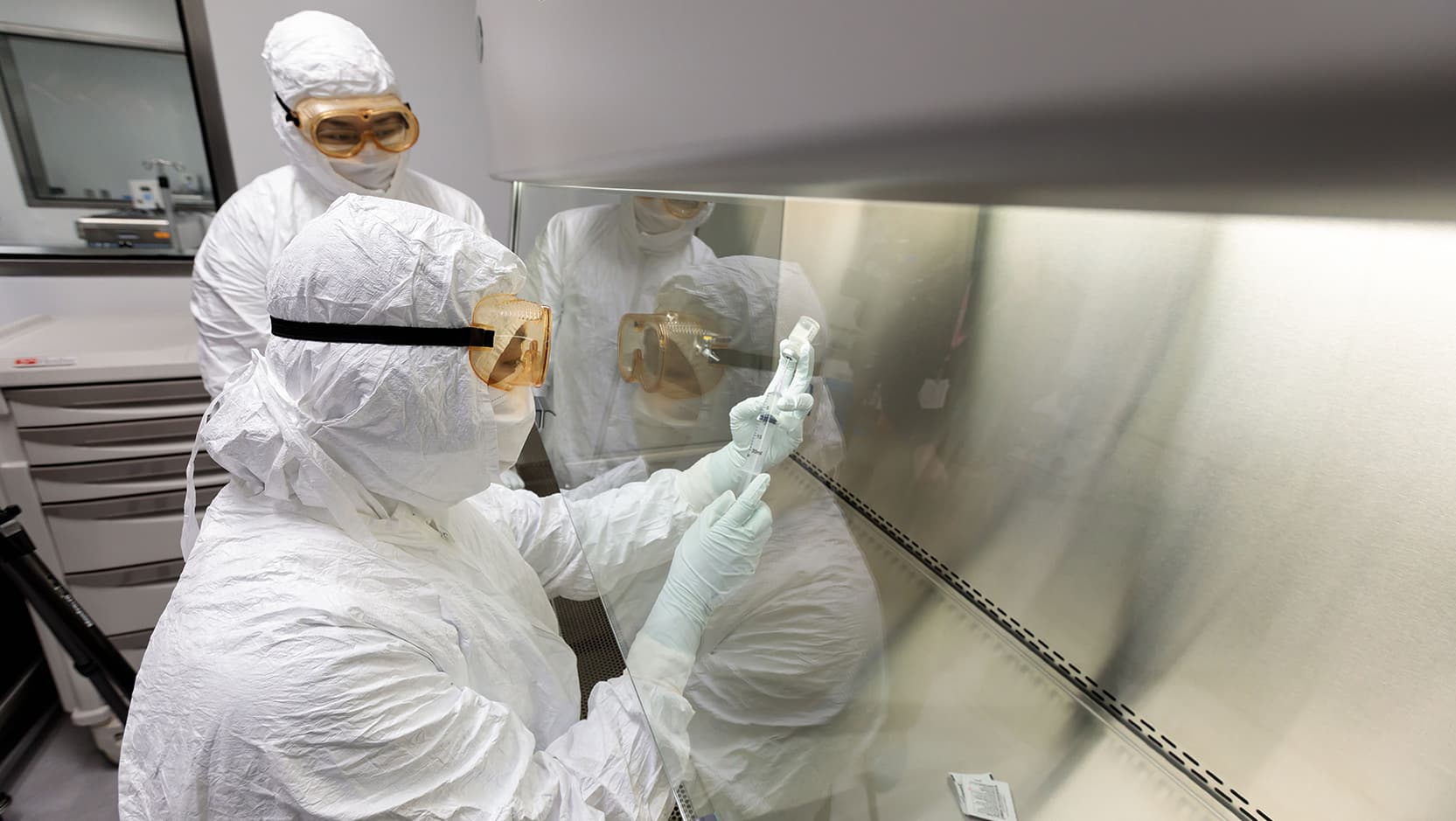
Cell therapies, or "living drugs," are made in special laboratory facilities to ensure they are safe for patients.
Researchers at UChicago Medicine have launched a first-of-its-kind clinical trial testing a new type of personalized cell therapy designed to help the body's own immune system recognize and destroy cancer cells. The study will evaluate the treatment's safety and early effectiveness in patients with metastatic ovarian cancer and several other advanced solid tumors.
Cell therapy is one of the most promising advances in cancer treatment. It involves collecting a patient's own immune cells, genetically reprogramming them in the laboratory to better recognize cancer, and then infusing them back into the patient. Once inside the body, these enhanced immune cells are designed to seek out and destroy cancer cells while leaving healthy tissue largely untouched. The approach has already transformed treatment for some blood cancers, and researchers are now working to bring those same benefits to patients with solid tumors.
Leaders in cell therapy
UChicago Medicine has been at the forefront of this field. It was among the first medical centers in the country to offer FDA-approved CAR T-cell therapy for adults and children with certain blood cancers and, more recently, became one of the first centers to provide tumor-infiltrating lymphocyte (TIL) therapy for advanced melanoma.
This new trial marks another major milestone. For the first time, UChicago Medicine researchers will design, manufacture and administer an experimental cell therapy entirely on campus, without relying on a pharmaceutical company to produce the cells.
The treatment also takes a different approach than existing CAR T-cell therapies. Instead of using engineered receptors that recognize proteins on the surface of cancer cells, the researchers are using specially engineered T-cell receptors, which allow immune cells to detect proteins hidden inside cancer cells. This greatly expands the number of cancers that may be targeted.
"We're using the same natural process the immune system relies on to fight infections, but we're redirecting it to attack cancer," said Richard Koya, MD, PhD, Professor of Obstetrics and Gynecology at UChicago Medicine, the scientific investigator who developed the treatment and designed the clinical trial based on many years of laboratory research. "Our goal is to create immune cells that can recognize cancer more effectively, survive longer and continue fighting the disease."
A novel approach
For the study, doctors will first collect a patient's white blood cells. Patients will then receive the chemotherapy drug decitabine, which increases production of a cancer protein called NY-ESO-1—a target found in many tumors but not in healthy adult tissues.
In the laboratory, researchers will genetically engineer the patient's immune cells with two important features. The first is a T-cell receptor that recognizes NY-ESO-1, helping the cells identify and attack cancer. The second is a genetic modification that blocks TGF-beta, a signaling molecule that normally suppresses immune responses and contributes to T-cell exhaustion inside tumors.
The enhanced immune cells will then be infused back into the patient through an intravenous line, similar to a blood transfusion. Patients will also receive a low dose of the immune-boosting drug interleukin-2 to help the engineered T cells multiply and remain active.
Researchers believe this combination could produce a stronger and longer-lasting immune response because it addresses one of the biggest challenges in treating solid tumors: the hostile environment that often weakens cancer-fighting immune cells before they can eliminate the tumor.
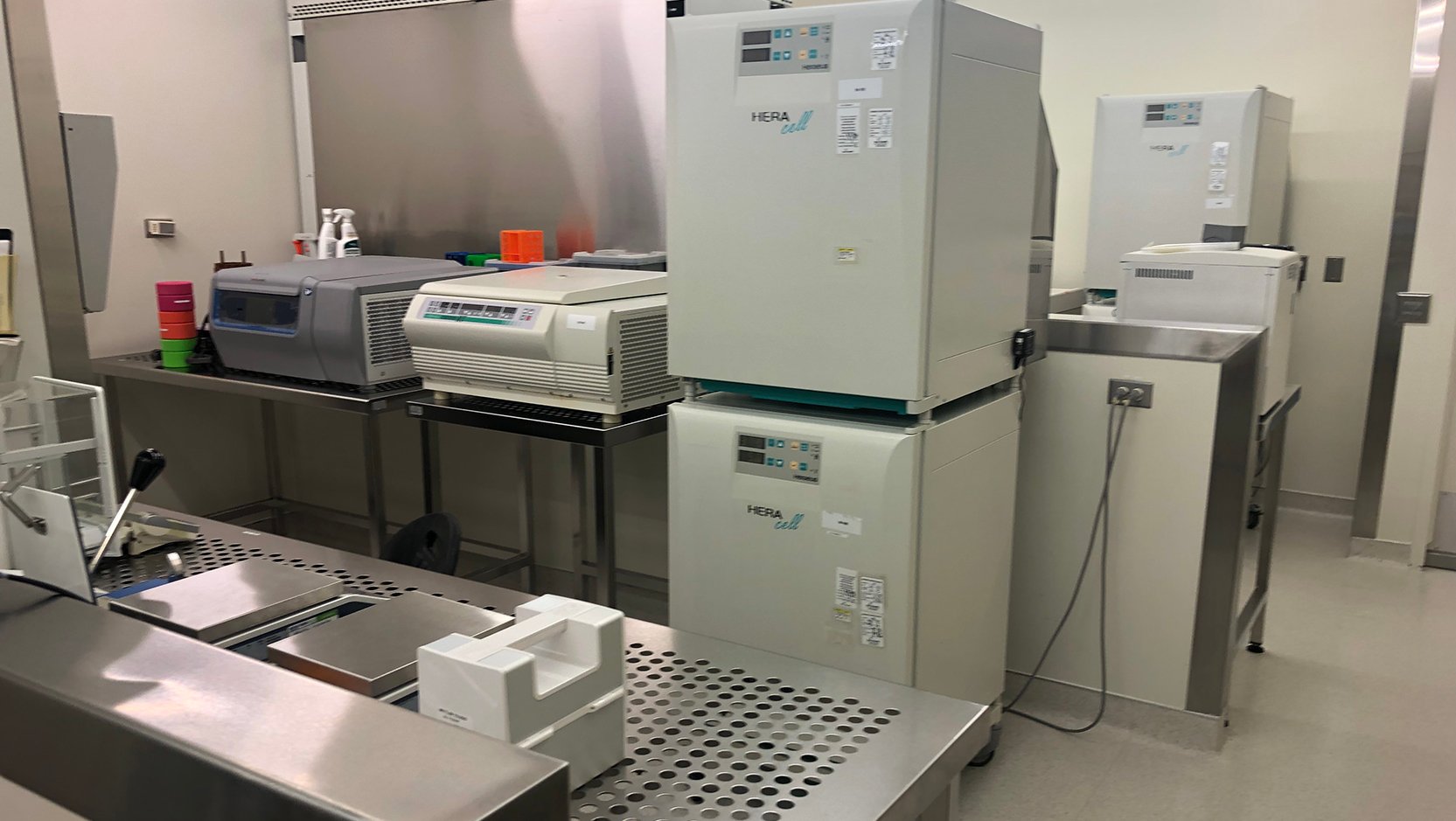
The Good Manufacturing Practices (GMP) facility is a highly specialized laboratory that meets strict federal standards for producing cell therapies.
Home-grown treatment
The clinical trial is unique in several important ways.
First, it is an investigator-initiated clinical trial, meaning the treatment was conceived of and developed by University of Chicago researchers rather than a pharmaceutical or biotechnology company. With one of the nation's largest cancer clinical trials programs, the UChicago Medicine Comprehensive Cancer Center has extensive experience translating laboratory discoveries into early-stage clinical studies.
Second, the engineered cells will be produced in UChicago Medicine's Good Manufacturing Practices (GMP) facility, a highly specialized laboratory that meets strict federal standards for producing cell therapies. Manufacturing the cells on-site allows researchers to oversee every step of the process while accelerating the translation of discoveries from the laboratory to patients.
"Very few academic medical centers have the ability to manufacture personalized cell therapies entirely on-site," Koya said. "This gives us tremendous flexibility to rapidly test new ideas and move promising treatments to patients."
Finally, the Phase 1/2A trial will evaluate the experimental therapy in a small group of patients with metastatic ovarian cancer, soft tissue sarcoma, bladder cancer, prostate cancer, breast cancer, melanoma or non-small cell lung cancer—all cancers that form solid tumors.
Unlike blood cancers, where CAR T-cell therapies have shown remarkable success, solid tumors have proven much more difficult to treat because they create an environment that suppresses immune cells. By engineering T cells to resist suppressive signals such as TGF-beta, researchers hope the cells will persist longer, develop lasting immune memory and continue attacking tumors over time. The investigators plan to infuse approximately one billion engineered T cells into each patient, with the goal of generating a powerful and durable immune response against cancers that currently have few effective treatment options.
Beginning in October 2026, screening for eligible patients will take place at UChicago Medicine locations in Hyde Park, New Lenox, Harvey, Flossmoor, Calumet City, Tinley Park and Crown Point, Indiana. Treatment will take place at the main campus in Hyde Park. UChicago Medicine oncologist Daniel Olson, MD, Assistant Professor of Medicine, is the clinical investigator overseeing the trial. Thinle Chodon, MD, PhD, research professor, is overseeing production of the engineered cells in UChicago Medicine's GMP facility.
UChicago Medicine and the Biological Sciences Division continue to be at the forefront of cancer care and research. In April 2027, UChicago Medicine will open the AbbVie Foundation Cancer Pavilion, Chicago’s first freestanding cancer pavilion, to bring advanced diagnostics, innovative treatments, translational discoveries, and comprehensive support to patients and the community.

Clinical Trials
We conduct more than a thousand clinical trials every year and can help you decide whether participating in a study is right for you.
Learn more about clinical trials.