Hepatic Artery Infusion (HAI) Pump Chemotherapy
What is hepatic artery infusion (HAI)?
Hepatic artery infusion (also called hepatic arterial infusion pump chemotherapy, or HAI) is an innovative treatment for patients with certain metastatic colorectal and bile duct cancers that affect the liver. It’s a powerful tool for doctors to use to treat liver tumors and to further customize treatment plans.
With the help of an implantable pump, HAI delivers high doses of chemotherapy directly to the liver. It shrinks tumors with fewer side effects than traditional chemotherapy given through a vein.
An Innovative Treatment from a Leading Cancer Center
The University of Chicago Medicine is home to a National Cancer Institute-designated Comprehensive Cancer Center, where patients have access to HAI as well as other innovative treatments and clinical trials that are not widely available at other hospitals.
The University of Chicago Medicine is among a select number of hospitals in the country to offer this advanced treatment. HAI is part of our highly respected, team-based Regional Cancer Therapies Program.
Hepatic Artery Infusion Pump: What to Expect
Understanding key facts can help you feel ready and informed for your HAI treatment journey. If you have more questions, your care team is available to support you.
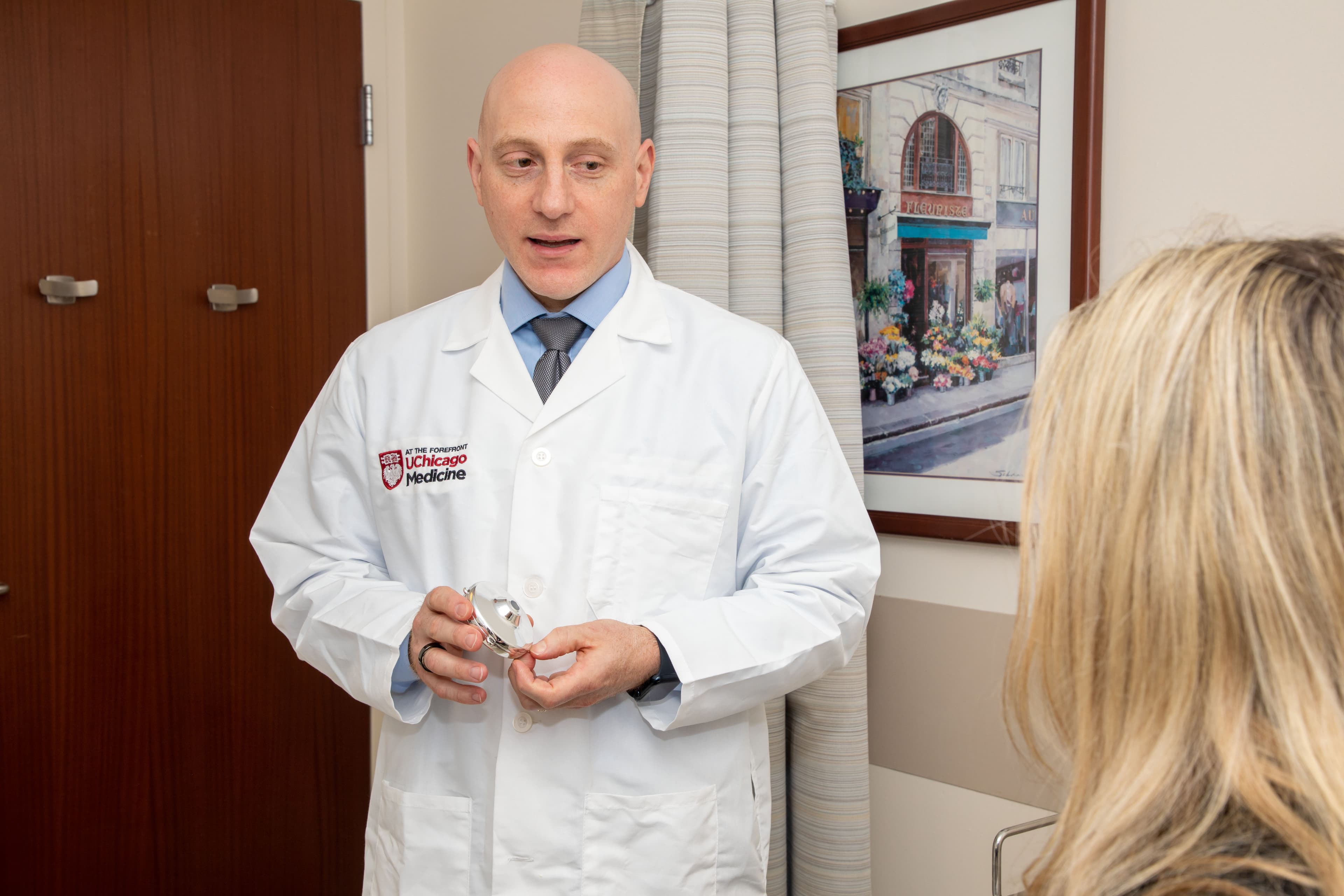
HAI is a type of regional chemotherapy made possible when a cancer surgeon places a wireless, metal pump inside the abdominal wall. About the size of a hockey puck, the pump is similar to a chemotherapy port.
This device pumps chemotherapy directly to the liver through a small tube (catheter) placed in a blood vessel connected to the hepatic artery, the blood vessel that goes into the liver.
HAI pumps, which are approved by the U.S. Food and Drug Administration, are available at UChicago Medicine for adults with certain types of cancers. You may be eligible if you have:
- Colorectal cancer that has spread (metastasized) to the liver only or has spread to the liver and only a few other sites
- Bile duct cancer that starts in the liver (intrahepatic cholangiocarcinoma)
This treatment may not be an option for you if your cancer has spread to several sites beyond the liver or if you are not healthy enough for surgery. If you are not a candidate for HAI, we also offer other life-extending treatments to people with stage 4 cancers through our Limited Metastatic Cancer Program.
These high doses of medication remain in the liver, as opposed to circulating through the body as in traditional chemotherapy. This approach reduces side effects of treatment, which can improve the quality of life for patients who may or may not yet be candidates for surgery.
For patients with metastatic colorectal cancer with liver tumors that can be removed surgically, research suggests HAI can reduce their risk of recurrence (having the liver tumors come back) and help them live longer.
For many who are not yet candidates for surgery to remove liver tumors, HAI can help control or even shrink tumors so they can have surgery.
If you are a candidate for HAI, you may receive the pump at the same time you have your liver tumors removed during a surgery called a resection. In some cases, you may just have a pump placed if your tumors are unable to be removed with surgery.
At UChicago Medicine, we can place many HAI pumps using minimally invasive, robotic-assisted surgery. Robotic techniques lead to a shorter hospital stay and a faster recovery than traditional surgery.
During the procedure, your surgeon will make a few small incisions on your abdomen. Then, we use a small video camera and highly precise robotic instruments to place a pump inside your abdominal wall, usually on the left side. You will also have a catheter placed in a blood vessel connected to your hepatic artery. This tube delivers the chemotherapy from the pump to your liver.
Placing the pump itself usually takes about two to three hours, but your surgery will take longer if you are also having tumors removed from your liver. After robotic HAI placement, many people can go home the next day, compared with three to five days after traditional surgery.
The potential complications of surgery to place the pump vary depending on what other procedures, such as a resection to remove the liver tumors, you may have at the time of pump placement. Having HAI surgery performed by an experienced cancer surgeon, like our team at UChicago Medicine, can reduce these risks.
Although complications associated with HAI pump are uncommon, they may include:
- Infections or bleeding near the pump
- Narrowing of the bile duct
- Injury to the hepatic artery
Our multidisciplinary team developed protocols to reduce these risks before, during and after surgery. Interventional radiologists will perform advanced imaging tests to check that your pump works correctly. Our medical oncologists and oncology pharmacists have processes to help ensure your pump delivers the right amount of chemotherapy to your liver. You will also have regular liver function tests so we can adjust the dose to optimize treatment and minimize the risks.
You can still safely travel on airplanes with an HAI pump.
You may receive chemotherapy through the pump for four to six months. During your treatment, you’ll need to visit the medical center every two weeks to have your pump refilled, which is also usually accompanied by lab tests and IV chemotherapy.
Refilling the pump takes about 10 minutes. A needle is used to drain the pump and refill it, but the needle does not stay in your abdomen (unlike a chemo port on the chest).
When it’s time to have the pump removed, you will visit the medical center for an outpatient procedure performed by your cancer surgeon under local anesthesia. The catheter will remain permanently in the blood vessel connected to your hepatic artery.
An Innovator in Hepatic Artery Infusion Research
At UChicago Medicine, our team is conducting a clinical trial of HAI for patients with metastatic colorectal cancer that has spread to the liver but who are not candidates for surgery. We also plan to study other chemotherapy drugs to use with the pump as well as other types of patients who might benefit from this treatment.
UChicago Medicine is also part of an international consortium of academic medical centers studying survival, quality of life and other outcomes for patients who have been treated with HAI. Through this collaborative effort, we aim to make HAI as safe and effective as possible and more widely available to patients who could benefit.