
Two hearts united: Couple navigates aortic stenosis, TAVR treatment together
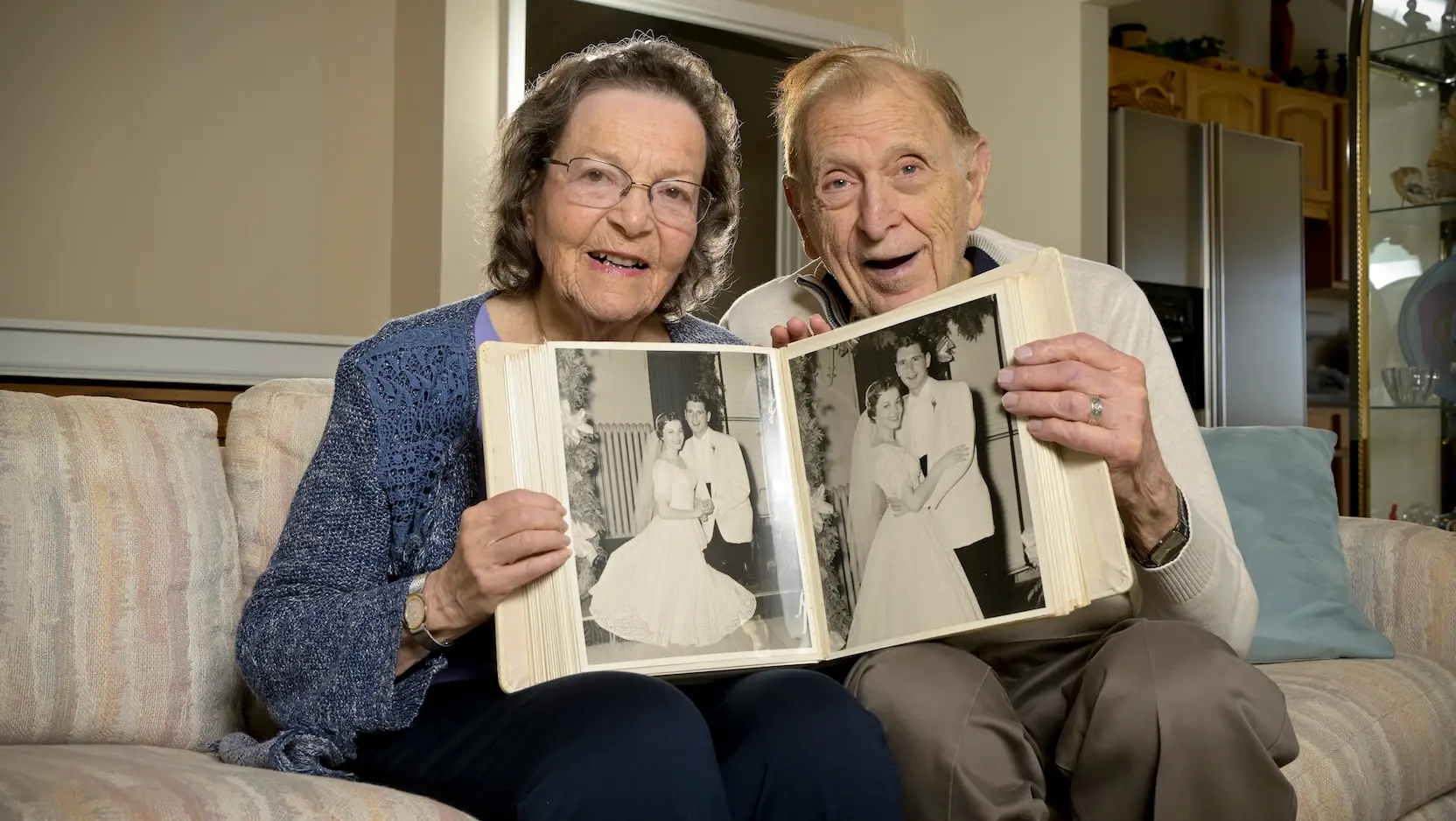
Ask Gerald Kirschenbaum the secret to his 71-year marriage and he laughs.
“We rarely agree on anything,” said Gerald, 92, who first met his wife, Marian, in 1952 on a blind date in Chicago. “But we eventually do, and that's the good part.”
The Tinley Park spouses recently made a smart decision together: seeing Sandeep Nathan, MD, MSc, an interventional cardiologist at the University of Chicago Medicine Heart & Vascular Center.
Over separate visits, Gerald and Marian were diagnosed with aortic stenosis — which occurs when the heart’s aortic valve narrows, restricting blood flow to the rest of the body. This makes the heart work harder, and it can lead to heart failure and death if left untreated.
Nathan recommended transcatheter aortic valve replacement, or TAVR, for the Kirschenbaums.
“It’s rare to treat a couple for the same condition and perform the same procedure,” Nathan said.
TAVR is a minimally-invasive option for patients seeking alternatives for traditional aortic replacement surgery, including people who are considered too high-risk for surgery.
Instead of opening the chest, surgeons carefully guide a small catheter through an artery in the groin up to the heart. The new valve — made from animal tissue — is positioned to replace the aortic valve and increase blood flow throughout the body.
Symptoms of aortic stenosis
Marian first experienced signs of heart trouble in 2021 when she would feel tired and out of breath after just a few minutes of playing tennis.
“I’d fight through it, and it would go away,” said Marian, 91.
Aortic stenosis can develop silently, and symptoms may not appear until the condition has worsened. Signs may include:
- Chest pain
- Fluttering heartbeat
- Shortness of breath
- Feeling dizzy or lightheaded
- Decline in activity level
Marian’s struggles persisted. Even climbing a flight of stairs left her breathless.
A cardiologist discovered that Marian’s aortic valve had narrowed by 50% and diagnosed her with severe aortic stenosis. An oncologist who treated her for breast cancer in 2015 recommended seeing Nathan at UChicago Medicine.
More than 1 in 10 adults over age 75 have aortic stenosis, according to the American Heart Association. Still, many don’t assume their health issues could mean heart trouble.
“I think the natural inclination for many older patients and physicians is to write off symptoms as age-related or related to other medical problems older patients have,” Nathan said.
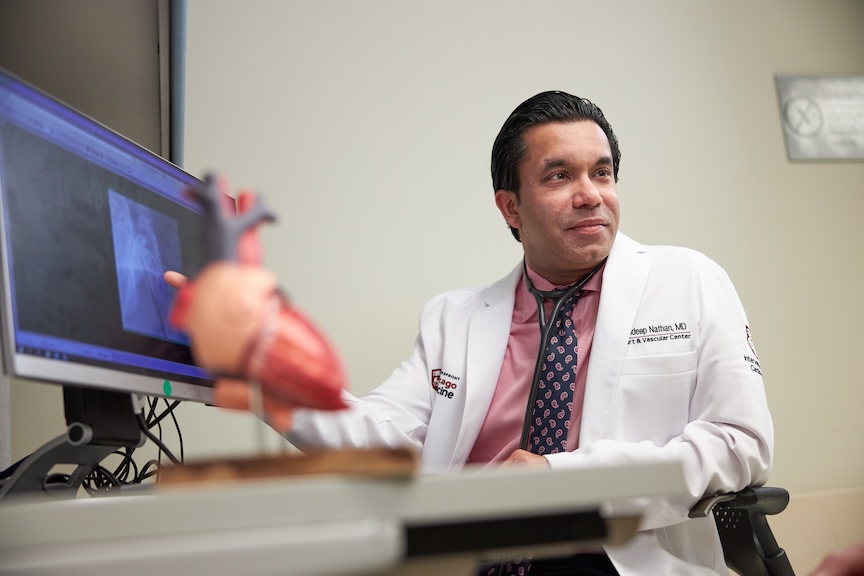
It can also take longer to recognize symptoms of aortic stenosis in people who become less active as a result of their condition. That’s because patients often subconsciously decrease their level of activity to avoid having symptoms like breathlessness, Nathan added.
Regular checkups and conversations with a doctor — who may recommend an echocardiogram to get images of the heart — can help diagnose and treat aortic stenosis earlier.
Minimally invasive surgery for better heart function
UChicago Medicine’s Heart & Vascular Center specializes in TAVR for the most medically complex patients, including those seeking bloodless TAVR surgery who have been turned down by other hospitals.
Marian’s case posed several challenges because of her smaller, twisty arteries.
“We had to carefully map out the course we were going to take to deliver the device safely without traumatizing or puncturing the blood vessels,” said Nathan, who opted for a self-expanding valve that would automatically deploy once positioned.
“Sometimes, it takes a couple of attempts, but in Marian's case it was deployed in the right location the very first time.”
Marian spent one night in the hospital, followed by eight weeks of outpatient rehabilitation. She was prescribed blood pressure medication, a common step for new TAVR recipients, and has since resumed her old routine.
“I could drive within a week after the procedure,” Marian said. “I built up my muscle strength and I played golf the following summer.”
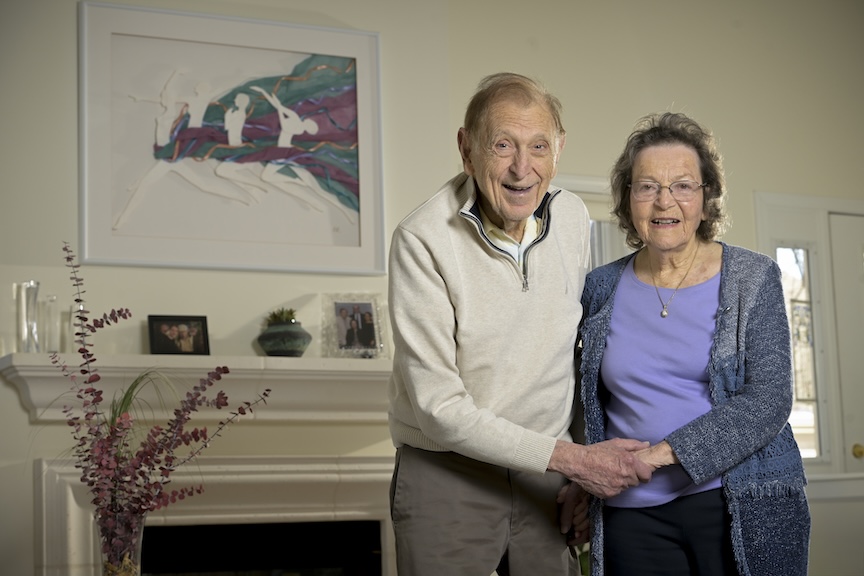
Reduced activity can mask aortic stenosis symptoms
A few years after Marian’s TAVR procedure, Gerald was also diagnosed with aortic stenosis.
“He waits until the last minute before he'll go to the doctor,” Marian said, with a gentle scoff.
She booked him an appointment with Nathan.
Gerald’s clinical evaluation included an angiogram to ensure grafts he had implanted during a 2009 heart bypass were still functioning. They were, and Nathan performed a successful TAVR procedure on Gerald in April 2024. He spent one night recovering and went home the next day.
“That's the thing about me — if they recommend it, I say go ahead and do it,” said Gerald, who hopes to join his wife this summer on the golf course. “I understood what was going to happen, and it was like no big deal.”
Their advice for other adults who suspect signs of aortic stenosis? Agree to get help right away.
“Don't procrastinate,” Marian said. “Go to the doctor and get it checked out.”
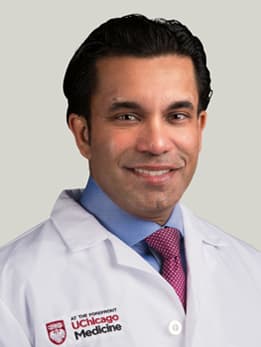
Sandeep Nathan, MD
Dr. Sandeep Nathan is a highly skilled cardiologist who specializes in interventional cardiovascular procedures.
Learn more about Dr. NathanHeart and Vascular Center
From advanced diagnostic technology to minimally invasive treatments and robotic surgery, the University of Chicago Medicine can provide the full scope of care for any type of heart or vascular disorder in adults and children.
Explore our Heart and Vascular Center