
UChicago Medicine invests $1.1 billion in community benefits for fiscal 2025
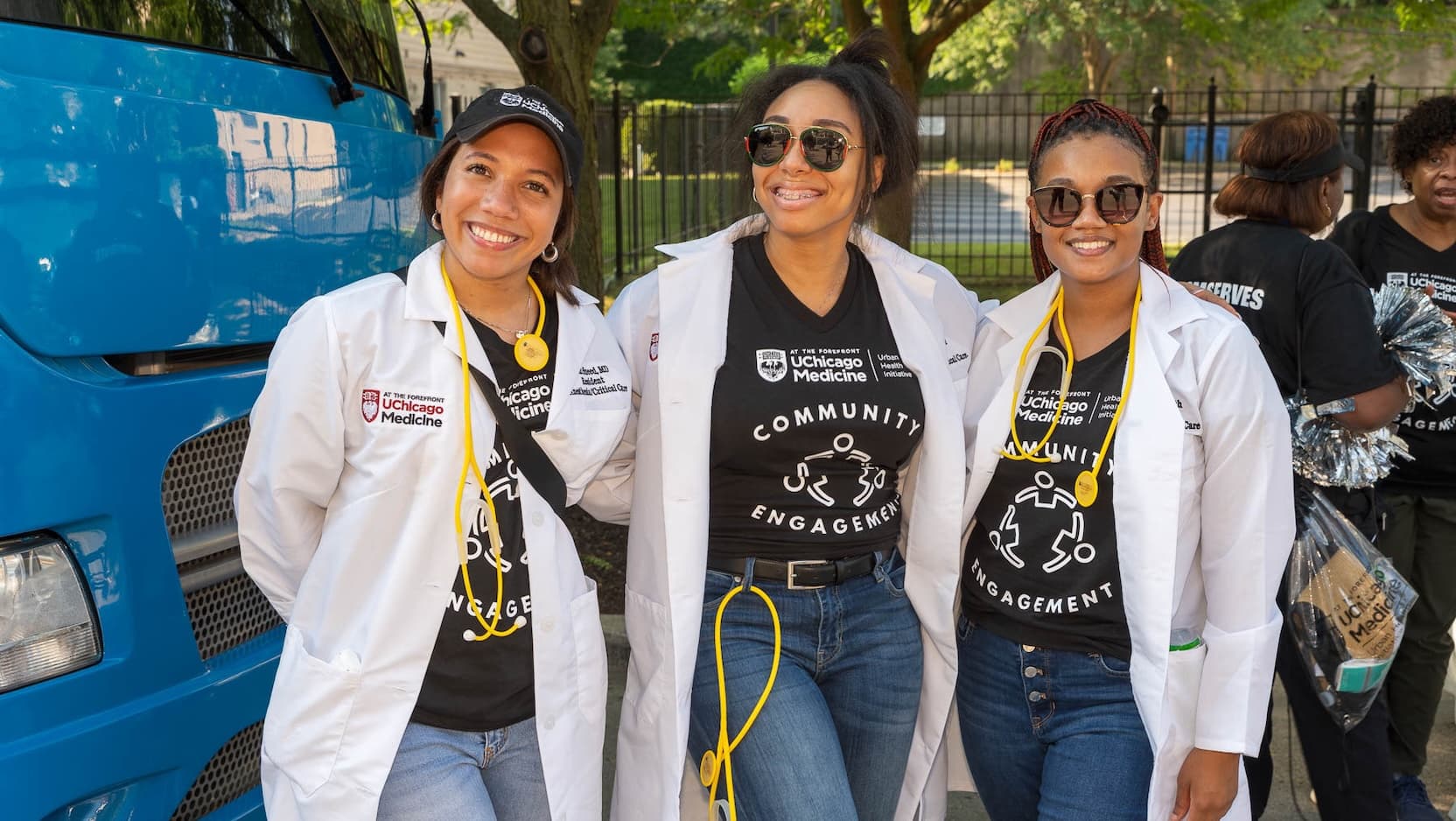
The University of Chicago Medicine invested $1.1 billion in community benefits in fiscal 2025 across its service areas, according to the academic health system's newly released Community Benefit Report.
The investment supports care for patients and community health programming for residents across UChicago Medicine's service areas — including $939.6 million in uncompensated care for patients covered by Medicare, Medicaid and those who could not afford to pay for their care — along with medical research, health professions' education, and community-based programs advancing health across Chicago's South Side, the south suburbs and Northwest Indiana.
The fiscal 2025 total represents a 54% increase over the $715 million reported in fiscal 2024. The increase is driven primarily by higher uncompensated care costs, including higher Medicare and Medicaid program losses and higher unrecoverable patient debt, along with UChicago Medicine Crown Point's first full year of operations in Northwest Indiana.
“Reducing health disparities requires more than delivering care — it requires investment in the research, training and partnerships that address the social and economic conditions that shape health,” said Mark Anderson, MD, PhD, Executive Vice President for Medical Affairs at the University of Chicago. “Our community benefit work reflects that long-term commitment.”
The University of Chicago Medical Center, which anchors the health system on Chicago's South Side, reported $971.4 million in community benefit investments. UChicago Medicine Ingalls Memorial contributed $124.5 million in Harvey and the south suburbs. Both hospitals are formally designated as safety net hospitals, recognizing their role in caring for patients with the greatest financial and social barriers to health.
UChicago Medicine Crown Point contributed $15.2 million in community benefits in Northwest Indiana during its first full year of operations.
“As our health system continues to grow, so does our responsibility and opportunity to improve health and expand access across our service areas,” said Tom Jackiewicz, President of the University of Chicago Health System. “Community benefit is more than a measure of dollars invested — it's a shared commitment with our neighbors to build healthier, stronger communities.”
Community-guided priorities
Community benefit investments are shaped by Community Health Needs Assessments (CHNAs), which are published every three years and developed with residents, community partners and public health data to identify the health issues that matter most to the people who live there. The 2024–2025 CHNAs for the South Side and south suburbs identify priorities including preventing and managing chronic diseases, building trauma resiliency, and addressing the social drivers of health such as food access, housing and workforce development. A CHNA for Northwest Indiana will be published in June 2026.
Community benefit work is directed by UChicago Medicine's Urban Health Initiative and supported by Community Advisory Councils composed of civic, faith and community leaders who volunteer their time and expertise.
“Health equity is built through relationships — with patients, with partners, with the communities whose voices guide our priorities,” said Catina Latham, PhD, UChicago Medicine’s Senior Vice President and Chief Community Health Transformation Officer. “This report highlights what's possible when trust, partnership and sustained investment come together to change lives.”
Programs reaching people where they are
Highlights from fiscal 2025 include:
- Violence Recovery Program: Violence recovery specialists engaged 1,830 patients across 4,129 encounters in fiscal 2025, connecting 79% of those with documented needs to essential services including housing, food, mental health counseling and legal help. Through the Bears CARES partnership, the program also facilitated game-day experiences for gun violence survivors during preseason and home opener games, supporting emotional recovery outside the hospital. Since 2018, the Violence Recovery Program has supported nearly 12,000 patients.
- Recovery Legal Care: A bedside legal support program for victims of violence, Recovery Legal Care has helped nearly 700 patients access crime victim compensation and legal resources, securing more than $640,000 in financial support.
- Medical Home & Specialty Care Connection: The program marked its 20th anniversary and expanded to Ingalls Memorial in July 2025. In fiscal 2025, its Patient Advocates connected with patients 8,351 times — a 60% increase over the prior year. Research shows participating patients visit the emergency department 45% less often for minor medical needs.
- Community Grand Rounds: UChicago Medicine's Center for Community Health & Vitality marked 15 years of Community Grand Rounds, which brings research and clinical knowledge into community settings with topics selected by community members. In fiscal 2025, the program convened seven sessions reaching 416 participants across four community partner organizations.
- Food access: Feed1st served 34,161 people from 12,251 families across 11 South Side pantry sites, distributing more than 71,000 pounds of food. Ingalls Memorial's Complimentary Nutrition Stations served 2,450 people and distributed 20,650 pounds of food across the south suburbs.
- Workforce development: 32% of new hires across the health system reside in the communities UChicago Medicine serves. The Certified Nursing Assistant Pathway Program placed 89% of fiscal 2025 graduates into full-time positions and expanded this year from the Medical Center to Ingalls Memorial.
- Local economic impact: UChicago Medicine awarded $66.4 million in construction contracts to local and community firms — a 21% increase over fiscal 2024 — and paid $10.2 million in wages to local construction workers, more than double the prior year's total.
- AbbVie Foundation Cancer Pavilion: Construction continued on Illinois' first freestanding cancer facility, scheduled to open in April 2027. The pavilion will expand prevention, screening, treatment and research capacity for South Side residents, where cancer is the second-leading cause of death and about half of patients currently leave the area to access care.
Read the Fiscal 2025 Community Benefit Report at https://uchicagomedicine.org/community-benefit.