
‘You can have hope’: New late-stage pancreatic cancer drug shows promise for Naperville mom

Kerrie Watson is among the first UChicago Medicine patients to take daraxonrasib, a new drug for advanced metastatic pancreatic cancer.
After her 10-year marriage ended, Kerrie Watson was finding joy again.
She completed the Napa Valley Marathon in March 2025 and moved into a new apartment in Naperville with her children, even carrying some heavy furniture by herself.
“I was in the best shape of my life,” said Watson, who was 46 at the time. “I felt like I was Wonder Woman.”
That summer, Watson started having stomach pains. She figured it was her appendix, but a CT scan unveiled something unthinkable: a tumor on her pancreas.
Follow-up imaging and a biopsy in August 2025 confirmed Watson had stage 4 pancreatic cancer. The disease had spread to her liver.
Watson’s doctors told her she had a year to live, and that nothing could be done. Treatment would only buy her a little more time.
“I was completely devastated,” Watson said, tearing up as she recalled the conversation. “I thought: ‘I have a 10- and 15-year-old. I can’t leave them.’”
How clinical trials can help pancreatic cancer patients
Pancreatic cancer is among the deadliest and most difficult cancers to treat, partly because it often causes no symptoms until it has spread. The five-year survival rate for stage 4 pancreatic cancer is 3%.
Watson began researching her options. Seeing the low odds of survival with standard treatments, she explored what else she could do and discovered clinical trials.
Clinical trials are structured research studies involving patients. They’re designed to safely test new drugs, devices or new ways of using known treatments.
“I didn't know much about clinical trials, but I felt like it was my only hope,” Watson said.
Watson's first oncologist analyzed her tumor's genes using a method called next-generation sequencing — a technology that helps identify specific changes or mutations so doctors can recommend treatments that are more likely to work for a particular cancer.
She was then referred to Ardaman Shergill, MD, an oncologist at the UChicago Medicine Comprehensive Cancer Center, which is nationally known for its leading-edge clinical trials offering more options for diseases like pancreatic cancer.
Joining a clinical trial for pancreatic cancer
Watson’s first clinical trial at UChicago Medicine combined standard chemotherapy (mFOLFIRINOX, the most aggressive regimen for pancreatic cancer) with a new drug targeting a gene alteration found in her specific cancer called MTAP deletion.
She responded well at first, Shergill said, but side effects forced changes to her chemotherapy, and the treatment eventually stopped working.
During that time, data from the phase III RASolute 302 clinical trial was showing the drug daraxonrasib significantly improved survival and slowed cancer growth in certain pancreatic cancer patients.
Shergill was ready to change course. “We are always trying to think one step ahead when treating patients with metastatic cancer to line up the next option,” she said, adding that daraxonrasib was “the right, next choice for Ms. Watson.”
Watson then joined that clinical trial.
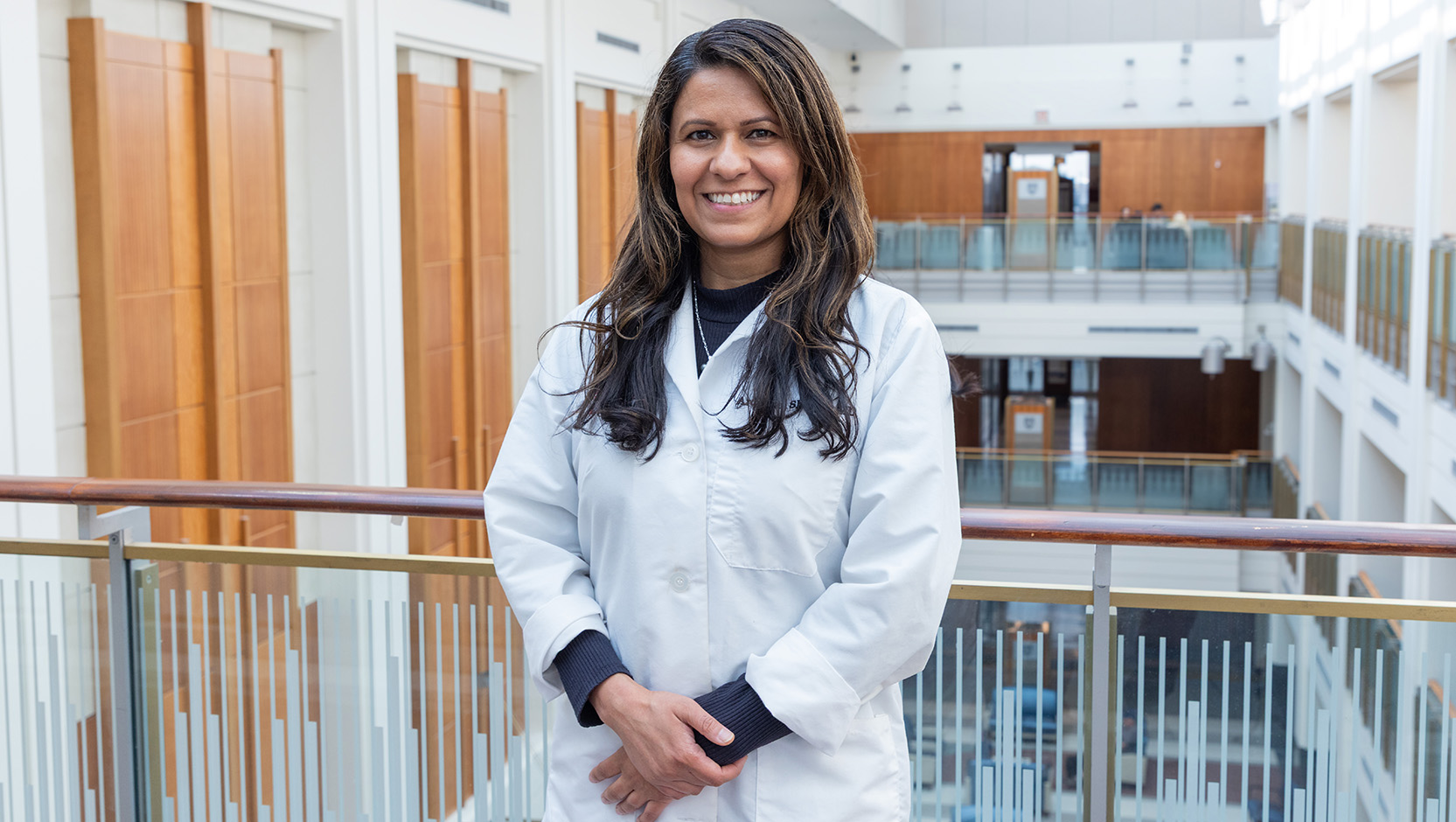 UChicago Medicine oncologist Ardaman Shergill, MD (Jordan Porter-Woodruff)
'Very promising' treatment for pancreatic cancer
Shergill, who led the RASolute 302 study at UChicago Medicine, said daraxonrasib has revolutionized the potential for care.
“The results with this drug are very promising, doubling the median survival time for most patients with pancreatic cancer compared to standard second-line chemotherapy,” Shergill said.
Daraxonrasib, taken as three pills once a day, was approved by the U.S. Food and Drug Administration on Aug. 26. It is a KRAS inhibitor that can turn off the signal that tells cancer cells to keep growing.
Shergill and her UChicago Medicine colleagues have already requested daraxonrasib for more than 30 patients.
Watson started on daraxonrasib in late July 2026. She feels well, with only some skin rashes, a common side effect.
She continues to live a normal life — raising her kids, working full-time as a vice president of operations for a therapy company and staying active, even going dancing with friends.
New early-onset pancreatic cancer clinic in the works
Pancreatic cancer is rare in people under age 50 (early-onset); the median age of diagnosis is 71. However, in recent years, the number of early-onset pancreatic and other gastrointestinal (GI) cancers has been increasing.
To help affected people live longer and better, Shergill and her colleagues are working to launch an early-onset GI cancers program at UChicago Medicine.
The goal: to study what's causing the rise in cases and find ways to guide treatment options, support during care, early detection, risk reduction and long-term survivorship.
“There is a lot to learn and a lot of work to do still — it takes a village and lots of resources,” Shergill said, adding she is proud of her team and hospital leadership for supporting the effort.
The program will be part of the AbbVie Foundation Cancer Pavilion, the first freestanding facility in Illinois dedicated to cancer care and research. The pavilion is set to open in April 2027.
Meanwhile, Shergill and her UChicago Medicine colleagues are monitoring other pancreatic cancer drugs in development.
“Daraxonrasib is just the beginning, and it has opened many new avenues of research,” Shergill said. “It is definitely a very big step in the right direction.”
 Watson: “I’m not going to lay in bed and feel sorry for myself.”
Keeping a positive mindset with pancreatic cancer
As she continues to take daraxonrasib, Watson is staying positive.
“I have my moments where I just cry, but I’m not going to lay in bed and feel sorry for myself,” she said. “When you read stuff on the internet, it always says, ‘Oh, it’s terminal. You won’t live.’ And I just don’t believe that. I think your mind can control a lot and help heal your body. You can have hope.”
Watson, now 47, values the support from her friends, family and UChicago Medicine care team.
“When Cindy Savaiano, the oncology nurse navigator, first gave me daraxonrasib, she told me this was the happiest day because they know how badly I want to beat this cancer,” Watson said.
“Doctors at other hospitals were like, ‘Yeah, well, you have stage 4 pancreatic cancer.’ But at UChicago Medicine, they want to fight for me.”

Ardaman Shergill, MD
Medical oncologist Ardaman Shergill, MD, specializes in providing comprehensive care to patients with all stages of gastrointestinal cancers, with expertise in treating pancreatobiliary and lower gastrointestinal cancers (appendix, colon, rectum, anal).
Learn more about Dr. Shergill
UChicago Medicine Comprehensive Cancer Center
UChicago Medicine is designated as a Comprehensive Cancer Center by the National Cancer Institute, the most prestigious recognition possible for a cancer institution. We have more than 200 physicians and scientists dedicated to defeating cancer.
Learn More About the Comprehensive Cancer Center