
New pancreatic cancer drug at UChicago Medicine may double survival for late-stage patients

A clinical trial at the University of Chicago Medicine is offering hope to patients with one of the deadliest and hardest-to-treat cancers: late-stage (metastatic) pancreatic cancer.
Last year, UChicago Medicine was the only hospital in Illinois to participate in the global RASolute 302 study of daraxonrasib, a new drug that doubled the median survival time for patients who have metastatic pancreatic ductal adenocarcinoma in the second-line setting.
Patients taking daraxonrasib saw a median survival time of 13.2 months, compared to those who received standard chemotherapy (6.7 months), the study found.
The drug, which on Aug. 26 was approved by the U.S. Food and Drug Administration, also improved quality of life and pain symptoms, compared to standard chemotherapy.
Here are answers to some common questions about daraxonrasib:
What is daraxonrasib and how does it work?
Daraxonrasib is an oral targeted tri-complex pan-RAS inhibitor.
The inhibitor blocks the mutated and non-mutated KRAS protein in its “on” state, turning off the signal that permits cancer cells to grow uncontrollably.
It is taken as three pills once a day.
Who is eligible to receive daraxonrasib?
Patients with metastatic pancreatic cancer whose disease has progressed despite prior chemotherapy.
What results have you seen in patients who are taking daraxonrasib?
We are seeing that patients are living longer, have better quality of life and better control of their symptoms like pain from cancer than they did with chemotherapy.
Patients have been able to meaningfully participate in major life events and connect more with loved ones. For example, one patient was able to help her children move to college, something that was much harder to do while receiving chemotherapy.
Does daraxonrasib have side effects or interfere with any other medications?
The main side effects are rash, diarrhea, stomatitis (mouth sores), fatigue and nausea.
It can interact with certain medications, so it’s important for a patient’s medical team to review all of a patient’s medications — prescribed, over-the-counter, supplements and nonprescribed or nontraditional options.
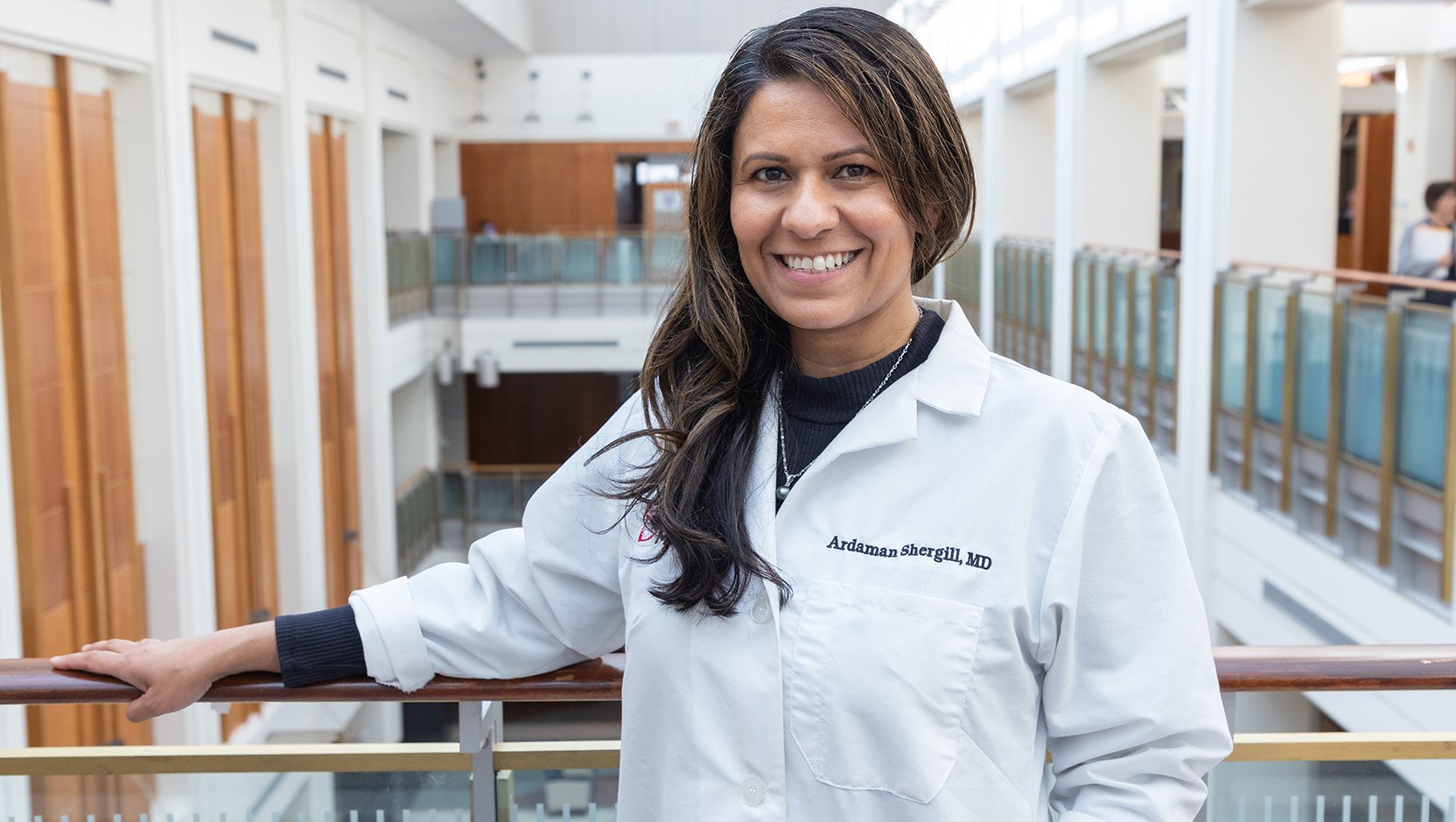
UChicago Medicine oncologist Ardaman Shergill, MD (Jordan Porter-Woodruff)
What are cancer experts saying about daraxonrasib?
This drug marks a pivotal development in pancreatic cancer care, given how lethal the disease is and how limited treatment options are for most patients.
Even with chemotherapy, the prognosis for late-stage pancreatic cancer is often poor; the five-year survival rate is 3%.
Results of RASolute 302 prompted a standing ovation from a packed auditorium of oncologists and researchers at the annual American Society of Clinical Oncology meeting in June. They called it “jaw-dropping,” “unprecedented,” “revolutionary” and “landscape-changing.”
Are there other new late-stage pancreatic drugs?
There are many promising drugs now being tested in clinical trials that could be available to UChicago Medicine patients in the future.
They include:
- zoldanrasib, which inhibits KRAS G12D mutations
- olmorasib, which inhibits the KRAS G12C protein
- VS-7375, a selective KRAS G12D inhibitor
- setidegrasib, which targets KRAS G12D mutations.
This is why it is so important to support research and clinical trials for patients with metastatic pancreatic cancer.
How can I make an appointment with an oncologist on UChicago Medicine’s pancreatic cancer team?
Call 855-403-0349 or complete an appointment request form.
UChicago Medicine and the Biological Sciences Division continue to be at the forefront of cancer care and research.
In April 2027, UChicago Medicine will open the AbbVie Foundation Cancer Pavilion, the state’s first freestanding cancer pavilion, to bring advanced diagnostics, innovative treatments, translational discoveries and comprehensive support to patients and the community.

Ardaman Shergill, MD
Medical oncologist Ardaman Shergill, MD, specializes in providing comprehensive care to patients with all stages of gastrointestinal cancers, with expertise in treating pancreatobiliary and lower gastrointestinal cancers (appendix, colon, rectum, anal).
Learn more about Dr. Shergill
UChicago Medicine Comprehensive Cancer Center
UChicago Medicine is designated as a Comprehensive Cancer Center by the National Cancer Institute, the most prestigious recognition possible for a cancer institution. We have more than 200 physicians and scientists dedicated to defeating cancer.
Learn More About the Comprehensive Cancer Center