
UChicago cancer researchers share advances at 2026 AACR Annual Meeting
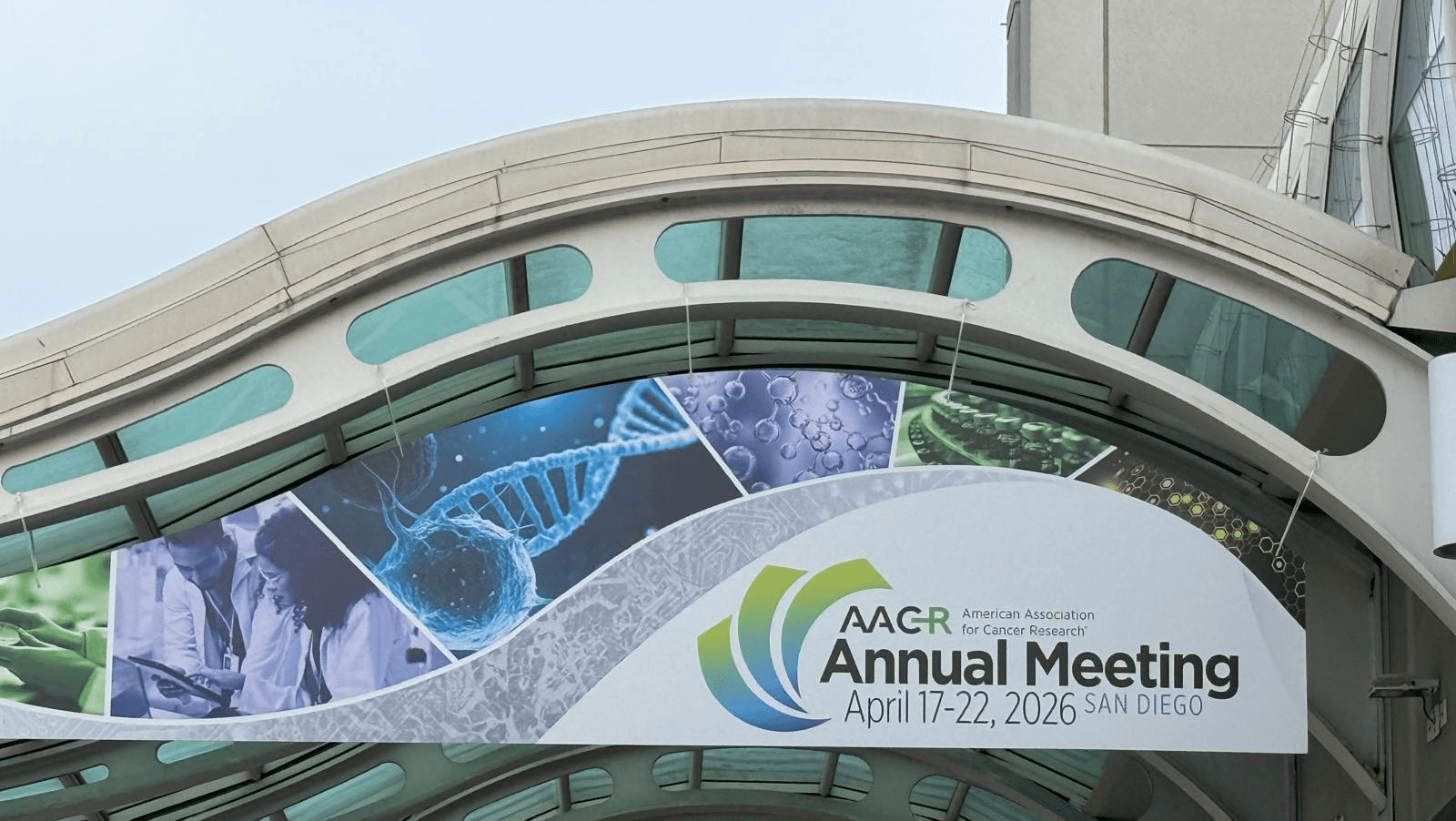
Three researchers received awards and more than 40 researchers presented their work at the 2026 American Association for Cancer Research (AACR) Annual Meeting, held April 17-22 in San Diego. Cancer researchers from the University of Chicago Medicine Comprehensive Cancer Center joined the global cancer research community at the meeting to share advances in basic, translational, and clinical research at various sessions.
This year’s meeting theme was “Precision, Partnership, Purpose: Advancing Cancer Science to Save Lives Globally.” The program brought together more than 20,000 researchers, educators, cancer survivors and patient advocates, and featured more than 100 scientific sessions and over 7,400 abstracts.
Major awards and honors
Maryellen L. Giger, PhD, A.N. Pritzker Distinguished Service Professor of Radiology, was honored with the AACR-Women in Cancer Research Charlotte Friend Lectureship Award. She was recognized for her pioneering contributions to cancer diagnosis through the development of computer-aided detection and machine learning methods for medical imaging, and for her profound impact on the advancement of women in cancer research. Giger’s work has helped establish quantitative imaging and radiomics approaches that extract high-dimensional features from radiologic images to characterize tumor phenotype and predict cancer risk, diagnosis, and treatment response. A dedicated mentor and role model, she has guided more than 120 trainees and has consistently championed the careers of women scientists and clinicians, thereby fostering a new generation of leaders in imaging and cancer research.
Long Chi Nguyen, MD, PhD, Pathways to Independence Instructor in the Ben May Department for Cancer Research, was selected for the AACR NextGen Stars Class of 2026. He was recognized for his innovative research in tumor biology and immunotherapy in triple-negative breast cancer. The AACR NextGen Stars Program was established in 2014 to support the professional development of early-career researchers.
Ruxandra Tonea, a graduate student at the Pritzker School of Molecular Engineering, received the AACR-Margaret Foti Foundation Scholar-in-Training Award for her outstanding research in the tumor microenvironment.
From immunotherapy to AI and biomarkers, University of Chicago researchers presented across a wide range of scientific sessions.
AI in cancer diagnosis and treatment
In a methods workshop session, “Deep Learning in Digital Pathology: From Morphology to Multimodal Biomarkers,” Alexander Pearson, MD, PhD, Associate Professor of Medicine, discussed advances in deep learning in digital pathology. He highlighted how foundation models trained on large pathology datasets can reduce data complexity and support many downstream clinical applications, while emphasizing the need for careful validation, supervised fine-tuning, and bias control before these tools are used in real-world cancer care.
Pearson also participated as a panelist in the special session “AI in Cancer Research and Care: What We’ve Learned and What Comes Next?” where he joined experts in oncology, computational biology, and biomedical data integration to discuss how AI is shaping cancer discovery and clinical decision support.
Tumor microenvironment
At a major symposium, Thomas Gajewski, MD, PhD, AbbVie Foundation Professor of Pathology and Professor of Medicine and the Ben May Department for Cancer Research, chaired and presented in a session “Harnessing the Power of the Immune System: Turning Cold Tumors Hot.” He highlighted interactions between Batf3+ dendritic cells and CD8+ T cells that favor a T cell-inflamed tumor microenvironment to drive anti-PD-1 efficacy. He also discussed how non-T cell-inflamed tumors are often dominated by M2-like suppressive macrophages, and described strategies to reprogram these cells into inflammatory, immune-supportive M1-like states through microbiome-based interventions and novel targets such as PKC-delta and GPNMB.
Ruxandra Tonea, a fourth-year PhD student, co-advised by Gajewski and Samantha Riesenfeld, PhD, presented at a minisymposium. Her work showed that host glycoprotein non-metastatic melanoma protein B (GPNMB), particularly in tissue-resident myeloid/macrophage populations, promotes an immunosuppressive tumor microenvironment. GPNMB deletion enhances pro-inflammatory macrophage activity, CD8+ T cell activation, and tumor control in mouse cancer models.
Justin Kline, MD, Professor of Medicine and Director of the Lymphoma Program at UChicago Medicine, co-chaired the session, “Combating T Cell Checkpoints.”
Epigenetics in cancer
Chuan He, PhD, John T. Wilson Distinguished Service Professor of Chemistry, presented at a major symposium on how reversible RNA modifications, particularly m6A and its reader proteins, regulate RNA stability, translation, transcriptome turnover, and immune-cell behavior in cancer. He also highlighted emerging findings that methylation of chromatin-associated regulatory RNAs shapes chromatin state and creates therapeutic vulnerabilities, including in treatment-refractory neuroendocrine cancers.
Breast cancer
At a major symposium, Long Chi Nguyen, MD, PhD, presented data identifying BACH1 as a key hypoxia-responsive regulator in triple-negative breast cancer (TNBC) that drives immune evasion and metastasis by suppressing interferon signaling and T-cell infiltration. He showed that targeting BACH1, either genetically or pharmacologically, can reprogram the tumor microenvironment, enhance anti-tumor immunity, and improve response to checkpoint immunotherapy.
Hematology/Oncology Fellow Margarite Matossian, MD, PhD, presented a poster on targeting pro-metastatic kinase networks in drug-resistant TNBC, demonstrating that multi-kinase inhibition strategies can overcome the limitations of single-agent therapies. Her work showed that coordinated targeting of stress and compensatory kinase pathways suppresses metastasis, reduces tumor cell plasticity, and enhances chemotherapy sensitivity, supporting a low-toxicity, network-based therapeutic approach.
Head and neck cancer
In a session “Advancing Precision Approaches to Head and Neck Cancers,” Ari Rosenberg, MD, Assistant Professor of Medicine, presented on advances in biologic subtypes of head and neck cancer. He highlighted how distinctions between HPV-associated and HPV-independent tumors, including TP53-mutant tumors, are shaping targeted and immune-based therapies, emphasizing the growing role of sensitive ctDNA-based minimal residual disease detection to guide treatment intensity and optimize clinical outcomes.
Bladder Cancer
Andrea Ziblat, PhD, a staff scientist in the lab of Randy F. Sweis, MD, presented findings showing that FGFR3 activation in bladder cancer promotes resistance to PD-1/PD-L1 immunotherapy by disrupting DC1/CD8+ T cell clustering, a key interaction required for effective anti-tumor immune responses. Her findings demonstrated that FGFR3-driven tumors exhibit reduced T cell activation, increased exhaustion, and impaired recruitment signals, highlighting spatial immune organization, not just cell presence, as critical to immunotherapy success.
Mohammed Mousa Ghanbari, PhD, a postdoctoral researcher in the lab of Piyush Agarwal, MD, presented work demonstrating that Nectin-4–targeted CAR-NK cells exhibit enhanced recognition and potent cytotoxic activity against Nectin-4–positive bladder cancer models, including improved tumor infiltration and killing in 3D spheroids and in vivo systems. These findings support CAR-NK therapy as a promising targeted immunotherapeutic strategy, with potential for further optimization through multi-target approaches to overcome resistance.
Cancer genomics
Lixing Yang, PhD, Associate Professor in the Ben May Department for Cancer Research, presented a poster on chromosomal instability in lung cancer, analyzing over 1,200 whole genomes and showing that structural variation (SV) landscapes differ by smoking status and oncogenic drivers. SVs are more abundant in smokers, but more complex and tumorigenic in never-smoker cancers, with EGFR and KRAS mutations shaping these patterns and pointing to convergent mechanisms of genome instability driving tumor evolution.
Autoimmunity in cancer
Emily Schachner, BS, a graduate student at the Pritzker School of Molecular Engineering, presented work showing that immune checkpoint inhibitor (ICI)-induced colitis is driven by activation of cytotoxic CD8⁺ tissue-resident memory (Trm) cells alongside dysfunctional, Th1-skewed regulatory T cells. Integrated single-cell and spatial analyses reveal a pathogenic circuit of Trm activation, Treg instability, and IFN-driven inflammation, offering insight into mechanisms of ICI toxicity and potential strategies to mitigate autoimmunity while preserving antitumor responses.
Cancer disparities
Yijia Sun, BS, a graduate student in the Department of Public Health Sciences, presented a poster on the independent validation of polygenic risk scores (PRS) for overall and triple-negative breast cancer in high-risk African American women, demonstrating that ancestry-specific PRS models outperform European-derived benchmarks. Importantly, a streamlined 162-variant TNBC PRS showed strong predictive performance, highlighting its potential as a cost-effective and equitable tool for risk stratification in clinically high-risk populations.
Armaan Jamal, BS, a PhD student in the Department of Public Health Sciences, presented a study evaluating pretreatment neutrophil-to-lymphocyte ratio (NLR) as a prognostic biomarker in a multiethnic breast cancer cohort, showing that higher NLR is associated with worse survival outcomes, particularly in HER2-negative and hormone receptor-positive subtypes. The findings highlight significant racial differences in baseline NLR, underscoring the need for more tailored risk stratification approaches.
Anjani Kapadia, MD, a fourth-year resident in the Department of Pediatrics, presented a study demonstrating significant disparities in MyChart utilization among patients with pancreatic ductal adenocarcinoma, with lower engagement observed among Black patients and those from higher-deprivation neighborhoods. Greater portal use — both before and after diagnosis — was associated with lower odds of advanced-stage disease, suggesting that improved digital engagement may facilitate earlier diagnosis and better access to care.
Undergraduate Caucus presentations
Trainees from UChicago Medicine Comprehensive Cancer Center pathways programs presented research at the AACR Undergraduate Student Caucus and Poster Competition. Their presentations covered a broad range of cancer research topics, including hypoxia-inducible factors in TNBC, genetic testing and cancer risk assessment, thyroid nodule classification, disparities among cancer survivors, sexual health outcomes, and AI-based mesothelioma differentiation.
Together, these presentations highlighted UChicago’s contributions across cancer discovery, technological innovations, and equity-focused research.
The AACR Annual Meeting 2027 will take place from April 2–7, 2027, at the Orange County Convention Center in Orlando, Florida.

UChicago Medicine Comprehensive Cancer Center
UChicago Medicine is designated as a Comprehensive Cancer Center by the National Cancer Institute, the most prestigious recognition possible for a cancer institution. We have more than 200 physicians and scientists dedicated to defeating cancer.
Learn More About the Comprehensive Cancer Center