
UChicago Medicine highlights research, leadership, clinical advances at ASCO 2026
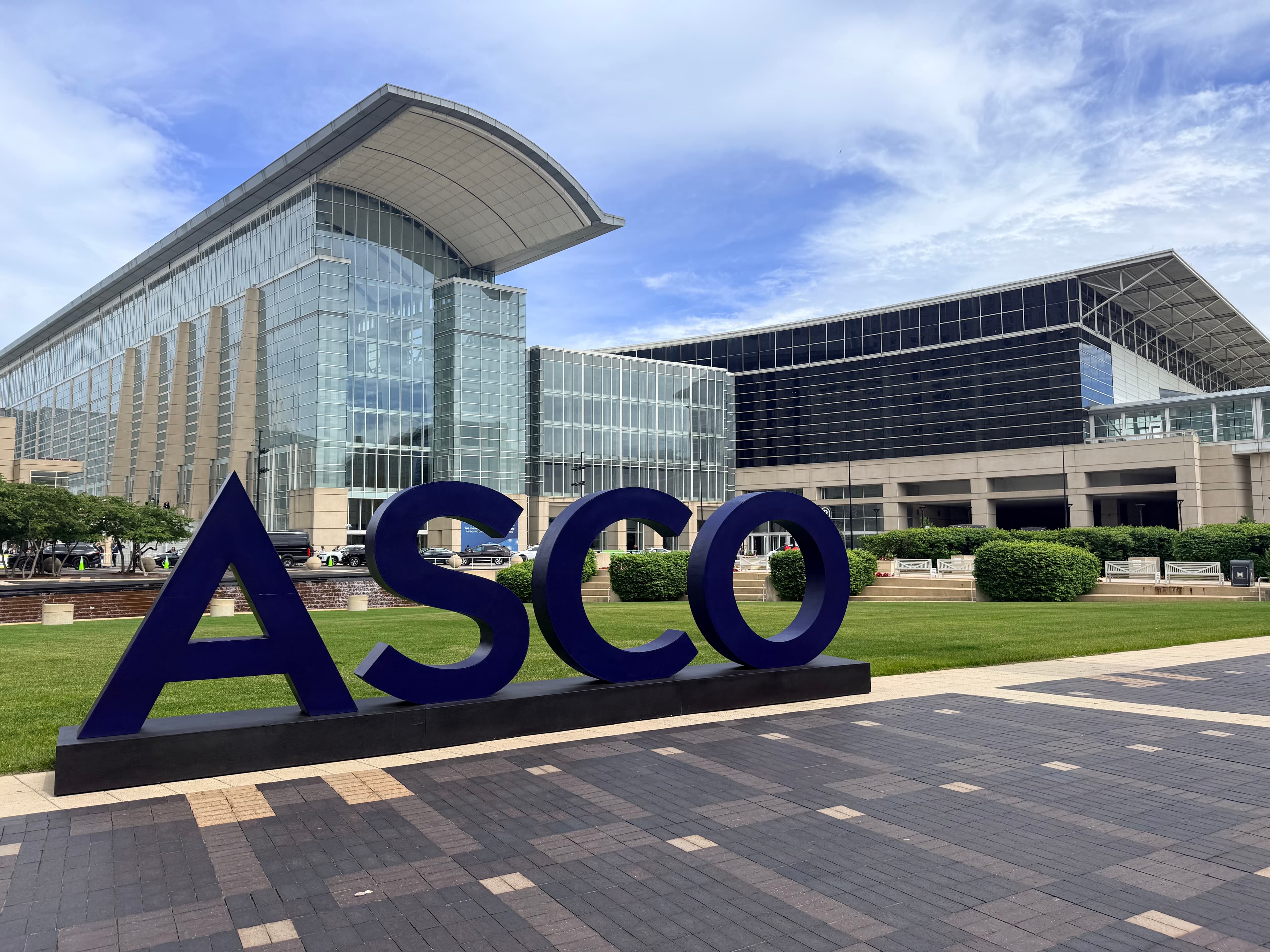
Researchers from the University of Chicago Medicine Comprehensive Cancer Center (UCCCC) delivered nearly 35 presentations across educational, oral and poster sessions at the 2026 American Society of Clinical Oncology (ASCO) Annual Meeting, held at McCormick Place in Chicago from May 29 to June 2, 2026. More than 44,000 oncology professionals from around the globe attended oncology's largest meeting to share the latest advances in the field.
The 2026 ASCO Annual Meeting theme was "The Science and Practice of Translation: Improving Cancer Outcomes Worldwide," selected by ASCO President Eric Small, MD, FASCO, from UCSF Health. The scientific and educational programs reflected the theme of moving lifesaving innovations from the research lab to everyday patient care around the world.
Awards and honors
Each year, ASCO recognizes members who have made extraordinary contributions through their volunteer service, engagement and dedication to oncology with the Fellow of the American Society of Clinical Oncology (FASCO) designation. Mark Applebaum, MD, Associate Professor of Pediatrics, was honored with the 2026 FASCO designation.
Conquer Cancer, the ASCO foundation, supports young physicians as they transition to faculty roles and pursue high-quality research in clinical oncology with the Young Investigator Award (YIA). This year, UChicago Medicine trainees, Margarite Matossian, MD, PhD; Reid Shaw, MD; Sulin Wu, MD, PhD; Maeve Hennessy, MBBCh, BAO; and Hannah Johnston, MD, received YIA Awards.
ASCO Merit Awards are given to trainees whose research is addressed in high-quality abstracts. Four UCCCC trainees, Faith Abodunrin, MD; Jincong (Jason) Freeman, MS, MPH; Wenji Guo, MD, PhD; and Armaan Jamal, BS, received 2026 ASCO Merit Awards.
Education sessions
UCCCC faculty also presented at a wide range of education sessions addressing multidisciplinary care, symptom management, health services research, international perspectives, and pathology.
Steven J. Chmura, MD, PhD, Professor of Radiation and Cellular Oncology and Director of Clinical and Translational Research for Radiation Oncology, presented during the “Complex Scenarios in Metastatic Breast Cancer” session, highlighting that systemic therapy remains as the standard of care for patients with metastatic breast cancer. He also points out that future trials exploring biomarkers and response-guided approaches could help improve outcomes in breast cancer patients.
Blase N. Polite, MD, MPP, FASCO, Professor of Medicine, discussed the financial pressures facing academic oncology and emphasized the need for leaders to define their value and advance high-value care that supports clinical excellence, research, education and patient access.
Rita Nanda, MD, FASCO, Associate Professor of Medicine and Director of the Breast Oncology Program, presented at a “Triple-Negative Breast Cancer in 2026: Translating New Data Into Clinical Decisions” session, highlighting the evolving role of biomarker-driven therapies, immunotherapy, PARP inhibitors and antibody-drug conjugates in metastatic triple-negative breast cancer (TNBC). She emphasized how emerging therapies and ongoing trials are expanding opportunities to personalize treatment and improve outcomes for patients with this aggressive and treatment-limited disease.
Heather Leeper, MD, Associate Professor of Medicine and Neurology, chaired and presented at a session “Caring for the Whole Patient: Integrative Medicine in Central Nervous System Malignancies,” emphasizing how clinicians can navigate difficult conversations with empathy, support patients and caregivers through complex decision-making, and better address personality, behavior and cognitive changes that often occur with brain tumors.
Michael R. Bishop, MD, FACP, FASCO, Professor of Medicine and Director of the Hematopoietic Stem Cell Transplantation Program, chaired and presented at a session “Management of Bispecific Antibody Toxicities,” where he discussed evolving safety considerations for bispecific antibody therapy in multiple myeloma, including rare and unique toxicities that differ from those associated with CAR T-cell and other immunotherapies.
Olufunmilayo I. Olopade, MD, FASCO, Walter L. Palmer Distinguished Service Professor of Medicine and Director of the Center for Clinical Cancer Genetics and Global Health, chaired and presented at a session “New Horizons for Hereditary Cancer Syndromes,” highlighting how broader cascade testing, polygenic risk scores and emerging tools such as liquid biopsy could help identify high-risk individuals earlier, close testing gaps among families and accelerate progress toward cancer prevention.
Daniel Olson, MD, Assistant Professor of Medicine, shared insights on the changing treatment landscape for metastatic melanoma. He highlighted how treatment sequencing, patient risk factors and emerging approaches such as tumor-infiltrating lymphocyte (TIL) therapy are shaping more personalized care for advanced melanoma.
Fay J. Hlubocky, PhD, MA, CCFP, FASCO, discussed how burnout threatens the oncology workforce and cancer care delivery worldwide, underscoring the need for both individual support and organizational change to preserve oncologists’ well-being, professional values and sense of purpose.
In addition to education sessions, UCCCC faculty presented clinical and translational research across several disease areas.
Clinical science symposium
Peter H. O’Donnell, MD, Fred C. Buffett Professor of Medicine, presented KEYNOTE-905 patient-reported outcomes showing that adding perioperative enfortumab vedotin plus pembrolizumab to radical cystectomy preserved overall quality of life in cisplatin-ineligible patients with muscle-invasive bladder cancer, further supporting the regimen’s benefit-risk profile.
Among the major studies highlighted at ASCO 2026 was a plenary session with phase III RASolute‑302 clinical trial data for pancreatic cancer. It demonstrated that the RAS inhibitor drug daraxonrasib nearly doubled median overall survival compared to standard chemotherapy in patients with advanced pancreatic cancer. UChicago Medicine served as one of the clinical trial sites for the study, underscoring the institution’s role in advancing breakthrough therapies for patients with difficult-to-treat cancers.
Rapid oral abstract session
Gini Fleming, MD, Professor of Medicine and Medical Director of Gynecologic Oncology, shared phase 1 clinical trial results showing that Temab-A demonstrated antitumor activity across several ovarian cancer types, particularly tumors with high c-Met protein expression and with a manageable safety profile.
Jennifer H. Cooperrider, MD, Assistant Professor of Medicine, presented long-term follow-up data showing that Dara-KPd was an effective and tolerable treatment option for patients with relapsed/refractory multiple myeloma.
Katherine Kurnit, MD, MPH, Assistant Professor of Obstetrics and Gynecology and Medicine, chaired and moderated an oral abstract session “Gynecological Cancer.”
Sonali M. Smith, MD, FASCO, Elwood V. Jensen Professor of Medicine and Section Chief of Hematology and Oncology, reviewed major lymphoma advances, highlighting promising new combinations and targeted approaches that are reshaping treatment for diffuse large B-cell lymphoma and mantle cell lymphoma, including options for older adults and patients with relapsed or refractory disease.
UCCCC faculty and trainees presented at various poster sessions. Please see the full list here.
The 2027 ASCO Annual Meeting is scheduled to take place at McCormick Place in Chicago from June 4 – 8, 2027.

UChicago Medicine Comprehensive Cancer Center
UChicago Medicine is designated as a Comprehensive Cancer Center by the National Cancer Institute, the most prestigious recognition possible for a cancer institution. We have more than 200 physicians and scientists dedicated to defeating cancer.
Learn More About the Comprehensive Cancer Center