Temporal Lobe Epilepsy
If your seizures keep breaking through even after trying two or more medications, you are not out of options — you may be an excellent candidate for epilepsy surgery. Temporal lobe epilepsy is the single most common form of epilepsy that surgery can actually cure.
What Is Temporal Lobe Epilepsy?
Temporal lobe epilepsy (TLE) is a focal epilepsy where seizures start in the temporal lobe, the part of the brain that handles memory, emotion, smell and parts of language. It's the most common focal epilepsy in adults and the form of epilepsy most likely to be cured by surgery. The majority of adults with TLE have mesial temporal sclerosis (hippocampal sclerosis) — the hippocampus is shrunken and scarred. Many patients have a history of a childhood febrile seizure, head injury or brain infection decades earlier.
At a Glance
- Temporal lobe epilepsy is the most common type of focal epilepsy in adults and the most common type successfully treated with surgery
- The usual underlying cause is mesial temporal sclerosis — scarring and cell loss in the hippocampus
- If two well-chosen seizure medications have failed, your epilepsy is considered drug-resistant and surgical evaluation is recommended
- A randomized trial (Wiebe 2001) showed that 58-64% of surgical patients were seizure-free at one year, compared with 8% on medication alone
- Modern options range from traditional anterior temporal lobectomy to minimally invasive laser ablation (LITT) through a small hole in the skull
The aura (warning before the seizure)
- A sudden rising feeling in the stomach, like the drop of a roller coaster
- An intense wave of fear, dread, or déjà vu
- Jamais vu — familiar place suddenly feels unfamiliar
- A strange smell or taste, often unpleasant or burning
- A sudden dreamy, distant feeling or vivid memory flashing back
During the seizure
- Staring and sudden unresponsiveness
- Automatisms — lip smacking, chewing, picking at clothing, fumbling with objects
- A hand or arm that stiffens, or twisted posture
- Speech that stops or becomes garbled
- Occasional progression to a full-body convulsion
After the seizure
- Several minutes of confusion, slurred speech, and exhaustion
- No memory of the event itself
Over years, untreated TLE can cause progressive memory problems, depression, and anxiety.
Drug-resistant epilepsy is defined as failure of two appropriately chosen, adequately dosed anti-seizure medications. Once a patient hits that threshold, the chance a third medication will work drops to ~5% — at which point guidelines recommend referral to an epilepsy surgery center.
Phase I — Non-invasive workup
- High-resolution MRI with dedicated epilepsy protocol — looks for hippocampal atrophy, abnormal signal, cortical malformations
- Video-EEG monitoring (inpatient) — medications reduced to capture seizures and confirm which side seizures start from
- PET scan — often shows reduced metabolism in the affected temporal lobe
- Ictal SPECT — tracer injected during a seizure to map blood flow changes
- Neuropsychological testing — memory, language, and attention baseline; predicts how surgery will affect cognition
- Functional MRI and Wada test — determines which side of the brain controls language and memory
Phase II — Stereo-EEG (SEEG)
When non-invasive tests are ambiguous, thin recording electrodes placed robotically through tiny holes directly into suspected seizure zones. Records actual seizures from inside the brain.
Anterior temporal lobectomy (ATL)
Classic, most-studied operation. Removes the front part of the temporal lobe together with the amygdala and front portion of the hippocampus. ~60-70% of patients are free of disabling seizures at one year. Used in landmark Wiebe and Engel randomized trials.
Selective amygdalohippocampectomy (SAH)
More targeted open operation removing only the amygdala and hippocampus while preserving the overlying temporal lobe cortex. Meta-analyses suggest seizure-freedom rates similar to ATL or slightly lower, with possible better preserved naming and verbal memory on the dominant side.
Laser interstitial thermal therapy (LITT / SLAH)
Minimally invasive: a laser fiber placed through a single 3.2 mm skull opening ablates the amygdala and hippocampus under real-time MRI thermal mapping. No craniotomy; most patients go home within 24-48 hours. Seizure-freedom ~55-60% for mesial temporal sclerosis. Better preservation of naming and verbal memory than open surgery. UChicago is one of the highest-volume LITT centers in the world.
Responsive neurostimulation (RNS) and deep brain stimulation (DBS)
For patients not candidates for resection or ablation — such as those with seizures coming from both temporal lobes. Can substantially reduce seizure frequency but rarely produce complete seizure freedom.
Everyone with new TLE starts with anti-seizure medications. Modern options control seizures in roughly two-thirds of patients. After two medications fail, the chance of a third working drops to ~5%.
Why surgery, and why earlier
Wiebe 2001 randomized trial: 58% of surgical group was free of disabling seizures at one year (vs 8% on medication). ERSET (Engel 2012) confirmed the finding. Despite this evidence, the average patient waits more than 20 years from diagnosis to surgical referral.
Open resection
ATL or SAH under general anesthesia using microsurgical technique, neuronavigation, and sometimes intraoperative ECoG. Takes 3-5 hours; one night in ICU, 3-4 nights total in hospital.
Laser ablation
Stereotactic frame or robot places laser fiber through a single 3.2 mm skull hole; ablation performed inside MRI scanner in 1-3 minute pulses with real-time thermal mapping. Most patients home within 24-48 hours; return to desk work within ~1 week.
- Engel I — free of disabling seizures (the goal)
- Engel II — rare disabling seizures ('almost seizure-free')
- Engel III — worthwhile improvement
- Engel IV — no worthwhile improvement
For mesial temporal sclerosis treated with ATL, long-term studies consistently show 60-70% of patients remain in Engel class I at one year, and roughly half remain seizure-free at 10 years.
- Wiebe S, et al. A randomized, controlled trial of surgery for temporal-lobe epilepsy. NEJM. 2001;345(5):311-318. PMID: 11484687
- Engel J Jr, et al. Early surgical therapy for drug-resistant temporal lobe epilepsy (ERSET). JAMA. 2012;307(9):922-930. PMID: 22396514
- Kwan P, Brodie MJ. Early identification of refractory epilepsy. NEJM. 2000;342(5):314-319. PMID: 10660394
- Wu C, et al. Effects of surgical targeting in laser interstitial thermal therapy for mesial TLE: multicenter study of 234 patients. Epilepsia. 2019;60(6):1171-1183. PMID: 31112302
- Satzer D, et al. Surgical outcomes and EEG prognostic factors after stereotactic laser amygdalohippocampectomy. Front Neurol. 2021;12:654668. PMID: 34079512
- Tellez-Zenteno JF, et al. Long-term seizure outcomes following epilepsy surgery: systematic review and meta-analysis. Brain. 2005;128(Pt 5):1188-1198. PMID: 15758038
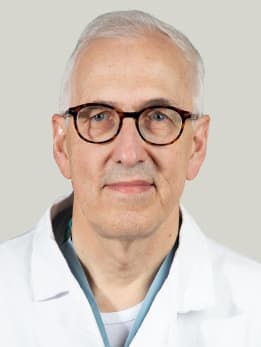
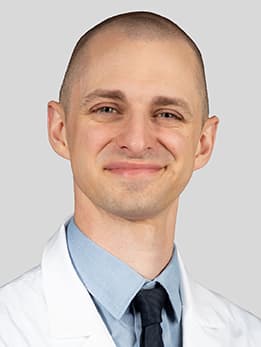
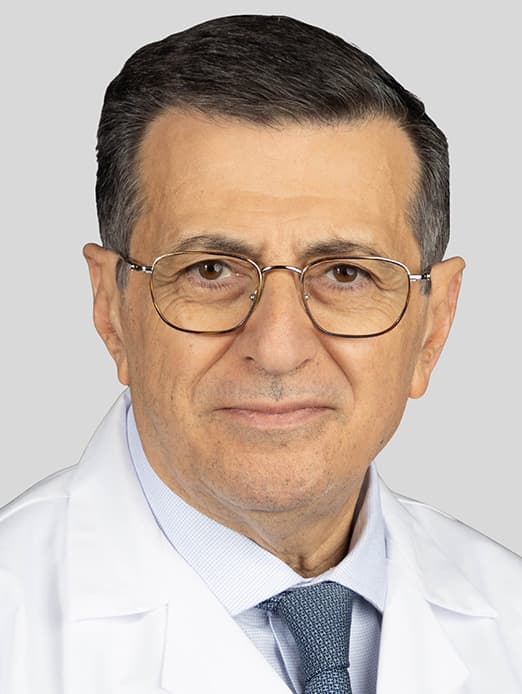
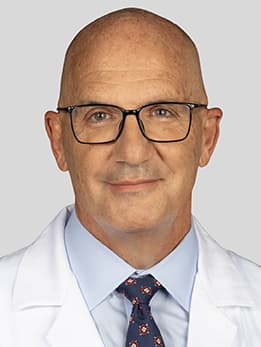
Our Specialists
Request an Appointment
We are currently experiencing a high volume of inquiries, leading to delayed response times. For faster assistance, please call 773-702-6222 to schedule your appointment.
If you have symptoms of an urgent nature, please call your doctor or go to the emergency room immediately.
Learn more about our specialists and schedule an appointment instantly through our online scheduling portal.
* Indicates required field