Acute Ischemic Stroke
If you or a loved one is having a stroke caused by a blocked brain artery, every minute matters. For large-vessel strokes, a procedure called mechanical thrombectomy can physically pull the clot out and restore blood flow, often reversing what looks like a devastating neurological injury.
What Is Acute Ischemic Stroke (Large-Vessel Occlusion)?
A stroke happens when blood flow to part of the brain is suddenly cut off. About 87% of strokes are ischemic (caused by a clot), and roughly one in three involves a large-vessel occlusion (LVO) — a clot stuck in one of the main arteries feeding the brain.
With every minute of an untreated LVO, about 1.9 million neurons die. But modern imaging can find brain cells that are starving but not yet dead even many hours later — which is why patients who would have been sent home untreated ten years ago are now leaving the hospital walking and talking today.
At a Glance
- A large-vessel occlusion (LVO) is a stroke caused by a clot blocking one of the big arteries supplying the brain — the kind most likely to cause major disability
- Mechanical thrombectomy uses a catheter threaded from the groin or wrist up into the brain artery to physically remove the clot
- Eligible patients can be treated up to 24 hours from when they were last known well if imaging shows salvageable brain tissue
- IV clot-busting medication (tPA or tenecteplase) is given first when the patient qualifies; thrombectomy is done in addition
- UChicago Medicine is a Comprehensive Stroke Center with a 24/7 neuroendovascular team
The BE FAST warning signs
- B — Balance: sudden trouble with balance or dizziness
- E — Eyes: sudden blurred, double, or lost vision
- F — Face: one side of the face droops
- A — Arm: one arm drifts down when trying to hold both up
- S — Speech: slurred, garbled, or nonsensical speech
- T — Time: call 911 right away and note the time symptoms started
Symptoms suggesting large-vessel occlusion
- Complete weakness or paralysis of one side of the body
- Inability to speak or understand speech (aphasia)
- Looking forcefully to one side (gaze deviation)
- Ignoring one side of the world entirely (neglect)
- In basilar artery strokes: sudden coma, crossed weakness, 'locked-in' symptoms
Call 911 immediately. Do not drive yourself.
- Non-contrast CT scan — rules out bleeding in the brain
- CT angiogram (CTA) — shows every major brain artery; where we find the large-vessel occlusion
- Perfusion imaging (CTP or MRI) — shows the core (already dead tissue) and penumbra (starving but salvageable tissue). Small core + large penumbra = green light for thrombectomy even 6-24 hours after symptom onset.
- NIH Stroke Scale (NIHSS) — scores neurological exam on a 0-42 scale. Score ≥6 combined with LVO generally meets criteria for thrombectomy.
Anterior circulation LVO
- Internal carotid artery (ICA) — biggest, most devastating strokes (T occlusion)
- Middle cerebral artery, M1 — most common LVO; causes severe weakness and language problems or neglect
- Middle cerebral artery, M2 — treatable with higher technical challenge
Posterior circulation LVO
- Basilar artery occlusion — frequently fatal without treatment. ATTENTION and BAOCHE trials (2022) confirmed thrombectomy doubles chance of good functional recovery.
- Vertebral artery occlusion — treated when threatening the basilar artery
IV thrombolysis — alteplase (tPA) or tenecteplase
Given within ~4.5 hours of last known well time if no contraindications. Tenecteplase is now preferred at many centers — given as a single fast push. Does not replace thrombectomy — it's a first punch.
Mechanical thrombectomy — pulling the clot out
Catheter threaded from groin or wrist up into the blocked brain artery. Two tools remove the clot:
- Stent retriever — self-expanding mesh that traps the clot like a fishing net, then pulled out
- Aspiration catheter — large-bore catheter that sucks the clot out directly (ADAPT technique)
Goal: TICI 2b or 3 reperfusion — more than half, ideally all, of the blocked territory reopened.
The extended window — 6 to 24 hours
DAWN trial (6-24h) and DEFUSE-3 trial (up to 16h) proved that patients with small core / large penumbra mismatch on imaging benefit dramatically from thrombectomy. Wake-up strokes now routinely treated.
| Factor | Independent at 90 days (mRS 0-2) | What to know |
|---|---|---|
| No thrombectomy (medical only) | ~19% | Pooled control arm from HERMES |
| Thrombectomy, any TICI | ~46% | Pooled thrombectomy arm from HERMES |
| Thrombectomy, TICI 2b/3 reperfusion | ~50-60% | Substantial reperfusion drives outcome |
| Thrombectomy, TICI 3 (complete) | ~60-70% | Best-case scenario |
| Extended window 6-24h (DAWN) | 49% vs 13% medical | Mismatch-selected patients |
| Basilar artery occlusion (ATTENTION) | ~46% mRS 0-3 vs 23% medical | Life-saving for a once-uniformly-fatal stroke |
Every 30 minutes saved from onset to reperfusion adds about a 10% absolute gain in the chance of a good outcome.
- Berkhemer OA, et al. MR CLEAN — a randomized trial of intraarterial treatment for acute ischemic stroke. NEJM. 2015;372(1):11-20. PMID: 25517348
- Goyal M, et al. ESCAPE — randomized assessment of rapid endovascular treatment of ischemic stroke. NEJM. 2015;372(11):1019-1030. PMID: 25671798
- Goyal M, et al. HERMES — endovascular thrombectomy after large-vessel ischaemic stroke: meta-analysis. Lancet. 2016;387(10029):1723-1731. PMID: 26898852
- Nogueira RG, et al. DAWN — thrombectomy 6 to 24 hours after stroke with mismatch between deficit and infarct. NEJM. 2018;378(1):11-21. PMID: 29129157
- Albers GW, et al. DEFUSE-3 — thrombectomy for stroke at 6 to 16 hours with selection by perfusion imaging. NEJM. 2018;378(8):708-718. PMID: 29364767
- Tao C, et al. ATTENTION — trial of endovascular treatment of acute basilar-artery occlusion. NEJM. 2022;387(15):1361-1372. PMID: 36239644
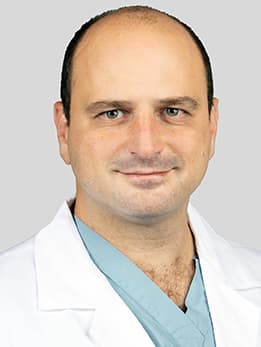
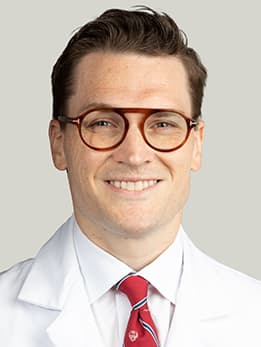
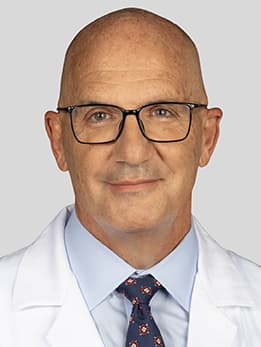
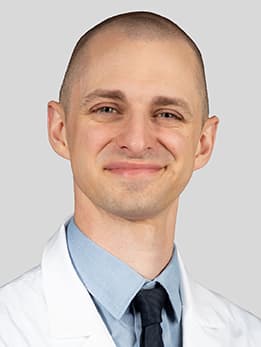
Our Specialists
Request an Appointment
We are currently experiencing a high volume of inquiries, leading to delayed response times. For faster assistance, please call 1-773-702-2123 to schedule your appointment.
If you have symptoms of an urgent nature, please call your doctor or go to the emergency room immediately.
* Indicates required field