
After living-donor liver transplant, Tinley Park mom triumphs at Transplant Games
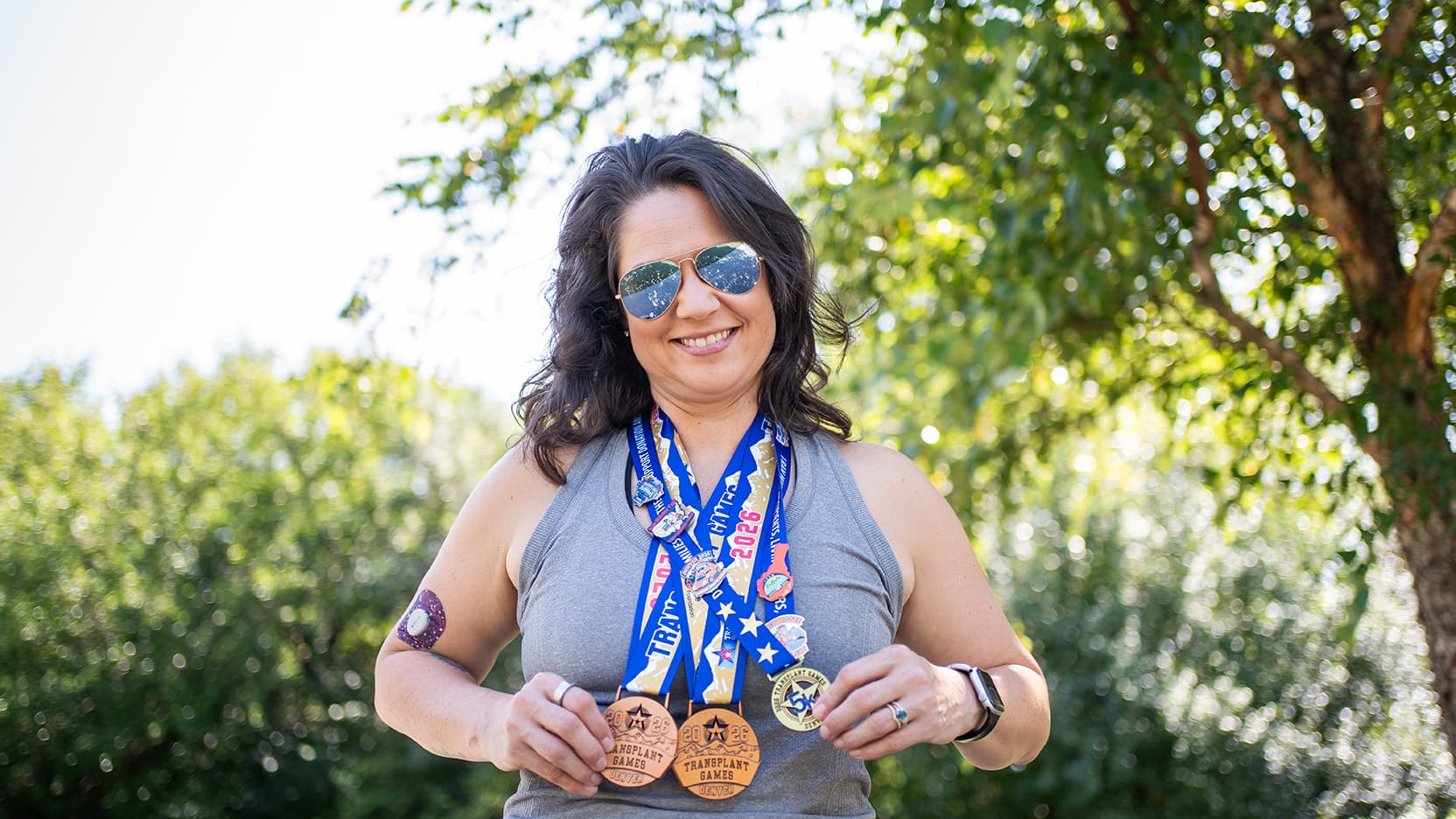
Elizabeth "Liz" Sullivan, with her medals from the Transplant Games of America. (Eddie Quinones)
A Tinley Park mom who received a lifesaving liver transplant at the University of Chicago Medicine in July 2024 won two medals at this summer’s Transplant Games of America.
Elizabeth “Liz” Sullivan, 38, placed third in two events: the 5K run and 5K cycling. Her husband, Shaun, finished second in the Caregiver 5K run.
The moment seemed impossible three years ago.
Sullivan had endured years of illness and pain from primary sclerosing cholangitis (PSC), a rare chronic liver disease that damages the bile ducts and liver and can lead to cirrhosis and liver failure.
Between 2020 and 2023, while living in Michigan, she had more than 30 stent surgeries — nearly one a month — to keep her bile ducts from collapsing.
The ducts would continually back up with “biliary sludge” (bile acids and inflammatory debris), making Sullivan very sick. Her skin would turn yellow and itchy, she would suffer from “absolutely brutal” side pain, and she couldn’t keep food down.
“In 2023, I said: ‘Enough is enough. I can’t keep doing this,’” said Sullivan, the mother of two young children. “I was being held together with meds and Band-Aids, and a hope and a prayer.”
Seeking a better long-term treatment plan, she turned to the internationally recognized liver transplant team at UChicago Medicine.
Sullivan was immediately put on the waitlist for a new liver, but her PSC diagnosis didn’t give her any type of priority. That meant could wait months or years for a donor liver while her health worsened.
Her best — and maybe only — hope was to find a living donor.
The advantages of a living organ donor
Livers are unique among donated organs. A person with a matching blood type may donate part of a healthy liver to someone who needs one.
The donor’s liver grows back to its full size within a couple of months. The transplanted portion grows in the recipient as well.
Donated organs are in high demand across the country, including in Chicago.
UChicago Medicine is on track to perform a record number of transplants this year, said Anjana Pillai, MD, co-director of UChicago Medicine’s Transplant Institute and Sullivan’s transplant hepatologist.
For patients like Sullivan, whose liver disease is progressive, their Model for End-State Liver Disease (MELD) score — a scoring system used to prioritize donor organs — doesn’t always reflect how urgently they need a transplant, Pillai said.
“That’s why a living donor gives patients a bit more control of their disease,” she said. “It gives them the opportunity to have a liver transplant sooner before they become much sicker.”
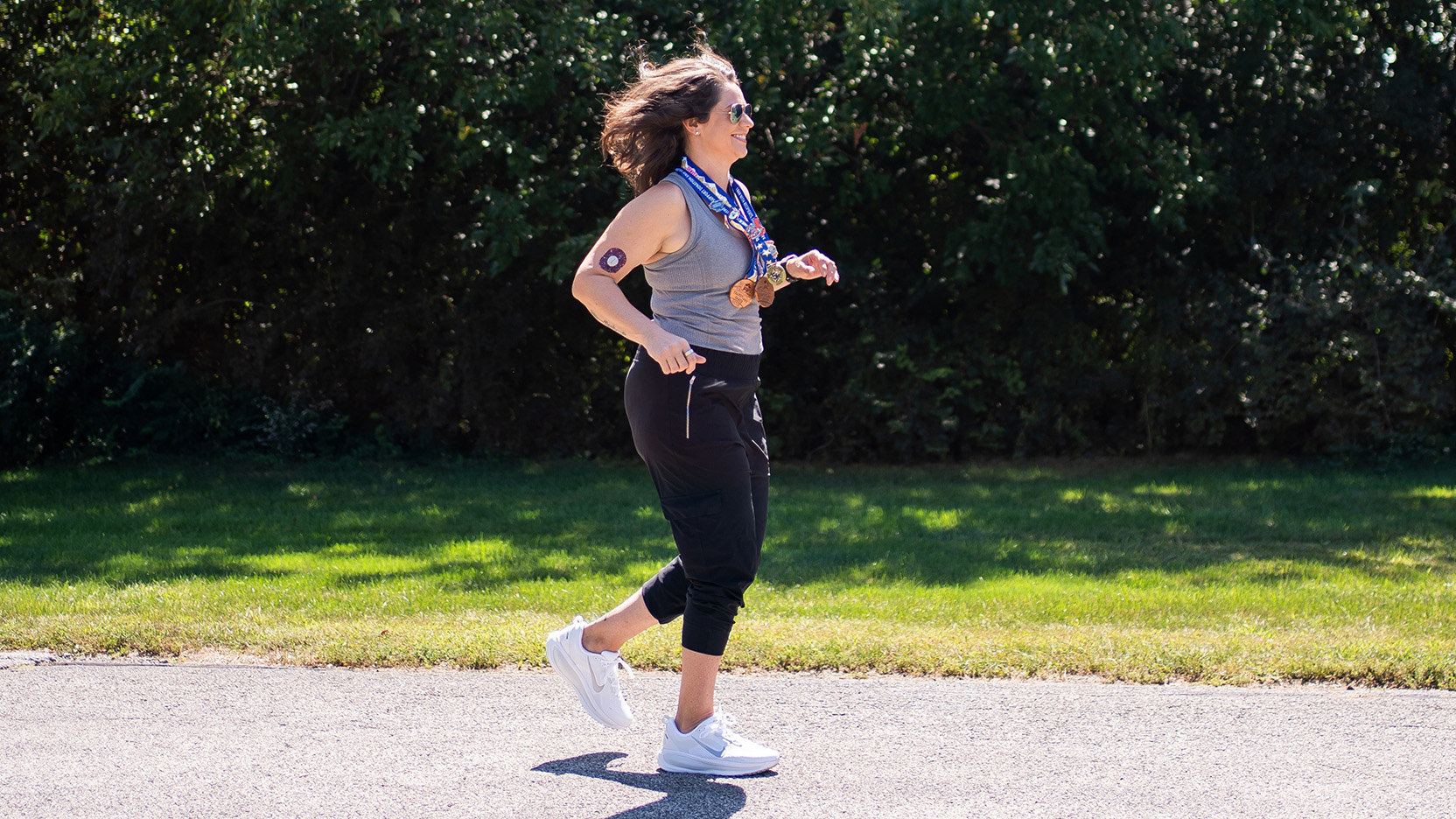 Sullivan enjoys a trail run near her home. (Eddie Quinones)
Finding a living donor for liver transplant
Sullivan went all out to find a living donor.
She created a website and blog, asked friends and family post donor requests on social media, made connections with influencers and members of her Peloton community, emailed local news outlets and handed out flyers near her home.
The efforts led 1,000 people to sign up to donate organs, Sullivan said. One of those people became her donor: her child’s godmother’s friend from college.
“It was just a whirlwind of amazing things that happened,” Sullivan said.
Her advocacy work continued while awaiting her transplant, and she even hosted a blood drive in Tinley Park. She eventually became an ambassador for Gift of Hope, a nonprofit organ and tissue donation network.
Sullivan’s successful transplant took place in July 2024 at UChicago Medical Center in Hyde Park.
‘Absolutely breathtaking’ moment at the Transplant Games
After surgery, Sullivan learned about the Transplant Games through a Gift of Life support group. The Olympic-style event is held every two years and brings together thousands of athletes from around the U.S. who’ve had successful transplants.
Athletes must be at least one year past transplant and have their doctor’s permission to participate.
Sullivan, who loves running and working out, was immediately interested. Her UChicago Medicine doctors gave the OK, and Gift of Hope sponsored her entry onto Team Illinois for the June 2026 games in Denver.
After finishing third in the running and cycling events, Sullivan described standing on the podium with her medals and crying happy tears as an “absolutely breathtaking” moment.
“I thought, ‘I’m a transplant patient, but that’s not the only thing I am. I did this on my own, despite my liver trying to kill me,’” she said. “I was, like, ‘We did it. I’m no longer sick.’”
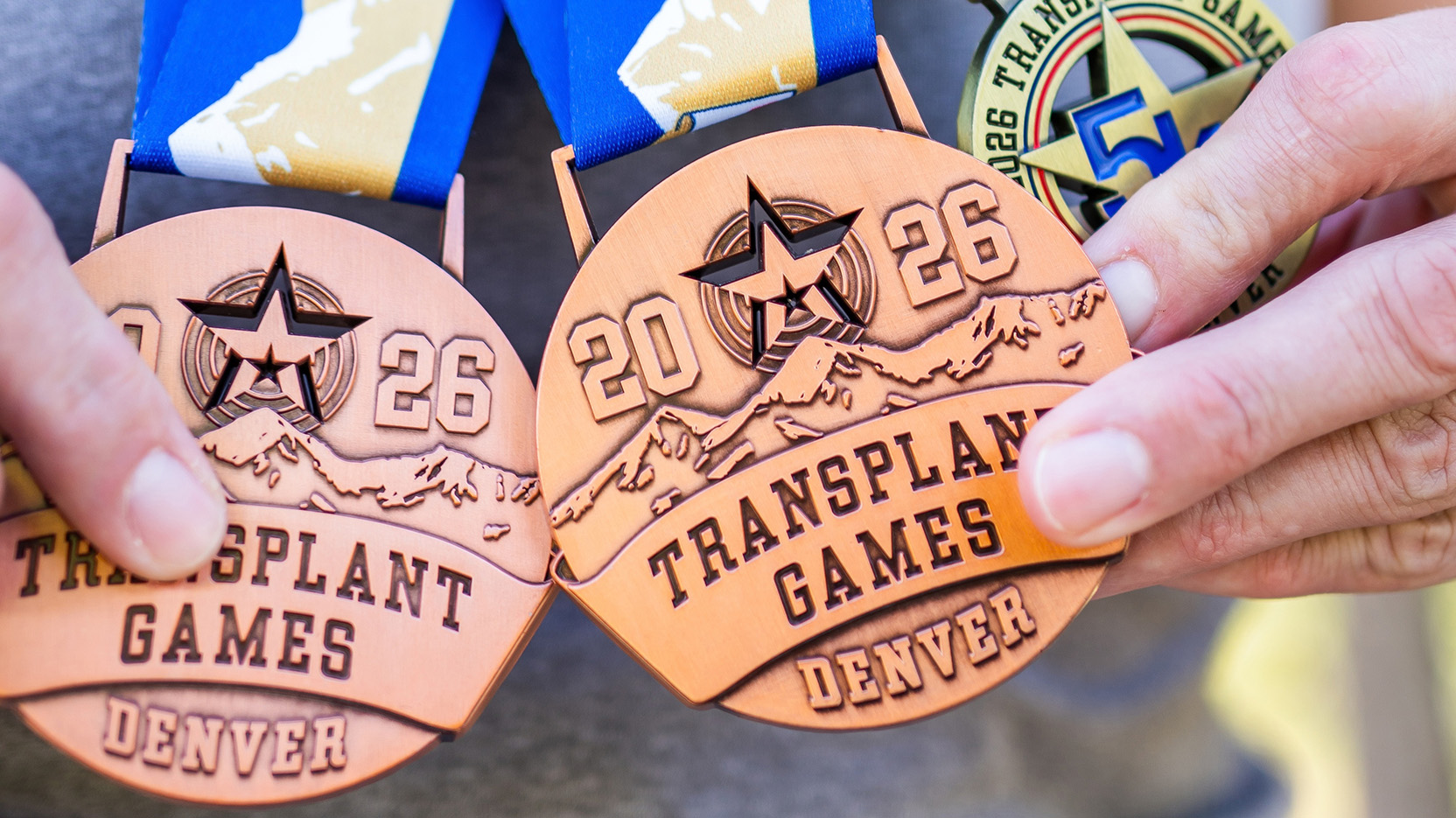 With one successful Transplant Games under her belt, Sullivan plans to compete again in 2028. (Eddie Quinones)
‘We didn’t transplant you to sit at home’
Sullivan praised her entire UChicago Medicine team for their care and encouragement to get back to doing the activities she loved doing when she was healthy.
“I owe my entire life to my UChicago Medicine team,” said Sullivan, who works as a director of workforce development and operations at Dexian.
Because she is still immunocompromised from the transplant, Sullivan needs regular blood work and follow-up appointments to monitor for possible complications, including skin cancer and heart issues.
So far, she is doing well. She has set her sights on the 2028 Transplant Games in Minnesota.
“The doctors told me: ‘Go live your life. We didn’t transplant you to sit at home,’” she said. “Just be sure to send us pictures.”
Added Pillai: “Seeing patients thrive like she has — it’s the best part of my job.”
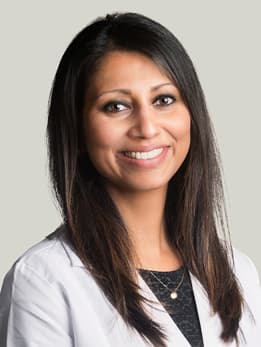
Anjana Pillai, MD
Anjana Pillai, MD, is a board-certified gastroenterologist and transplant hepatologist who specializes in the management of chronic liver diseases. Dr. Pillai is the medical director of the multidisciplinary liver tumor program, which encompasses multiple specialists with expertise in benign and malignant tumors of the liver.
See Dr. Pillai's profile