
Expressive arts therapy program offers holistic healing at Ingalls
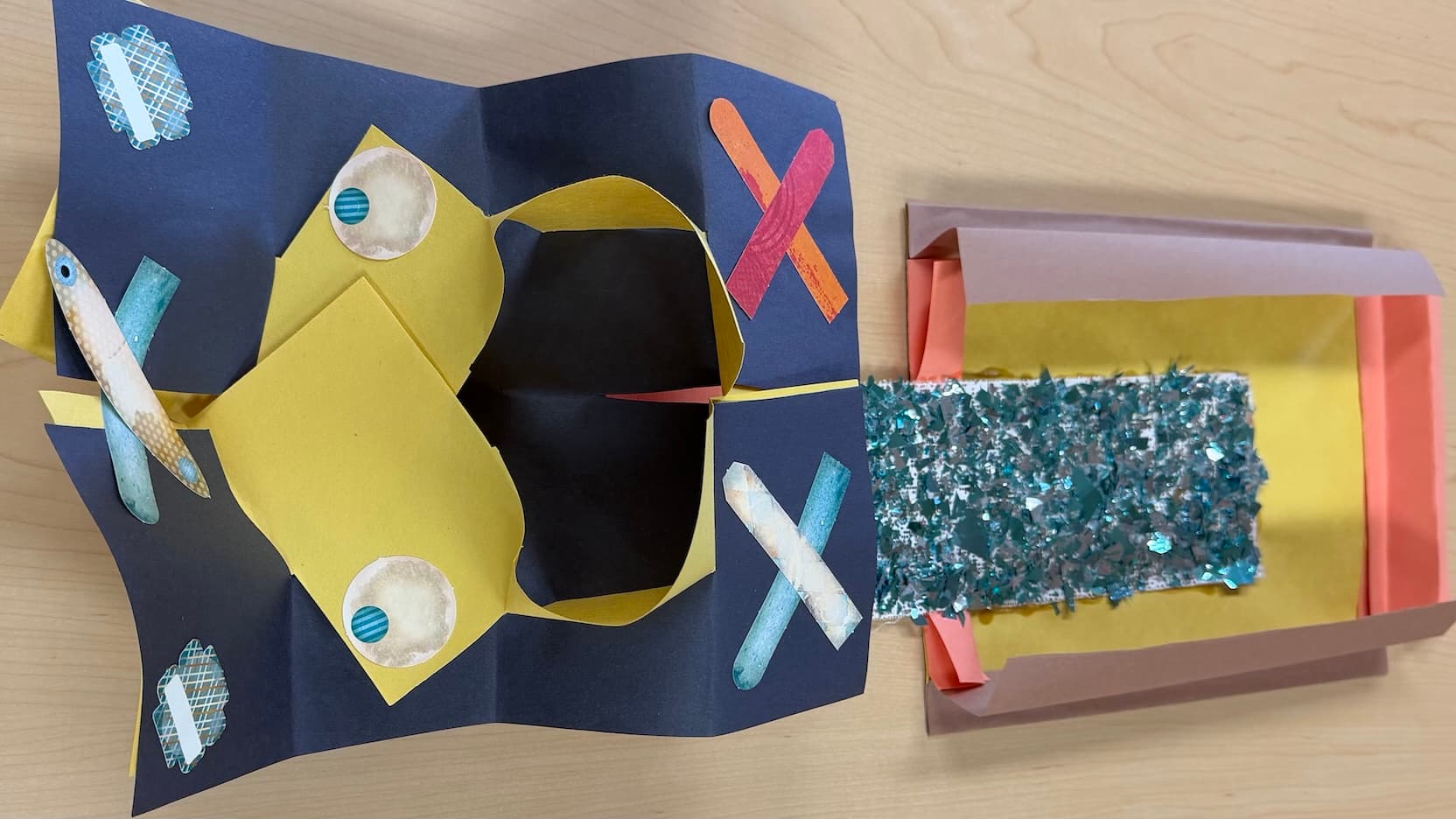
Healing takes on many forms. A paper bird. A puzzle. An ice cube.
These are some of the tools used by outpatient therapist Steven Wilson in his expressive arts therapy programs at UChicago Medicine Ingalls Memorial.
Behavioral and mental health services are expanding beyond traditional individual and group talk therapy, helping people cope with a wide range of experiences and conditions that add challenges to everyday life. One such approach is art therapy, which combines creative expression with applied psychological theory — and it can look different for everyone. Formally established in the 1930s and 1940s, it's now practiced and recognized around the world.
Wilson, who primarily works with trauma patients, started the adult expressive arts therapy program as a small group in 2024 as a way to help patients receive a more holistic approach to their treatment journeys. One of his first lessons for them revolved around the body’s responses to trauma: fight, flight, freeze or fawn. For the freeze response, the group made ice cubes.
“At first, they looked at me and said, ‘ice cubes?’ And I said, yeah, we’re going to make ice cubes,” Wilson said.
But by the end of the session, he said that using the ice cubes, along with physical drawings and other artistic tools, helped the patients better understand the validity and meaning behind the body’s responses to trauma.
“Water freezes when it’s exposed to certain temperatures. I wanted to help my patients understand how the freeze response is an automatic reaction from the body when it’s exposed to stress, rather than being a conscious choice,” he said.
Since its inception, the program has grown from two patients to up to 10 at a given time. The group meets weekly in person, and each participant is evaluated individually to determine how long they need to stay in the group. Some patients use the group to supplement their individual outpatient therapy, though outpatient therapy isn't required to join.
In April, Wilson started a similar program for adolescents between the ages of 12 and 18. At a recent session, participants used themes and characters from a popular streaming show to explore the topic of body image. The groups, he said, will always be tailored to the participants and what best resonates with them.
To learn more about the different behavioral health offerings and specialty groups at Ingalls and receive a no-cost consult, call 708-787-4758.
Patients & Visitors
University of Chicago Medicine Ingalls Memorial Hospital is a full-service community hospital positioned in Chicago’s Southland for nearly a century.
Read about our patient and visitor policies