
TGR Haas F1 Team, UChicago Medicine introduce first-of-its-kind study on elite team performance
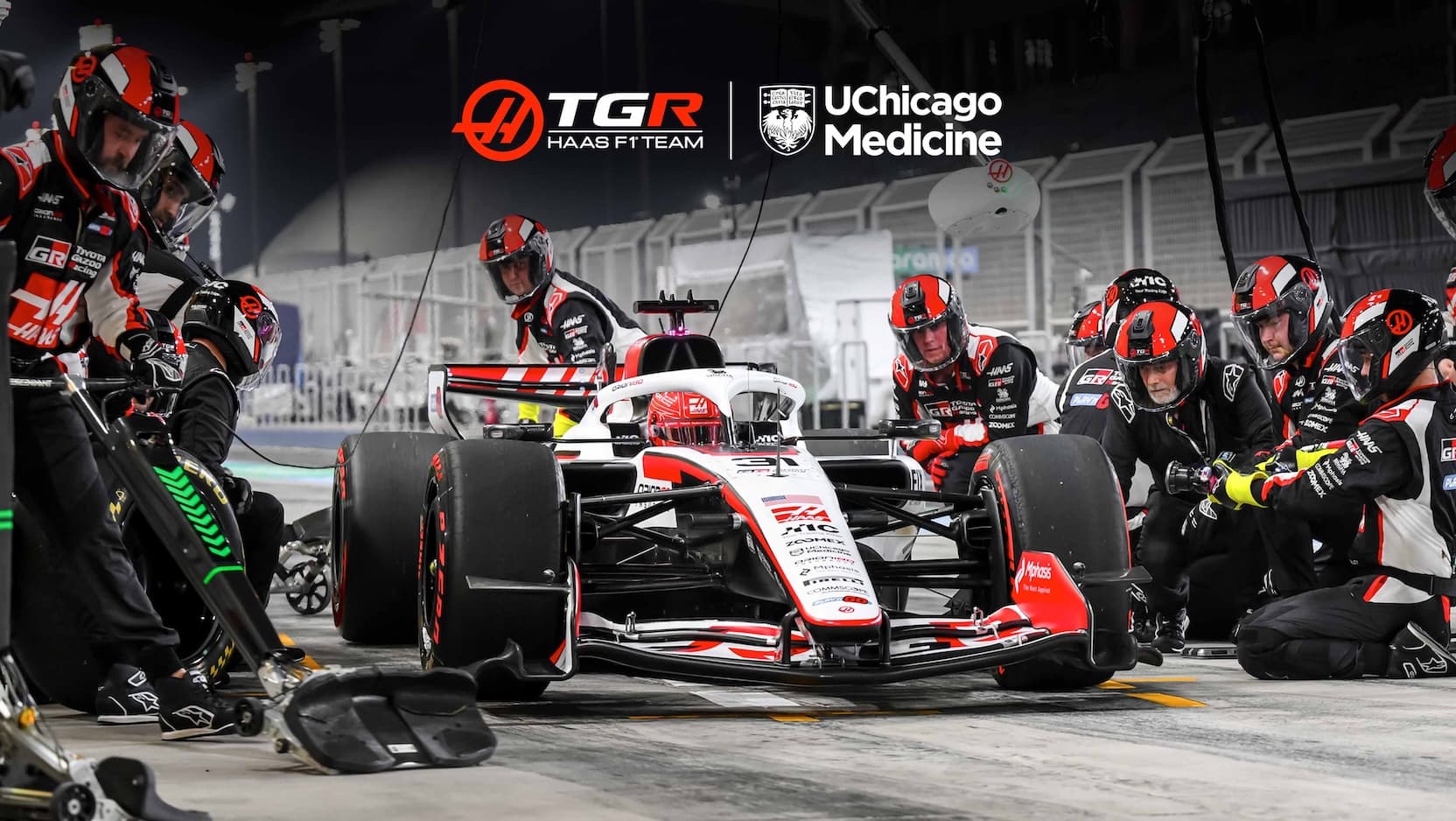
TGR Haas F1 Team and the University of Chicago Medicine today announced a first-of-its-kind study examining the cumulative physical, cognitive and psychological demands of a Formula 1 season on team personnel.
The long-term study, now underway, monitors members of the traveling Haas F1 team across a race season, examining the effects of international travel, disrupted sleep, workload and stress. Researchers aim to develop evidence-based strategies to improve health, well-being, recovery and performance in one of the world’s most demanding team environments.
The collaboration is the first in Formula 1 to be conducted alongside an academic medical center, bringing clinical and research expertise to the study of team-based performance in elite motorsport.
“Over the course of a season, team members face continuous travel, disrupted sleep cycles and sustained cognitive and physical demands,” said Vineet Arora, MD, the study’s principal investigator and dean for medical education at the University of Chicago Pritzker School of Medicine. “Our goal is to understand how these factors interact over time and to develop targeted interventions that support performance, recovery and well-being. What we learn here has the potential to shape how we support teams in other environments.”
While Formula 1 is globally recognized for its engineering innovation and the physical conditioning of its drivers, little is understood about the mechanics, engineers and staff who support race operations. Those team members routinely cross multiple time zones, work overnight under intense pressure and must perform with precision throughout the season.
"Formula 1 is an incredibly demanding environment, not only for drivers, but for everyone working within the sport," said Ayao Komatsu, team principal of TGR Haas F1 Team. "As a team, we're always looking to better understand how those demands affect our people and how we can create an environment where our people can operate at their best — both on and off track."
The study involves voluntary participation from traveling Haas F1 team members across functions, including mechanics, engineers, IT and operations staff. UChicago Medicine researchers will use wearable devices, validated surveys and interviews to assess sleep patterns, recovery, workload, psychological well-being and team dynamics in real-world racing conditions. The research team includes specialists in sleep medicine, neurology, psychiatry and behavioral science, led by principal investigator Vineet Arora, MD, and including Kenneth Lee, MD; Jennifer Ghandhi, MD; Alejandra Lastra, MD; and Aashna Sunderrajan, PhD. All data will be de-identified and analyzed in aggregate.
The research builds on UChicago Medicine's expertise in sleep medicine, circadian health and performance in high-stakes environments, including landmark studies on fatigue, shift work and decision-making in demanding clinical settings. The same questions are increasingly relevant in healthcare, where teams operate under similar demands.
“The modern Formula 1 schedule is demanding both physically and socially, with extensive travel, jet lag and time away from home,” said Dan Martin, lead performance coach at TGR Haas F1 Team. “We want to better understand these stressors and use that insight to support health, career longevity and overall team performance.”
The program will begin with longitudinal data collection across the race season, followed by the development and testing of targeted strategies to support sleep, recovery and resilience. Over time, effective approaches will be incorporated into team operations.
“I see the daily prevalence of physical injury relating to fatigue and workload in this environment,” said Faith Atack-Martin, performance coach and team physiotherapist at TGR Haas F1 Team. "While evidence-based approaches are consistently employed alongside existing knowledge and experience, developing practical, evidence-based strategies that support health, career longevity, and sustainable team performance will ultimately lead to improved practice, greater impact, and overall health benefits for this team.”
Insights from the research are expected to inform broader applications beyond motorsport, including healthcare, emergency response and other high-performance, high-reliability fields where teams must operate effectively under sustained pressure and fatigue. Peer-reviewed publications and broader research outputs are planned following the study's completion.
“By studying performance in a setting as demanding as Formula 1, we can generate insights that extend far beyond the sport,” said Andrew Chang, chief marketing officer at UChicago Medicine. “This is about advancing how we support teams operating at the highest levels.”
This initiative builds on UChicago Medicine's sponsorship of TGR Haas F1 Team, established in 2024, which made UChicago Medicine the first and only healthcare provider to serve as an official team partner in Formula 1. For more information about the study, visit humanengine.uchicagomedicine.org.
Atack-Martin added, “The collaboration between UCM and TGR Haas F1 Team provides a new and exciting opportunity to support and develop our shared commitment to race team health, performance and career longevity."