
What to do if you have severe diarrhea
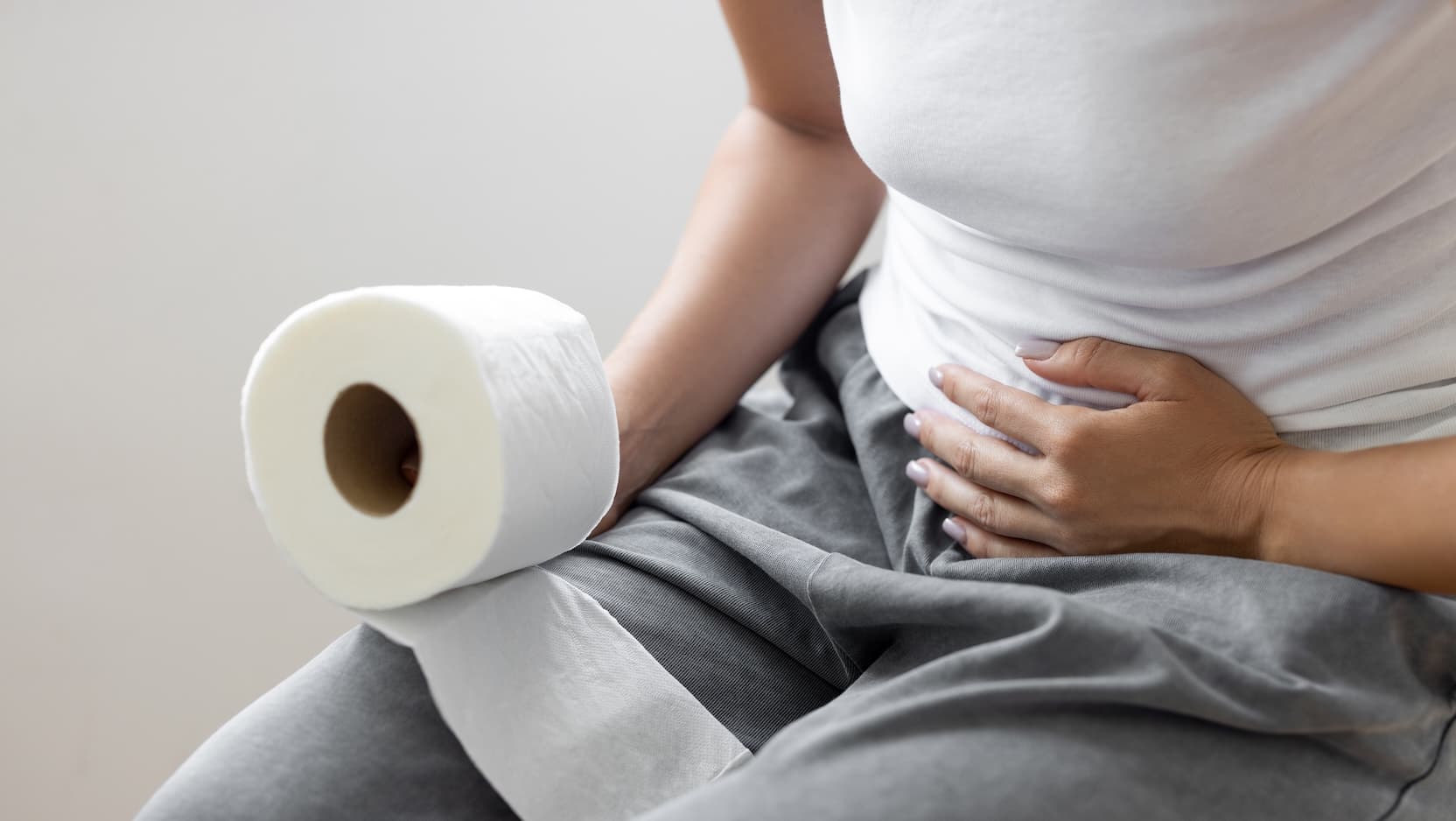
Diarrhea is a common and highly unpleasant experience that everyone encounters at some point.
It can be caused by a variety of factors, including a stomach bug, food that didn’t agree with you, medication side effects, or, recently, an outbreak of the parasite cyclospora, which leads to particularly severe diarrhea.
So what’s actually going on in the body when you have diarrhea? Here’s what to know — and simple steps you can take to help yourself recover.
What happens in the body during diarrhea?
Inside your small intestine are finger-like structures called villi. Their job is to absorb water and nutrients.
But if something damages the villi (like a bacteria, virus or parasite), your body can’t absorb these substances properly. Instead, everything just passes right through, leading to loose, watery stools.
What should you do if you have diarrhea?
It depends on how severe the diarrhea is. If you’re otherwise healthy and able to keep down fluids and electrolytes, it is best to let your body naturally flush out the cause. Make sure to drink plenty of water or an electrolyte drink to stay hydrated.
If your diarrhea lasts longer than two or three days, or you have more than six bowel movements per day, contact your healthcare provider for further guidance.
When should I see a doctor for diarrhea?
Seek medical care if you have severe diarrhea lasting more than two or three days, or if you can’t hold down food or liquids. (UChicago Medicine offers walk-in and virtual urgent care across Chicagoland.)
If you have recently traveled outside the United States, you should see a doctor. Anyone experiencing lightheadedness, shortness of breath, or weakness when standing should seek medical attention immediately.
Immunocompromised individuals and those with kidney problems face a higher risk of complications and should consult a doctor if diarrhea lasts more than a day or two.
What should you eat and drink if you have diarrhea?
Hydration is key. Make sure you’re drinking water and electrolyte solutions to prevent dehydration.
When you do eat, stick to bland foods like white rice and clear soup broth, which are gentle on the body. Avoid heavy, greasy or sugary foods, as they may worsen symptoms.
Eat slowly; consuming too much too fast will only keep things moving through your system.
You may consider taking Imodium (loperamide) to help slow diarrhea, but do not use it if your stool is bloody or black, or if you have a fever.
How is cyclospora different from other causes of diarrhea?
Cyclospora is a parasite, not a bacteria or virus.
Unlike norovirus, a stomach virus that spreads easily, cyclosporiasis (the illness resulting from cyclospora infection) isn’t contagious. It comes from eating affected food.
Because it invades the villi, cyclospora is harder to eradicate than viruses and bacteria, which are more likely to be naturally flushed out by diarrhea.
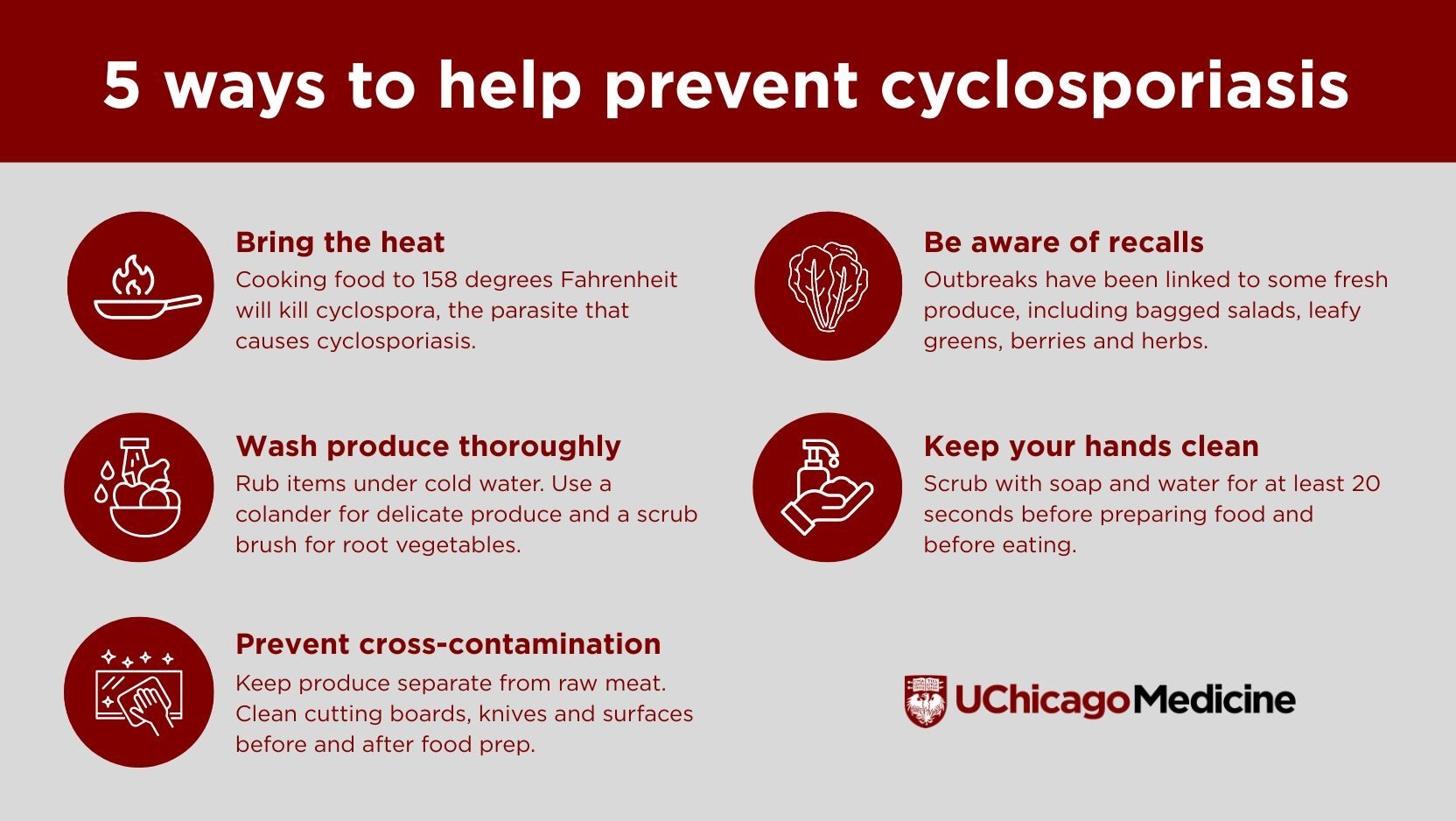
What are the common symptoms of cyclosporiasis?
After entering the body, cyclospora lodges in the small intestine and causes watery diarrhea and these other symptoms:
- Loss of appetite
- Abdominal cramping and bloating
- Fatigue
- Low-grade fever
- Increased flatulence
How long does cyclosporiasis last?
Symptoms usually start about two to 14 days after exposure and can persist for several weeks.
How is cyclosporiasis treated?
Most healthy patients will recover without antibiotics, but cyclosporiasis can sometimes cause complications such as dehydration, reactive arthritis, malnutrition or gallbladder inflammation.
UChicago Medicine can test for cyclospora. Positive results are reported to the public health department to help manage outbreaks.
*Joseph Newberg, MD, is the Medical Director of Urgent Care for UChicago Medicine Medical Group and a UChicago Medicine Medical Group provider. UChicago Medicine Medical Group comprises UCM Medical Group, Inc., f/k/a UCM Care Network Medical Group, Inc., and UCM Medical Group Sub, LLC f/k/a Primary Healthcare Associates, S.C. UChicago Medicine Medical Group providers are not employees or agents of the University of Chicago Medical Center, the University of Chicago, UChicago Medicine Ingalls Memorial, UChicago Medicine Medical Group - Homewood, UChicago Medicine Dearborn Station or UChicago Medicine River East.
David Zhang, MD
David Zhang, MD, specializes in pediatric infectious diseases at Comer Children's Hospital.
Learn more about Dr. Zhang
Joseph Newberg, MD
Board-certified family medicine physician, Joseph Newberg, MD, specializes in care for the whole family.
Learn more about Dr. Newberg