
Woman shares leukemia battle, partial-match stem cell treatment with 1.5 million on social media
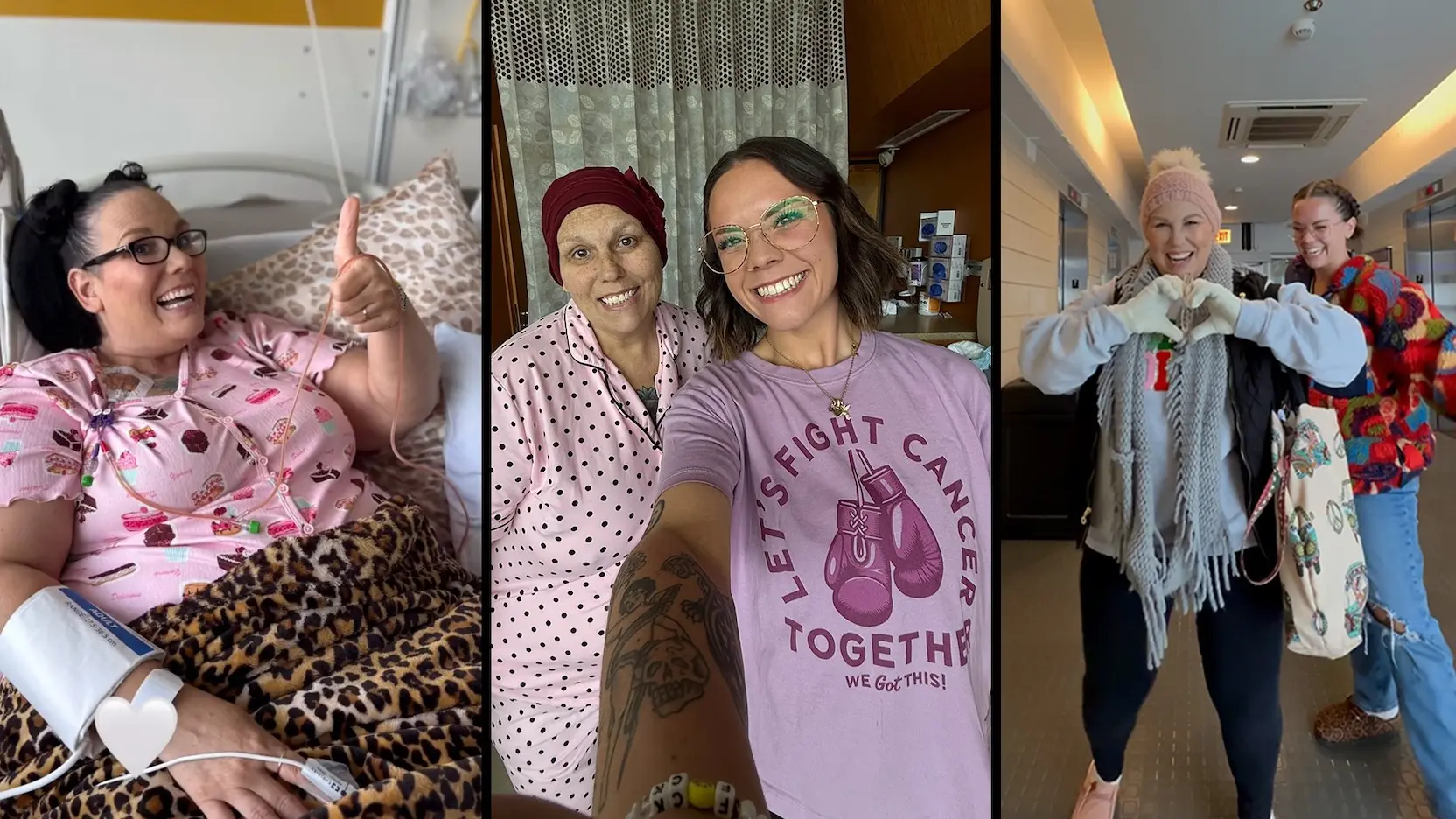
When Sherry Cordle received a stem cell transplant last summer, more than 1.5 million people followed her journey on social media.
Cordle had been diagnosed with acute myeloid leukemia (AML), an aggressive blood and bone marrow cancer, two years earlier. After several rounds of chemotherapy provided only temporary remission, she was referred to the leukemia experts at the University of Chicago Medicine Comprehensive Cancer Center.
“I was so sick and tired; I knew I couldn’t keep doing chemo,” said Cordle, 51, who lives in Mapleton, Illinois, just outside Peoria.
The next step would be stem cell transplantation, also known as bone marrow transplantation. The transplant would replace Cordle’s cancerous bone marrow with new stem cells that would reproduce healthy blood cells.
She'd also benefit from two newer scientific advances: genetic testing and use of a partial match donor.
Cordle's treatment and recovery were tough. But she wanted to share every phase with the world.
Cordle and her daughter, Jenna, posted about the experience on TikTok, Instagram and Facebook. Jenna, a social media influencer, already had a large following for her posts on life after a substantial weight loss.
The posts often captured their lively personalities: dancing together in the hospital elevator or laughing as they used a lint roller on Cordle’s bald head after chemotherapy. Others addressed the pain, struggle and heartache of cancer treatment.
“I wanted to educate other people on what the process was like,” Cordle said. “It was a learning process for me, and this way, people who have to go through this can be prepared.”
Genetic testing for personalized leukemia treatment
In preparation for her transplant at UChicago Medicine, Cordle’s treatment began with intensive chemotherapy to destroy the leukemia.
Her oncologist, Mariam Nawas, MD, also recommended genetic testing. That would determine if her cancer had any genetic mutations that could inform their treatment options.
Sure enough, the test revealed a mutation. It allowed Nawas to target Cordle’s leukemia with a newly approved drug.
“The test gave us an avenue to add an additional drug to her regimen that ultimately helped get her into remission. We wouldn’t have been able to do the transplant otherwise,” said Nawas, part of the cancer center’s Complex Acute Leukemia and Myeloid Malignancies Clinic (CALMM), which offers comprehensive, personalized care for AML and other high-risk myeloid cancers.
The test also revealed that Cordle had Lynch syndrome, an inherited genetic condition that predisposes a person to several cancers. For this reason, Cordle had surgery to preventively remove her uterus and ovaries, as well as a cancer-checking scope of her stomach.
“Getting her to the day of the transplant safe, healthy and in remission was such a rollercoaster,” Nawas said. “Fortunately, we were able to do it because of all the tools we had at UChicago Medicine.”
Why partial match transplants benefit cancer patients
Historically, stem cell donors and recipients needed to have a closely matched tissue type. This is to prevent the body’s immune system from rejecting transplanted cells and reduce the possibility of graft-versus-host disease, a condition where the newly transplanted cells attack the recipient’s body.
But neither the stem cell donor registry nor any of Cordle’s family members could provide her a full match.
There was another way: an increasingly popular option called partial match transplant.
With a partial match donor, the patient can receive a treatment that helps their body tolerate the nonmatching stem cells.
“We are able to do partial match transplants safely and effectively now,” Nawas said.
It’s one of many new scientific advances dramatically improving leukemia treatment, Nawas said. The breakthrough also makes stem cell transplants accessible to more cancer patients, including ethnicities that are underrepresented in the donor registry.
“The therapies Sherry received, that ultimately saved her, have only been available in the last five years,” Nawas said. “We were able to figure out specifically what was driving her leukemia and target it.”
Life after a stem cell transplant
Following her stem cell transplant in June 2025 — done intravenously, similar to a blood transfusion — Cordle had to stay in Chicago for three months to be near her doctors.
Jenna, a pediatric nurse, uprooted her life and moved in with her mother to help with housework, meals and medication management. UChicago Medicine’s cancer team found them an apartment with discounted rent near the hospital’s Hyde Park campus.
Still, it was a bumpy recovery. Cordle was still mourning the loss of her husband, who died of cancer in December 2024, shortly after she started her own treatment. Plus, following her transplant, Cordle suffered persistent gastrointestinal issues, severe fatigue and a 40-pound weight loss.
Much of this ended up on their social media posts, where they emphasized finding the beauty and humor in things, even in bad times.
The message resonated. “Immediately, there were thousands of strangers saying, ‘How can we help? What do you need?’” Jenna said.
Becausea stem cell transplant effectively replaces a person’s immune system with the donor’s, Cordle is on antibiotics and chemotherapy medications and must be closely monitored.
Just before Christmas, she had her 14th bone marrow biopsy, a painful procedure that involves a long needle inserted in the back of her hip, to make sure her cancer hasn’t returned.
“She weathered the storm as well as anyone could hope, and she really held her head high throughout all of the challenges,” Nawas said. “The hope is that, with this transplant, she will never relapse again and this will actually cure her leukemia.”
Through it all, Cordle has maintained a positive outlook — and she continues to post about her journey on social media.
“It makes a difference if you keep a positive attitude and you have a strong system of people, including your doctors,” she said. “Your doctors will instill a thrill of hope in you, if you have good ones. And luckily for me, I had very good ones.”

UChicago Medicine Comprehensive Cancer Center
UChicago Medicine is designated as a Comprehensive Cancer Center by the National Cancer Institute, the most prestigious recognition possible for a cancer institution. We have more than 200 physicians and scientists dedicated to defeating cancer.
Learn More About the Comprehensive Cancer Center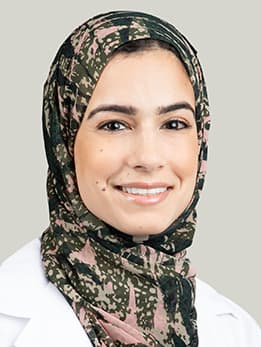
Mariam Nawas, MD
Mariam Nawas, MD, specializes in hematology and oncology with a primary focus on bone marrow transplantation (hematopoietic cell transplantation) for patients suffering from leukemias and other bone marrow cancers and disorders.
Learn more about Dr. Nawas