Faith in motion: Rehab after heart surgery helps preacher return to the pulpit
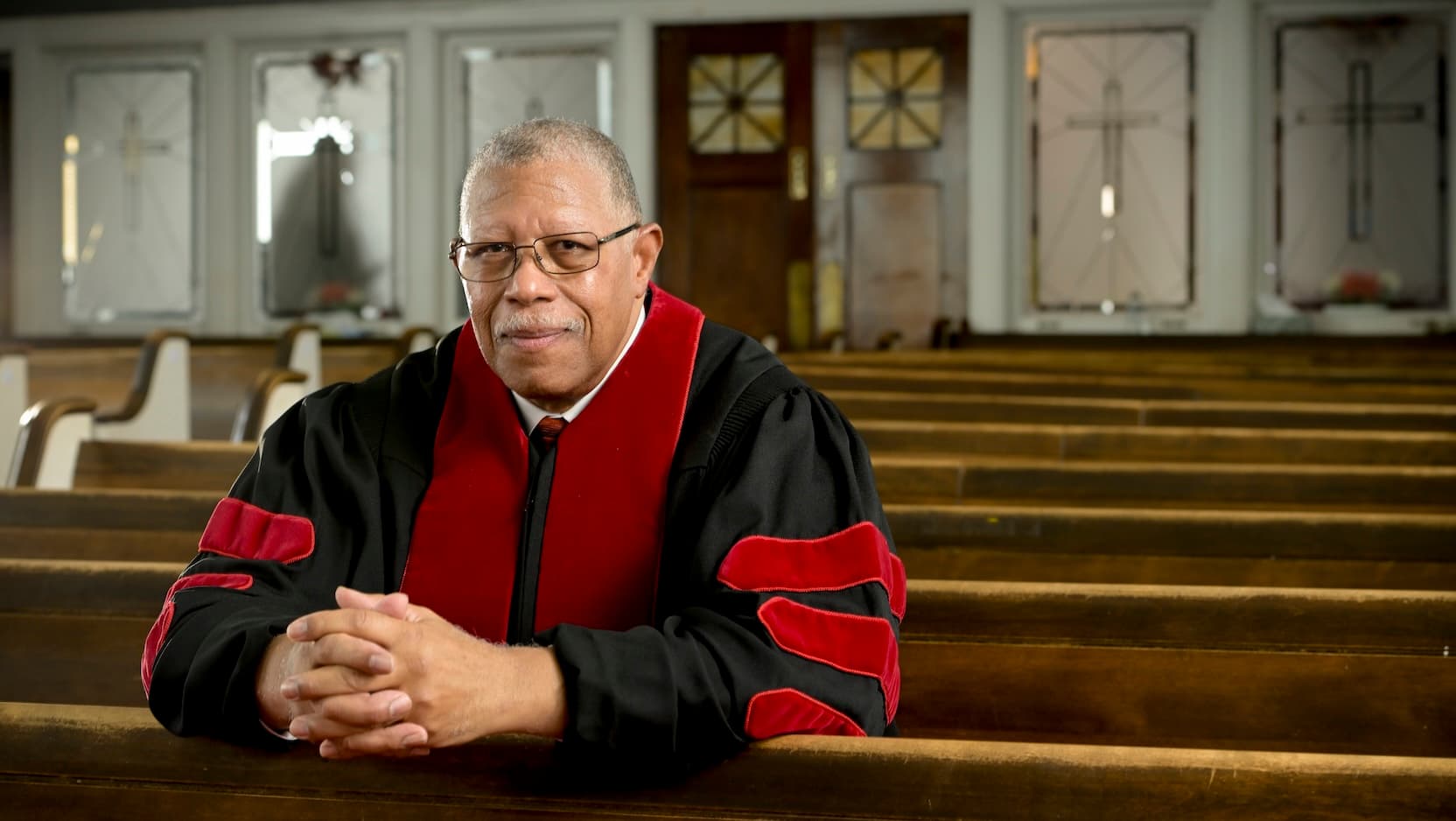
Hugh Williams, pictured at Mission of Faith Baptist Church on the South Side. (Mark Black)
Hugh Williams has ministered in churches, parks and on street corners. He never anticipated speaking at an inpatient rehabilitation facility.
But that’s what happened when the South Side man spent 10 days at UChicago Medicine Ingalls Memorial Hospital recovering from open-heart surgery.
Williams would need to strengthen his endurance and confidence before returning to Mission of Faith Baptist Church, where he is the director of evangelism and preaches occasionally.
The dilemma gave his rehabilitation team an idea: create an occupation-based exercise that involved giving a mock sermon.
Williams, 69, called it a “divine appointment” from God.
But it was no coincidence, said David Weiss, MD, the medical director of rehabilitation services at UChicago Medicine, which in 2019 formed a partnership with the internationally-known Shirley Ryan AbilityLab to serve patients at the academic medical system.
“It's crucial to design exercises around occupational tasks, because these activities strengthen the exact skills patients need to make their return to independent living more effective,” Weiss said.
UChicago Medicine Inpatient Rehabilitation teams lead the full continuum of rehabilitative services to serve people with complex rehabilitative needs — such as spinal cord injuries or amputations — but they also work with patients like Williams who are recovering from more common illnesses.
Rebuilding strength and confidence
Earlier this year, Williams felt increasingly out of breath and sweated profusely, but he chalked it up to mid-life weight gain. It was only after experiencing chest pains and visiting the emergency department that Williams learned he had three blocked arteries.
Williams underwent triple bypass surgery in August. He spent more than a week recovering and was transferred to Ingalls Memorial for daily, three-hour rehabilitation sessions.
Williams was weak and struggled with endurance. Every day in a hospital bed can require two days to recover from a hospital-acquired disability, his therapists said.
“He had some difficulty, particularly with standing for long periods of time,” said Ingalls Memorial physical therapist Alex Gockman, PT, DPT. “To be able to walk farther than across a room in the beginning was a challenge.”
Gockman created a balance- and strength-focused exercise routine to help Williams walk faster and farther with less support. Therese Swigart, OTR/L, an Ingalls Memorial occupational therapist, worked with Williams on key activities like bathing and dressing.
He practiced using a sock aid — a device that looks like a drink cup cut in half lengthwise and attached to two ropes — to put on socks without having to bend over, and he used a handle-and-grip "grabber" mechanism to reach for items without reaching or bending.
“He went from needing help with things to being able to do everything for himself,” Swigart said.
Personalized rehab for real-world scenarios
Gockman remembered his own pastor telling him about giving a sermon in a hospital auditorium as part of speech therapy after vocal-cord surgery. Swigart asked Williams if he'd consider doing something similar.
Williams was ready. “If I can't do nothing else, I can preach!” he said.
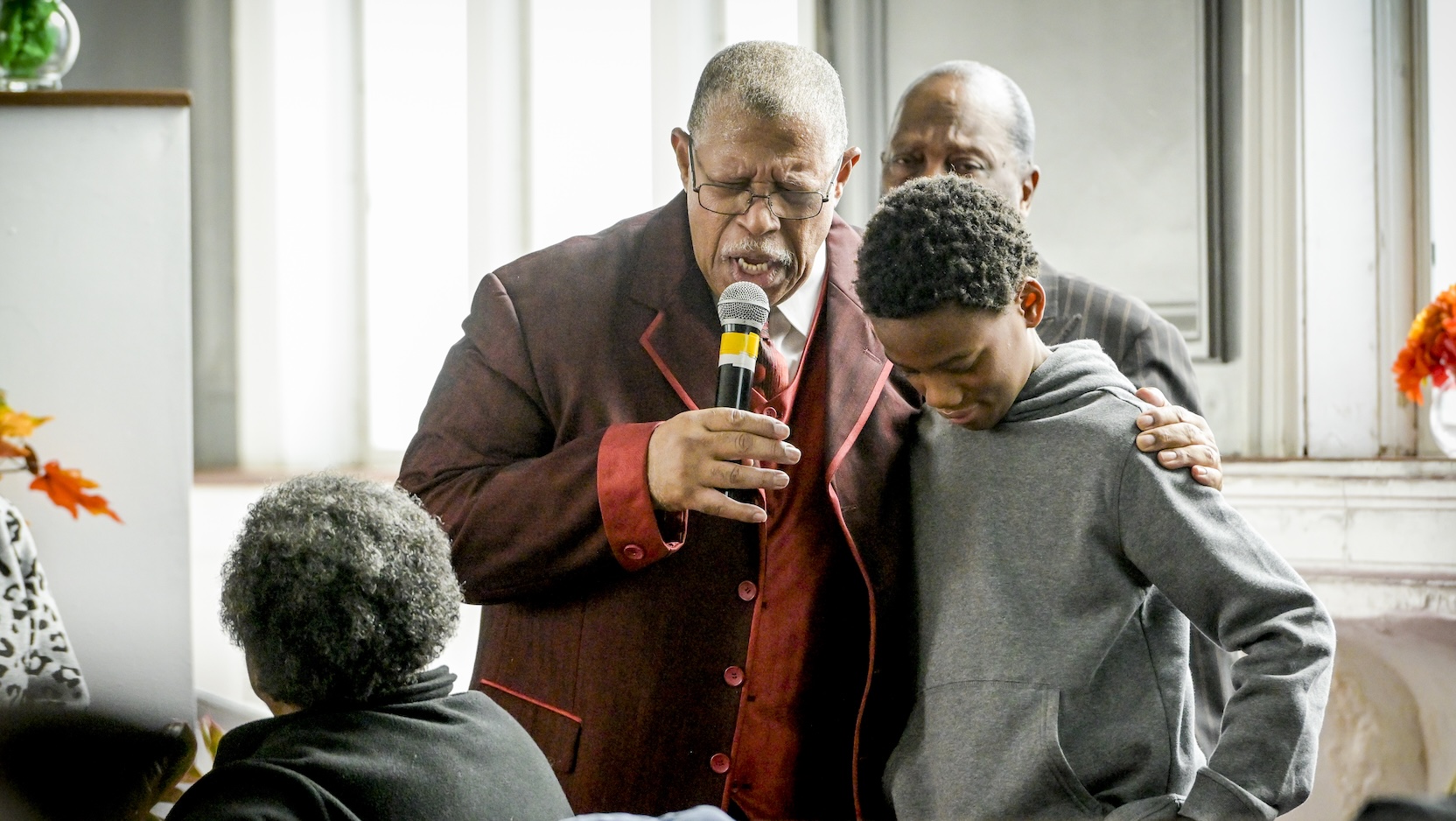
Swigart suggested Williams aim for a 20-minute standing sermon, and he provided one of the clinic’s mobile laptop stands to use as a podium. A group of Ingalls Memorial patients and staff watched as Williams shared an unscripted message of hope and resilience.
“You know, the worst thing you can do is give a Baptist preacher an audience,” Williams said, with a chuckle.
A little more than a week after arriving at the first rehabilitation session in a wheelchair, he was discharged needing only a walker. Williams now walks everywhere and will soon begin cardiac rehabilitation.
And he’s back to work: During a recent Sunday service, he led his congregation through sermon, song and prayer.
“I'm asking God for at least 16 more years,” Williams said. “If I get to 85, in decent health, I'll be real happy.”
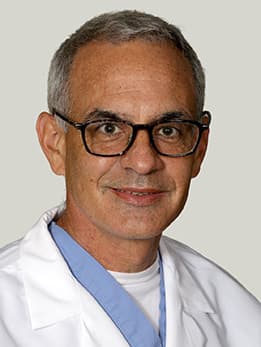
David Weiss, MD
David Weiss, MD, specializes in physical and rehabilitation medicine and is based in Ingalls Memorial Hospital. Dr. Weiss helps patients who have mobility limitations due to injuries, and he provides individualized treatment plans that are tailored to each specific patient's needs and goals.
Read more about Dr. WeissThings You're Too Embarrassed to Ask a Doctor Podcast