
What age should I start having mammograms? Here are the latest recommendations
What age should I start having mammograms? Here are the latest recommendations
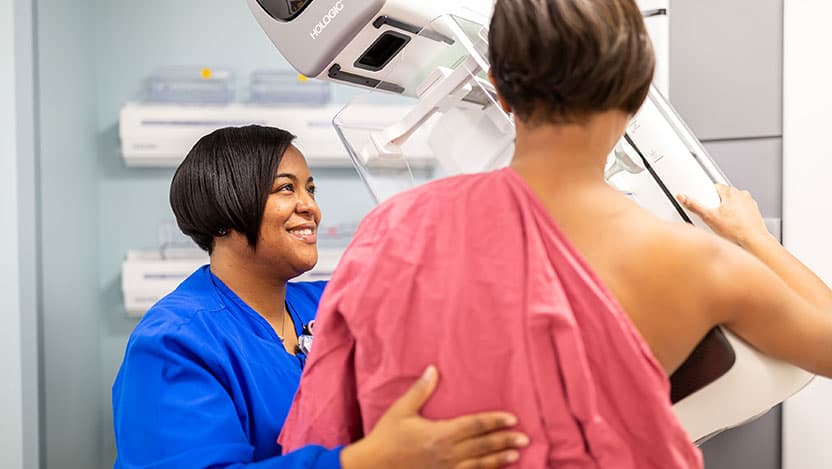
Women with an average risk for breast cancer should have a mammogram starting at age 40, according to the newest recommendations from several prominent national groups, including the U.S. Preventative Services Task Force, the National Comprehensive Cancer Network (NCCN), and the American College of Radiology.
University of Chicago Medicine’s breast cancer experts strongly support that recommendation and believe people as young as 25 should have a breast cancer risk assessment with their obstetrician-gynecologist (OB-GYN) or primary care doctor.
That way they can determine if they’re at high risk for the disease, and if so, can be screened sooner than age 40.
“It’s heartbreaking when a patient comes in at age 45 with cancer that now requires intensive therapy, whereas if we knew about it sooner, it might not have been necessary,” said UChicago Medicine breast surgeon Sarah P. Shubeck, MD, MS.On average, U.S. women have a 13% chance of developing breast cancer, the American Cancer Society reports.
Shubeck, UChicago Medicine oncologist Olufunmilayo I. Olopade, MD, and radiologist , answer frequently asked questions about mammograms.
Why do I need a mammogram at age 40?
- Shubeck: These recommendations are for patients who say, “I don’t know anything about breast cancer. How do I take care of myself?” This is how they can take control of their health. Breast cancer is incredibly common and we want to be proactive. You don’t have to have a family history to be affected. This should evoke a feeling of empowerment rather than fear. Knowledge is power.
- Olopade: Every decision we make in healthcare is nuanced, but we know there’s an epidemic of women getting breast cancer between the ages of 40-49. What’s causing that epidemic? We are trying to find out. The most important thing we can do is practice evidence-based medicine. The data suggests that as you get older, you may get breast cancer. So the recommendation to have a mammogram at age 40 is a step in the right direction. Everyone should talk to their OB-GYN or primary care doctor in their 20s or 30s, so by the time they’re 40, they know if they’re at average or high risk for breast cancer.
- Kulkarni: We see so many young patients with breast cancer. Ages 40 to 50 is where we see more aggressive cancers. If the patient is high-risk, a mammogram may not be enough. They may need a breast MRI. But for an average-risk woman, 40 is definitely the right time to start screening.
Who is at high risk for breast cancer?
- Olopade: Risk factors differ by race and ethnicity, but Black women and Ashkenazi Jews are at high risk. So is anyone with a family history of the disease, anyone who carries a genetic mutation in a gene such as BRCA or p53, or anyone who has already had multiple breast biopsies.
How do I know if I have dense breasts?
- Shubeck: You can't know if you have dense breasts if you’ve never had a mammogram. If you have dense breasts — which means your breasts have more glandular and fibrous tissue than fatty tissue — it is harder for radiologists to see cancer on a mammogram. That means a mammogram will be insufficient to capture and characterize what’s going on in the breast. We do a lot of supplementary imaging here at the UChicago Medicine Comprehensive Cancer Center. It’s effective because we find the cancer at a point when it’s easier to intervene.
- Kulkarni: Of the screening mammograms we do, 40% are for women with dense breasts. That’s a high number. It’s a challenge for us mammographers because dense breast tissue can hide a small cancer. We have the best tools out there — 3D mammography, whole breast ultrasound and an ultrafast abbreviated breast MRI. These tests don’t replace mammograms, but they detect small invasive cancers that are difficult to see on a mammogram. There are ongoing studies to personalize the best screening test and the frequency you need. That is the future.
- Olopade: For most young women with dense breasts, the probability that we’ll find cancer is very low. It’s easier to see cancer on a mammogram for a 50-year-old woman who has more fatty breast tissue than a young woman with dense breasts. That’s why we don’t want to give every woman under the age of 40 a mammogram and why there are debates about mammograms.
Do I need a breast MRI?
- Olopade: If you know you're at high risk at age 30, or if you have dense breasts, you should be getting a breast MRI. saying if you have dense breasts, you need to be notified after your mammogram so you can opt for additional testing.
Am I likely to get a false positive on my mammogram or MRI?
- Kulkarni: As a radiologist, I’ve seen a sharp drop in the number of false positives on mammograms and breast MRIs because the technology has evolved. We have really sharp images now. There are dedicated breast radiologists who have completed a full year of breast imaging fellowship and have learned the nuances of interpretation and interventional skills. The amount of time the patients spend “on the scanner” is getting shorter. Plus, we use artificial intelligence and computer-assisted diagnosis to augment our interpretation. The number of false positive biopsies has gone down, too. In every test we do, we have newer tools and newer ways of understanding what an image can tell us about the biology and aggressiveness of the tumor. There’s a lot of research being done on that front.
Do I need genetic testing for breast cancer?
- Kulkarni: Anyone at high risk should have genetic testing. But sometimes, women with average breast cancer risk get testing done because they’re anxious to know. And that’s fine. If they have a genetic mutation, then they can let family members know that they may be at high risk for certain cancers. We have a really good group of genetic counselors at UChicago Medicine who use different models to calculate a patient’s risk for breast cancer. It can done through a blood or saliva test.
- Olopade: It’s important to have genetic testing because then we can look at all genetic variants that put some women at very high risk and some women at low risk. There are so many genetic variants. Now we can look at all of them in your entire genome. We want to know, who is in the extreme? Who is at low risk? Maybe they can screen every two years or three years? We want to learn how best to screen them so we don’t overdiagnose and we don’t miss the cancers.
What’s new with the WISDOM study?
- Olopade: It’s still ongoing. (Women Informed to Screen Depending On Measures of risk) tests a personalized approach to screening compared to annual mammograms. We’ve already enrolled more than 86,000 women, including more diverse participants that UChicago Medicine has access to.
Black women have the highest breast cancer death rate. What does this recommendation mean for them?
- Shubeck: Increased screenings have moved the needle. They’ve made breast cancer outcomes better, but they’ve been differentially beneficial to certain subsets of the population. Black women still have higher mortality from breast cancer than white women. Hopefully, having mammograms starting at age 40 will correct some of that disparity where women of color were left behind. It’s about closing the gap.
- Olopade: When you look at America’s diverse population, you can see why we need to adjust how we do screenings. For example, Black women are more likely to get breast cancer under age 40 and get triple-negative breast cancer (an aggressive and deadly form) at some point in their lives. Earlier screenings are needed for them.
What are the key takeaways from all this?
- Olopade: Every woman should know their risk for breast cancer. Because of the recent advancements, we have better tools and better risk prediction.
- Shubeck: We want women to understand what their risk profile is and partner with their doctors to make the right screening plan for them. Is a mammogram enough? Do I need an MRI? Do I need an ultrasound? And when? And how often? Breast cancer is like a fingerprint. Each person has a different set of circumstances and we work together as a multidisciplinary program to get the right care for each patient.
- Kulkarni: We need to do the risk assessment sooner, and in some cases, more frequently, because it’s not a one-size-fits-all thing. The risk for breast cancer changes over one's lifetime.
Breast Cancer Care
Our team represents expertise across the spectrum of breast cancer care: breast imaging, breast surgery, medical and radiation oncology, plastic and reconstructive surgery, lymphedema treatment, clinical genetics, pathology and nursing. Our comprehensive care approach optimizes chances of survival and quality of life.
Learn more about UChicago Medicine breast cancer care.