
Understanding sarcoidosis: UChicago Medicine clinic offers team care for a complex condition
Sarcoidosis is a rare condition marked by the growth of clusters of immune cells called granulomas. These clusters are caused by inflammation (an overreaction of the body’s immune system), and they can interfere with how organs work.
The granulomas, which develop as lumps or nodules, may appear in different places on the body and cause a variety of symptoms. Because of this, sarcoidosis is often tough to diagnose.
Specialists at the UChicago Medicine Multidisciplinary Sarcoidosis Clinic are experienced in diagnosing and treating sarcoidosis. Our team offers a unique, patient-centered approach that involves seeing multiple specialists in a coordinated visit.
In recognition of Sarcoidosis Awareness Month this April, I would like to provide answers to some common questions about this chronic disease:
Who is most at risk for sarcoidosis?
Doctors are still learning what triggers sarcoidosis and who may get it.
In the United States, sarcoidosis is more common among African Americans and people of Northern European descent. Research has also shown that environmental triggers such as certain infections and occupational exposures, as well as genetics, can play a role.
How does sarcoidosis affect the body?
One of the most frequent body parts that sarcoidosis affects is the lungs. But sarcoidosis also can affect the heart, liver, kidneys, skin, muscles and eyes.
As a neurologist, I look at sarcoidosis that involves the brain, spine and nerves. This is called neurosarcoidosis, and it is a less common manifestation of the condition.
What are some common symptoms of sarcoidosis?
Sarcoidosis originally was discovered as dark patches or firm bumps of skin on the body. If you discover these symptoms, it’s important to see a dermatologist.
The most common symptom with lung inflammation from sarcoidosis is coughing. When the heart is involved, sarcoidosis can lead to fluid buildup and swelling in the arms and legs. Sarcoidosis-related inflammation of the eye can cause blurry vision or eye pain.
Neurological involvement can involve a lot of different symptoms, most commonly numbness and weakness, but also stiffness in the arms and legs and trouble controlling the bladder.
With so many possible symptoms, how do you diagnose sarcoidosis?
Diagnosis often starts with your primary care physician doing a review of the symptoms you may be experiencing. Sarcoidosis specialists are involved depending on which parts of the body are affected by inflammation.
To make a diagnosis, testing may include blood work and body scans, such as CT or MRI. We might perform lung and heart function tests. In some cases, a biopsy is necessary.
Sarcoidosis is a particularly challenging diagnosis because it can look like a lot of other diagnoses — which is why sarcoidosis is known as “the great mimicker.” Sarcoidosis also can be tough to diagnose because it can involve sensitive areas of the body, like the brain.
How is sarcoidosis treated?
Some patients living with sarcoidosis have very mild symptoms, such as those affecting only the skin or lungs. They may be monitored by their medical team and don’t necessarily need treatment.
Other patients may have a greater number of granulomas that can spread to other parts of the body and can have more severe symptoms; they do need treatment.
Much of what we do is try to reduce the inflammation, to reduce symptoms that may impact quality of life and to prevent new granuloma formation. Because sarcoidosis is a chronic inflammatory process, we often need to give medicines that lower the inflammation.
Still, one of the most common questions patients ask is, “Is there a cure?” Currently, we do not have a cure.
What sets the UChicago Multidisciplinary Sarcoidosis Clinic apart?
Instead of moving between doctors, patients stay in one room while pulmonologists, cardiologists, rheumatologists, neurologists, dermatologists and ophthalmologists rotate to evaluate them. That’s a special feature of our clinic.
This team-based care ensures comprehensive assessment and collaborative treatment planning, often making the initial visit last about two hours.
As a member of the Global Sarcoidosis Clinic Alliance at the Foundation for Sarcoidosis Research, we collaborate with about 50 other institutions nationally and internationally to help advance sarcoidosis research with the aim of having more medications approved by the FDA.
Each person’s sarcoidosis journey looks different, and it can change over time. The UChicago Medicine Multidisciplinary Sarcoidosis Clinic team continuously works to develop an individualized plan to help sarcoidosis patients achieve their treatment and life goals.
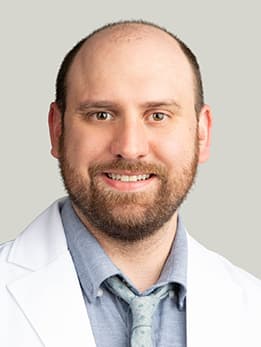
Daniel P. Kurz, Jr., MD
Daniel P. Kurz, Jr., MD is a board-certified neurologist at UChicago Medicine and an expert in multiple sclerosis, along with other disorders that impact the nervous system