
Spine surgery to remove cyst helps retiree regain his stride

Last year, Steven Swartz began having trouble with his balance.
“It was just like a drunken sailor, especially when I stood up and started walking,” said Swartz, 70.
As an active outdoorsman who prefers not to sit still, Swartz was frustrated. He began using a cane and a walker, and worried the setback might be permanent.
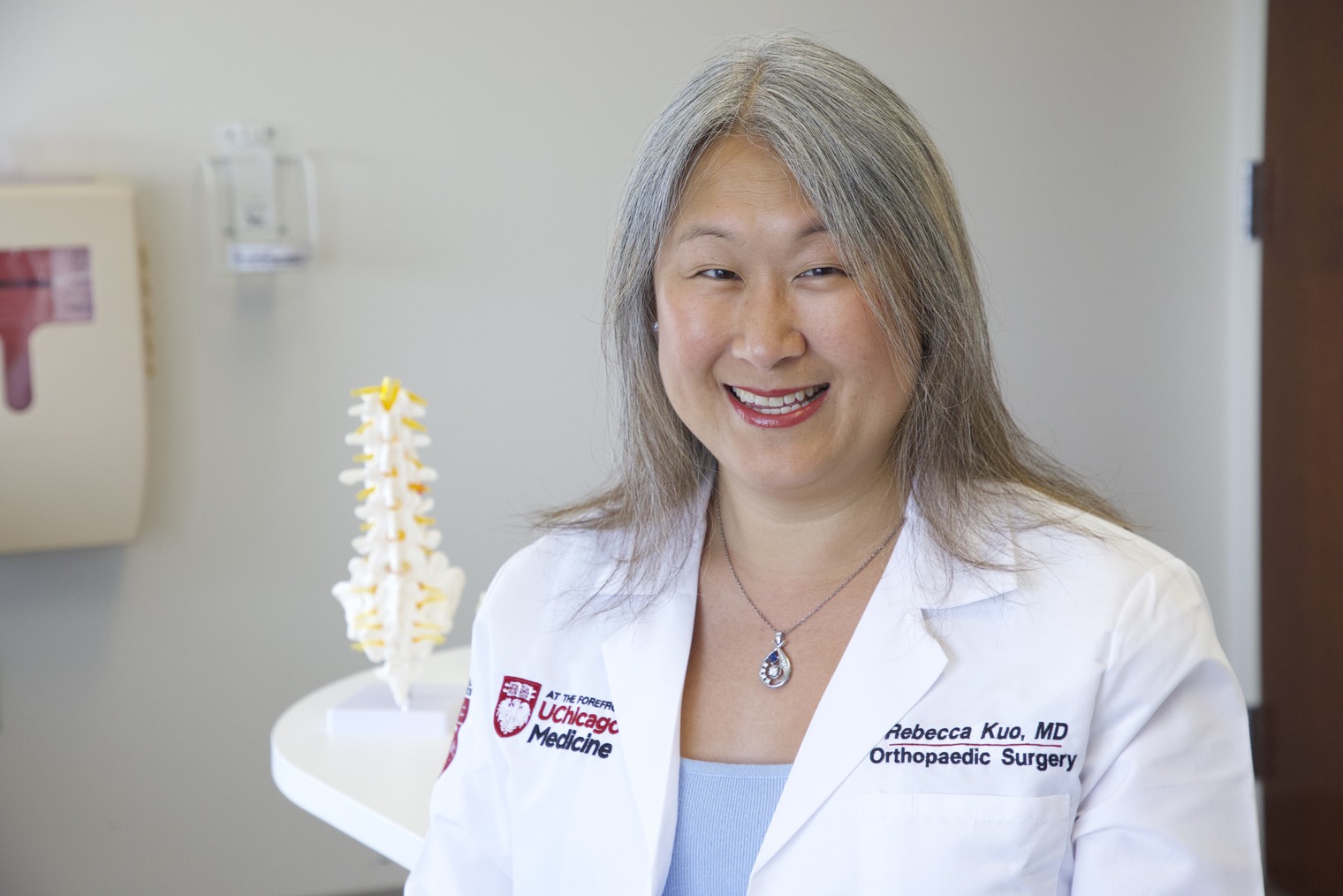
But Swartz knew exactly who to call: Rebecca Kuo, MD, the spine specialist who had treated him before. Kuo is a board-certified orthopaedic spine surgeon who joined the University of Chicago Medicine Comprehensive Spine Center in August 2025.
“I’d have her operate on my grandkids; that’s how much I put my trust in her,” Swartz said.
History of trusted spine care
Swartz is no stranger to back and joint pain. He spent more than 40 years working at a chemical plant, doing everything from maintenance to operations.
Over the years, Swartz had a left hip and left knee replacement plus numerous steroid shots to treat sciatica — a painful condition caused by nerve irritation in the lower back.
Kuo, previously in private practice in Joliet, Illinois, performed a lumbar laminectomy and fusion for Swartz in 2016 to relieve nerve pressure and stabilize his spine. Roughly six years earlier, she also fused three vertebrae in his neck to relieve nerve pain in his shoulder.
This time, though, something was different. An X-ray of Swartz’s lower spine showed nothing unusual, and physical therapy with a vertigo specialist didn’t help.
An MRI revealed the culprit: a fluid-filled cyst on a joint on the middle of Swartz’s spine.
Fast, coordinated care for spinal cyst surgery
Known as a facet cyst or synovial cyst, this condition occurs when fluid leaks from the sacs that lubricate the facet joints connecting the spine’s vertebrae.
The body typically forms a membrane around the leaking fluid, which can swell and press against nearby nerves.
Symptoms include pain in the back and buttocks, as well as weakness, tingling, numbness and pain in the legs. Treatments may range from pain medication and physical therapy to steroid injections, draining the cyst or surgery.
For Swartz, the compression was significant. “This was a cyst in the back of his spine, pushing forward into the spinal canal and compressing the spinal cord,” Kuo said.
With his symptoms worsening and Kuo transitioning to her new role, time was of the essence. Thanks to teamwork at UChicago Medicine, Swartz was scheduled for surgery quickly.
“I think one of the things this story highlights is the collaboration among UChicago Medicine physicians and nurse practitioners that helped get Steven in quickly,” Kuo said.
With an integrated surgical and rehabilitation team under one roof, UChicago Medicine’s spine center offers the full spectrum of treatment for spine conditions, including nonsurgical treatments.
Successful spine surgery leads to long-term recovery
In August 2025, Kuo surgically removed the cyst and part of the joint to decrease the chance of recurrence. She used screws and rods to secure Swartz’s spine. He spent one night in the hospital before beginning rehabilitation therapy.
“He has a very positive outlook on life, and that always helps people recover better,” Kuo said.
It can take roughly a year for nerves and the spinal cord to fully heal after surgery, so rehab was vital to Swartz’s recovery.
“You just have to have a little patience sometimes,” said Swartz, who lives in Morris, Illinois, with his wife Lynnese. “I wasn’t a believer in therapy at first, but as I get older, it does help a lot.”
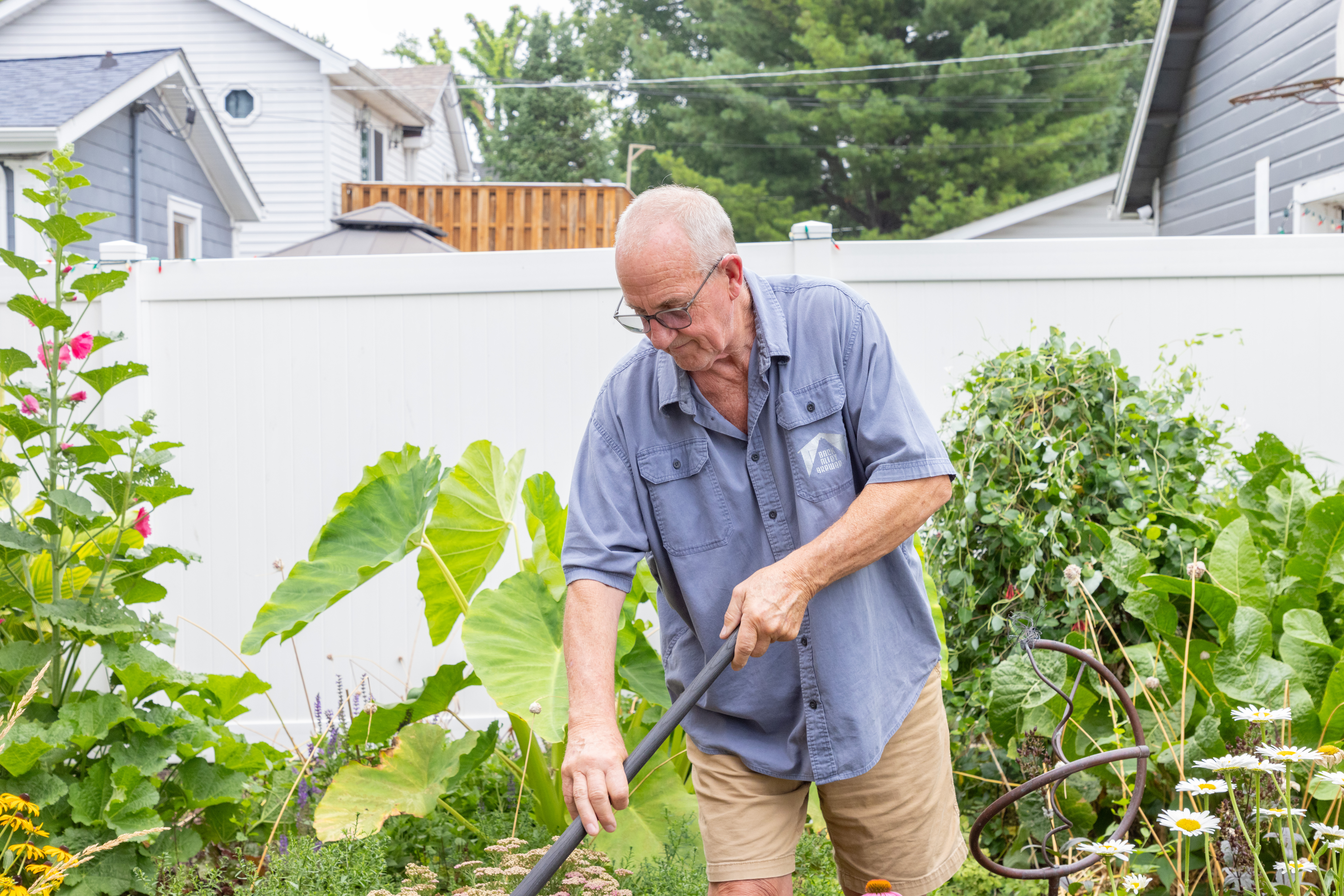
Today, Swartz says he feels great. He’s able to walk longer distances and keep up with his grandchildren.
An avid gardener and beekeeper, he feels grateful for the improved quality of life and the guidance from his trusted surgeon.
“When I walk out the door, I don’t need a cane or walker,” Swartz said. “I can do about anything I want to do.”