
Mobile dental unit takes no-cost oral healthcare out into the community
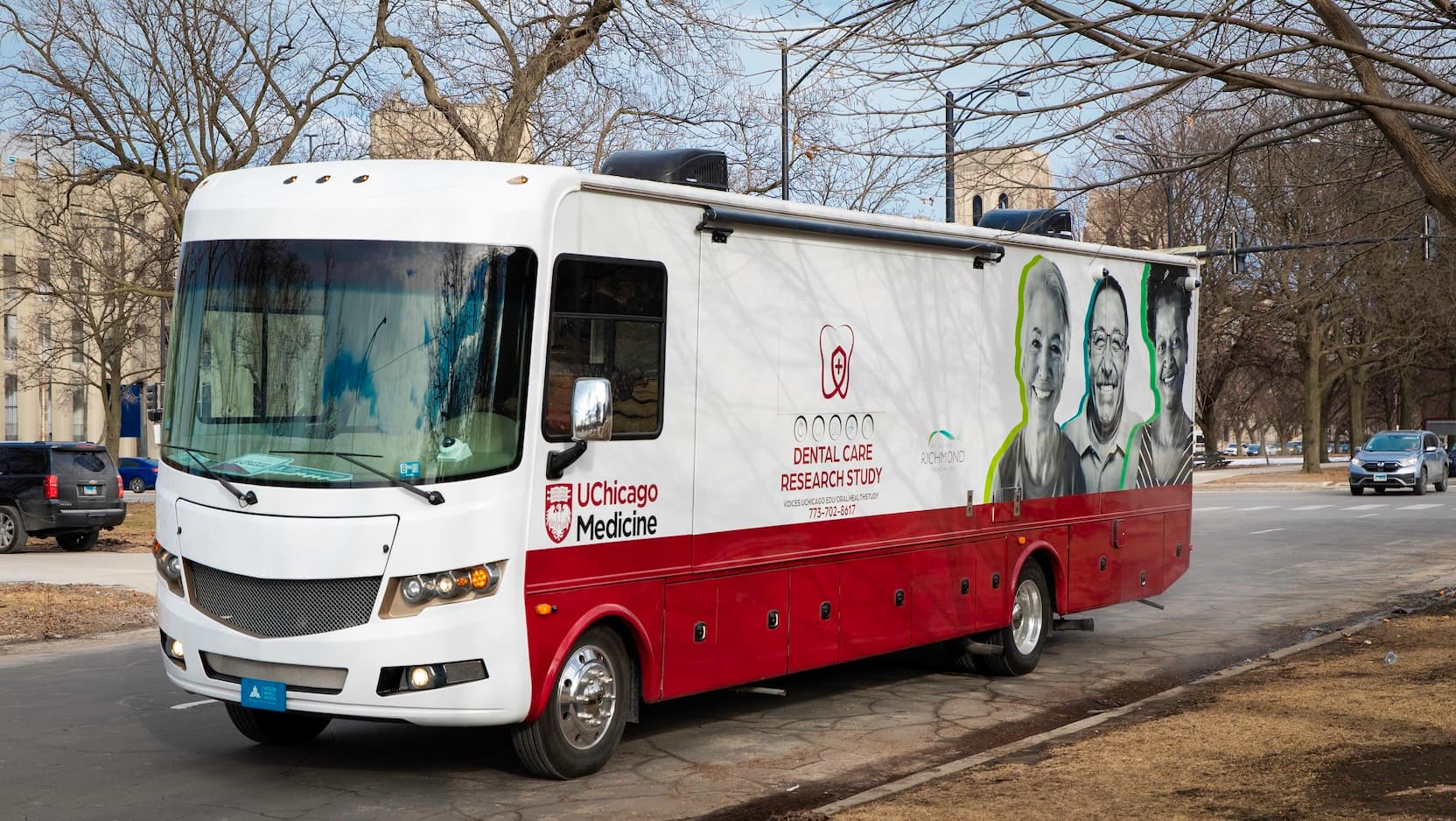
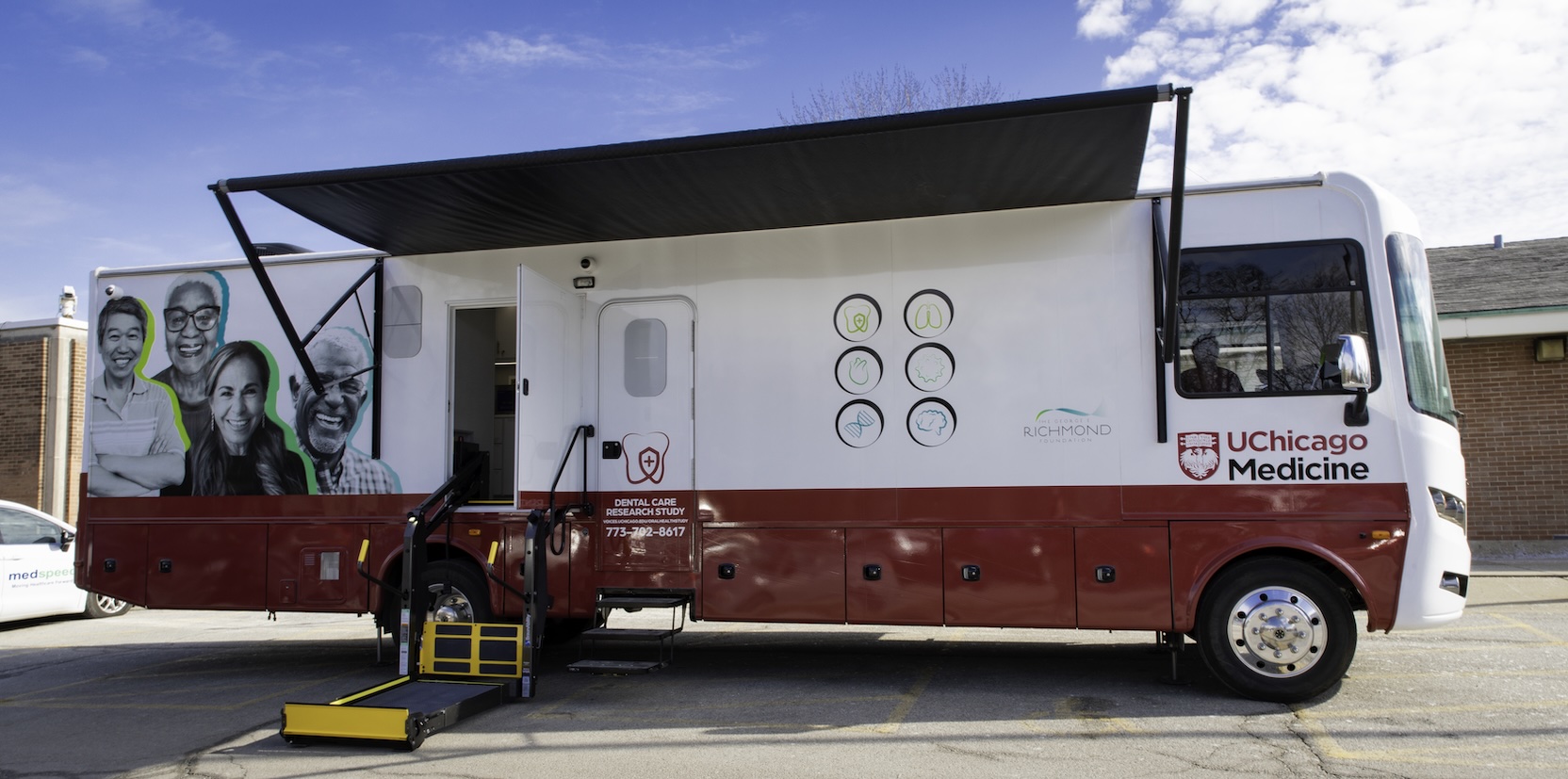
The University of Chicago Medicine has launched a new mobile dental clinic that brings no-cost oral healthcare directly to community members across the South Side and south suburbs of Chicago.
The new, 37-foot-long mobile unit expands the reach of an ongoing University of Chicago Dental Care Research Study, which aims to understand how quality of life and health for older adults who do not have dental insurance may benefit from being offered no-fee dental care. Since its initiation in 2020, the randomized controlled trial has served 785 patients. The study team and study’s principal funder, the George E. Richmond Foundation, hope to serve hundreds more.
“Bringing care closer to home is critical to so many people we hope to serve. We are really excited to see the mobile unit on the move,” said principal investigator David Meltzer, MD, PhD, the Fanny L. Pritzker Professor of Medicine.
There is growing evidence that oral health problems can affect overall health and quality of life. However, many adults do not have dental insurance, and many do not receive regular dental care due to cost. In a survey of patients over age 65 hospitalized at UChicago Medicine, more than one in five reported not receiving oral healthcare because of cost concerns.
UChicago Medicine patients in Illinois over age 50 with no dental insurance are eligible to enroll in the five-year trial. They start with an in-person study visit to take baseline health measurements and a survey. Previously, they had to travel to the UChicago Medicine dental clinic on the health system’s main campus in Hyde Park for this visit, but now the mobile dental clinic can bring the visit — and subsequent care appointments — directly to those who face transportation challenges.
“We designed the mobile unit to closely emulate a complete two-chair dental clinic with a panoramic X-ray and sterilization area, so anyone treated in the mobile clinic can receive the same comprehensive care they would receive in our main clinic,” said co-investigator Kopal Mathur, Director of the Program in Oral Health at the UChicago Center for Health and the Social Sciences (CHeSS).
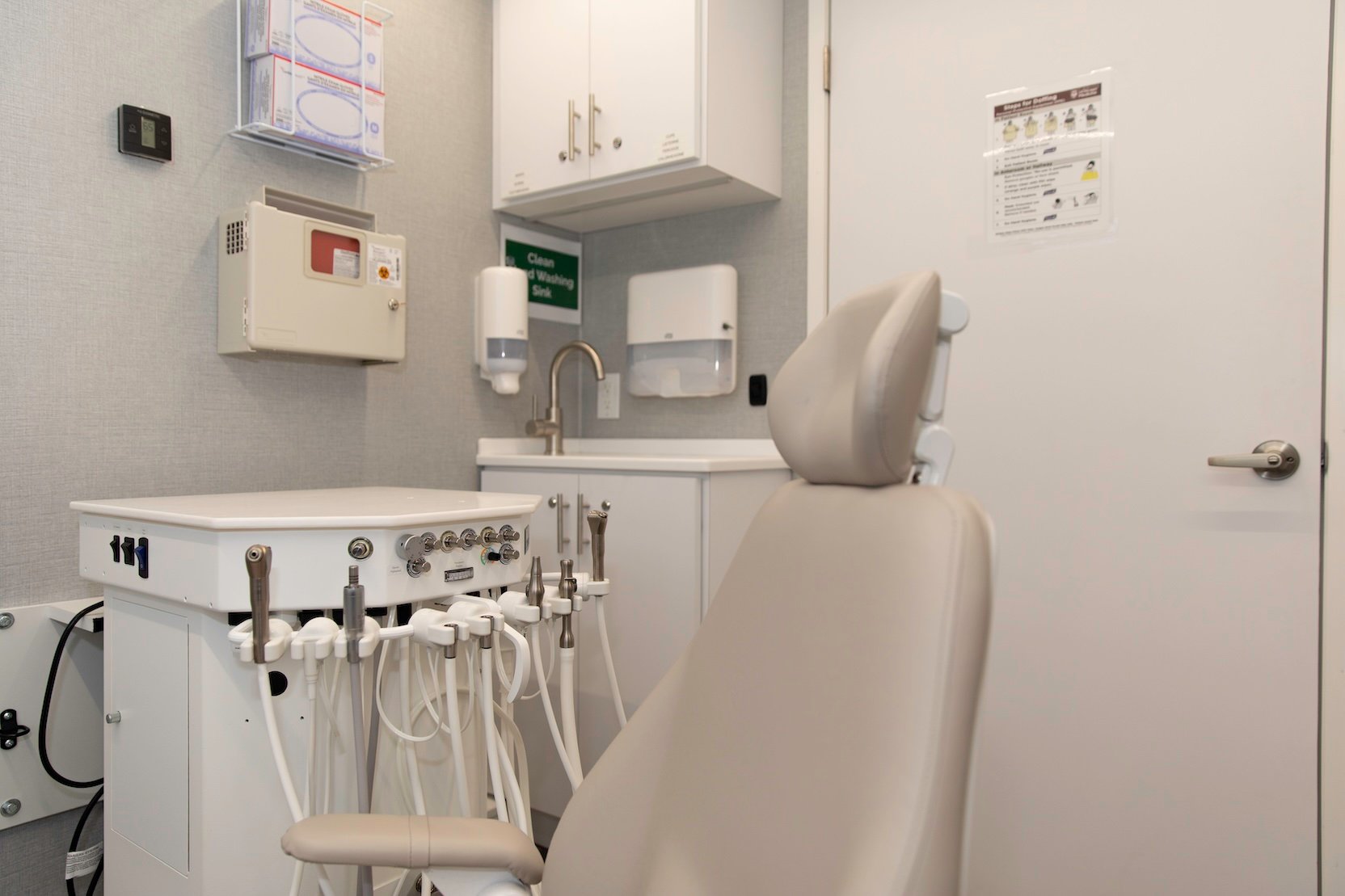
This comprehensive care includes oral exams and X-rays, preventive cleanings, fillings, root canals for anterior teeth, basic tooth extractions, silver diamine fluoride treatment, and even complete or partial removable dentures.
Meltzer, Mathur, and the rest of the Dental Care Research Study team are partnering with community organizations, senior centers and local leaders to direct the mobile unit to the most impactful, accessible locations.
To prioritize supporting the communities surrounding UChicago Medicine’s main medical centers, the mobile dental unit will deliver care on the South Side of Chicago and the Southland communities — neighborhoods that face significant healthcare needs and limited access to affordable dental care. These service areas are anchored by the University of Chicago Medical Center on the South Side and UChicago Medicine Ingalls Memorial in Harvey and Flossmoor.
The mobile dental clinic is the latest initiative that reflects UChicago Medicine’s philosophy and commitment to lowering barriers to healthcare access, which shaped the creation of the Comer Children’s Pediatric Mobile Medical Unit in 2002. The Pediatric Mobile Medical Unit reaches children ages 3 to 19 who may not receive healthcare on a regular basis, partnering with area schools and community organizations to provide sports physicals, health screenings, vaccinations, and more.
Ultimately, Meltzer said he and others at UChicago Medicine envision building an even broader mobile care capacity to bring not only dental care but also primary care out into the community and closer to people like senior patients who struggle with travel.
“The support and funding we’ve received from the George E. Richmond Foundation have been instrumental in bringing this work to our community,” Meltzer said. “We hope to find additional partners who want to help us bring mobile care directly to patients in the communities we serve.”
To learn more about the Dental Care Research Study, visit the program website.
Legal notice: Dentists providing services in the mobile dental unit or at the UCM Dental Research Study Clinic in the UCM Clinical Research Center as part of the Dental Care Research Study are NOT employees of The University of Chicago Medicine or affiliated with The University of Chicago Medical Center. They are independent dental practitioners who have been permitted to practice in the UCM Clinical Research Center and mobile dental unit for research purposes. Questions or concerns can be directed to the Principal Investigator.