
New genetic tools offer more accurate breast cancer prediction for women of African ancestry
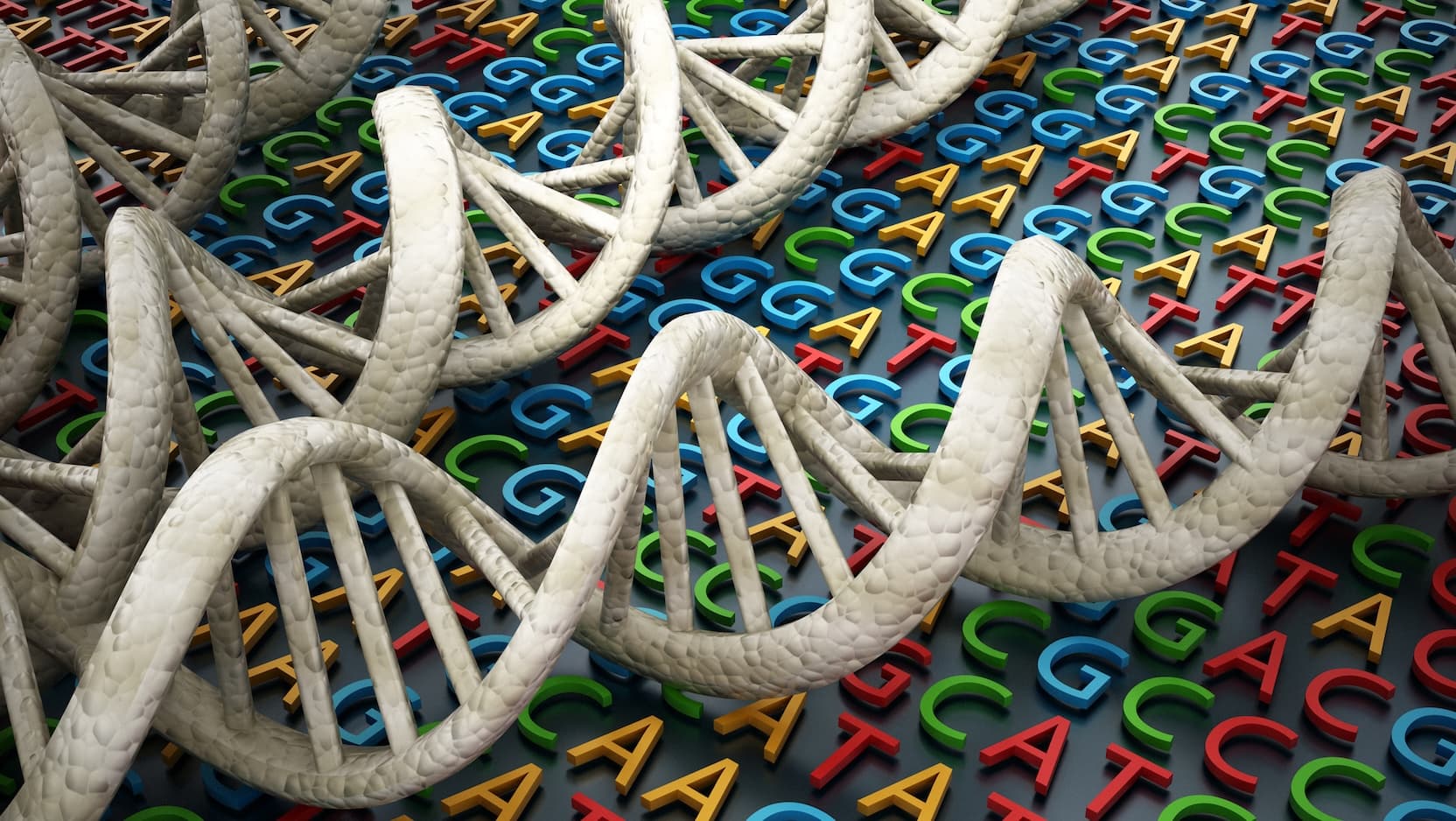
Despite major advances in genetic testing for breast cancer risk prediction, death rates remain disproportionately high among women of African ancestry. This is often due to a combination of factors, including failure of existing genetic models to accurately predict risk, higher rates of aggressive tumor subtypes, and later-stage diagnoses.
Now, researchers at the University of Chicago Medicine have developed a set of polygenic risk score (PRS) models that significantly improved the ability to predict breast cancer risk in women of African ancestry. Using genetic data from more than 36,000 women, the team created the most comprehensive breast cancer prediction tool for this historically underserved population. The study was published today in Nature Genetics.
Reason behind failure of existing risk models
Most current genetic tools for breast cancer risk prediction were developed using data from white women of European ancestry. These models perform well for that group but often fail to provide accurate predictions for African American women, particularly for aggressive subtypes like triple-negative breast cancer (TNBC).
One reason for this gap is genetic diversity. African ancestry populations have greater variation in their genomes, and differences in the frequency and distribution of genetic variants can lead to different disease patterns. Risk models built on European genetic data often miss critical signals present in African DNA.
Polygenic risk scores are determined by looking at a patient’s DNA for “SNPs” (single nucleotide polymorphisms), which are the most common type of change in DNA. They occur when a single nucleotide, which is the building block of DNA, changes. One or two SNPs may not have an effect, but a larger number of SNPs could change the risk of cancer.
“Polygenic risk scores worked well for European-Americans but weren’t accurate for African American women due to smaller sample size and greater genetic diversity,” said Dezheng Huo, PhD, Professor of Public Health Sciences and senior author of the study. “By forming a large consortium and combining data collected by investigators from 20 institutions, we have significantly improved prediction accuracy for this underserved population.”
Building the right models for the right population
Using data from the African Ancestry Breast Cancer Genetics Consortium, which includes women from the U.S., the Caribbean and Sub-Saharan Africa, the research team led by Huo developed new PRS models specifically tailored to women of African ancestry. These women had either been diagnosed with breast cancer or served as healthy controls. They built models for four breast cancer types: overall breast cancer, estrogen receptor positive (ER+), estrogen receptor negative (ER-) and triple-negative breast cancer (TNBC).
The performance of each model was measured by its area under the curve (AUC), which reflects how well a model distinguishes between individuals who develop breast cancer and those who don’t. The AUC scores between 0 and 1; the closer the number is to 1, the better the prediction will be. The new model had scores from 0.61 – 0.64 whereas earlier models scored in the 0.56 – 0.58 range, a significant improvement over previous models.
The team also built simplified models to improve usability and reduce costs. For example, one model developed for TNBC used only 162 genetic markers, which had the same performance with an AUC of 0.626, making it more practical for clinical use.
“With improved risk prediction, doctors can start screening earlier for women at higher risk, tailor care based on a woman’s specific risk profile and catch the cancers sooner,” Huo said.
The study found that women in the top 1% of risk scores had a 25.7% lifetime risk of developing breast cancer, while the top 1% risk score of TNBC indicates a lifetime risk of 7.4% for this aggressive breast cancer subtype. The findings suggest that high-risk women could benefit from screening as early as age 32, rather than waiting until the current recommendation of age 40 or 45, depending on the guidelines.
Combining PRS with family history enhances prediction
“Family history is a known risk factor for breast cancer, and when combined with the new PRS models, it makes the prediction even stronger,” Huo said.
Women in the top 1% of PRS scores who also had a first-degree relative with breast cancer had a lifetime risk of over 50%. This level of risk could justify earlier and more frequent screening, as well as preventive interventions such as medications or genetic counseling.
To test the accuracy of the newly developed models, the researchers validated them in several independent datasets, including the All of Us study and three additional studies involving women of African ancestry. In one group, the TNBC model scored an AUC of 0.652, confirming that the new tools perform consistently across different populations.
Although the current study primarily focused on African American and women of West African ancestry, the researchers emphasized the importance of further research as there are important genetic differences among West, East, North and South African populations, as well as the global African population.
“These advanced testing models bring us closer to a future where everyone, no matter their ancestry, gets an equal chance at early detection, effective treatment and survival,” Huo said.
The study, “Improved Polygenic Risk Prediction Models for Breast Cancer Subtypes in Women of African Ancestry,” was supported by grants from the National Institutes of Health, the Breast Cancer Research Foundation, and the Susan G. Komen Foundation.
The study's lead author was James L. Li, a student in the Pritzker School of Medicine Medical Scientist Training Program. Additional authors include James L. Li, Julian C. McClellan, Wenji Guo, Yijia Sun, Guimin Gao, and Olufunmilayo I. Olopade from the University of Chicago; Haoyu Zhang, Thomas U. Ahearn, Peter Kraft, and Stefan Ambs from the National Cancer Institute, Bethesda, Maryland; Xiaoyu Wang from the National Cancer Institute, Bethesda, Maryland, and Frederick National Laboratory for Cancer Research, Leidos Biomedical Research Inc., Rockville, Maryland; Guochong Jia, Jirong Long, Xiao-Ou Shu, Qiuyin Cai, Xingyi Guo, Wei Zheng, Jie Ping, Tuya Pal, Sonya Reid, Ran Tao, and Bingshan Li from Vanderbilt University, Nashville, Tennessee; Peter N. Fiorica from the University at Buffalo, New York; Mollie E. Barnard, Julie R. Palmer, and Gary Zirpoli from Boston University, Boston; Yu Chen from NYU Grossman School of Medicine, New York; Montserrat Garcia-Closas from the Institute of Cancer Research, London, UK; Jian Gu, Maosheng Huang, and Abenaa M. Brewster from the University of Texas MD Anderson Cancer Center, Houston; Jennifer J. Hu from the University of Miami School of Medicine, Miami; Esther M. John from Stanford University School of Medicine, Stanford, California; Katherine L. Nathanson from the University of Pennsylvania, Philadelphia; Barbara Nemesure from Stony Brook University, Stony Brook, New York; Anselm J.M. Hennis from Stony Brook University, Stony Brook, New York, and University of the West Indies, Bridgetown, Barbados; Michael F. Press from University of Southern California, Los Angeles; Maureen Sanderson from Meharry Medical College, Nashville, Tennessee; Dale P. Sandler, Katie M. O'Brien, and Clarice R. Weinberg from the National Institute of Environmental Health Sciences, Research Triangle Park, North Carolina; Melissa A. Troester, Andrew F. Olshan, and Eboneé N. Butler from the University of North Carolina at Chapel Hill, North Carolina; Song Yao and Christine Ambrosone from Roswell Park Comprehensive Cancer Center, Buffalo, New York; Adeyinka Falusi from the University of Ibadan, Ibadan, Nigeria; Timothy Makumbi from Mulago Hospital, Kampala, Uganda; Berthe S.E. Mapoko from the University of Yaounde, Yaounde Central Hospital, Cameroon; Oladosu Ojengbede from the University of Ibadan, Nigeria; John Obafunwa from Lagos State University Teaching Hospital, Lagos, Nigeria; David V. Conti and Christopher A. Haiman from Keck School of Medicine of USC, Los Angeles; Nilanjan Chatterjee from Johns Hopkins University, Baltimore, Maryland.
Breast Cancer Care
We offer expert, comprehensive care for all types and stages of breast cancer. Our team provides personalized attention, streamlined appointments, and dedicated support at every step.
Learn more